Anime has produced countless popular series over the years, but only a select few have truly changed the direction of the industry. While many titles become fan favorites or achieve impressive commercial success, only a handful introduce new ideas, redefine storytelling, influence animation techniques, or inspire future creators. Their impact extends far beyond ratings, leaving a lasting mark on how anime is made, marketed, and enjoyed around the world.
This list ranks 18 anime that changed the industry through their long-term influence rather than popularity alone. Some introduced groundbreaking animation styles, while others transformed entire genres, expanded anime’s global audience, or proved that ambitious creative risks could become major commercial successes. Several of these classics continue to inspire today’s directors, animators, and writers, while newer entries are already reshaping the medium.
1. Astro Boy (1963)
When people discuss the anime that changed the industry forever, Astro Boy almost always comes first. Created by Osamu Tezuka, the series did far more than introduce audiences to a memorable robot hero. It helped establish the production model that still supports weekly television anime today.
At a time when animation was expensive and difficult to produce on a regular schedule, Tezuka developed practical techniques such as limited animation, repeated movement cycles, and reusable artwork to make weekly broadcasting financially possible. While these methods were originally designed to reduce costs, they became the foundation of television anime production for decades.
Astro Boy also transformed the relationship between manga and anime. As one of the first major manga adaptations to achieve nationwide success, it demonstrated that popular manga could become a successful television series. Today, adapting hit manga into anime remains one of the industry’s most successful business strategies.
The story itself also left a lasting impression. Astro, a young robot with human emotions, explored themes of justice, technology, discrimination, and humanity that were far more mature than many children’s programs of the era. Those ideas helped prove that animation could tell meaningful stories while remaining accessible to younger audiences.
2. Princess Knight (1967) and Sally the Witch (1966)
Long before magical girls and romantic heroines became defining parts of anime, Princess Knight and Sally the Witch introduced ideas that would shape entire genres for generations. Although they rarely receive the same attention as later classics, their influence on anime history is impossible to overlook.
Princess Knight presented one of anime’s earliest female protagonists with a complex personality and an unforgettable journey. The story blended adventure, romance, fantasy, and questions about identity in ways that were highly unusual during the 1960s. Its emotional storytelling helped establish the foundation for modern shoujo anime, inspiring future classics that placed character relationships and personal growth at the center of their narratives.
Around the same period, Sally the Witch introduced many of the storytelling elements that would later define the magical girl genre. A young heroine with magical powers, a secret identity, and adventures balancing ordinary life with fantasy became a formula that countless anime would build upon over the following decades.
The success of this series opened new opportunities for stories aimed at young female audiences. Rather than focusing entirely on action, they demonstrated that emotional storytelling, friendship, and character development could become major strengths within anime.
Many of today’s most successful magical girl and shoujo series still reflect ideas first introduced by these groundbreaking classics. Their influence continues to shape anime more than half a century after their original broadcasts.
3. Mobile Suit Gundam (1979)
Before Mobile Suit Gundam arrived, giant robot anime usually presented clear heroes fighting obvious villains with powerful machines that felt almost indestructible. Gundam completely changed those expectations by treating war as a complicated human tragedy rather than simple entertainment.
Instead of portraying robots as symbols of heroic fantasy, the series presented them as military weapons with devastating consequences. Soldiers experienced fear, loss, and emotional trauma while political conflicts became far more important than straightforward battles between good and evil. This realistic approach introduced audiences to a new style of mecha storytelling that eventually became known as the real robot genre.
Another major reason for Gundam’s lasting influence is its memorable characters. Rivalries such as Amuro Ray and Char Aznable became templates for countless future anime, proving that personal conflict could be just as compelling as large-scale battles. Many later series borrowed similar character dynamics while expanding upon Gundam’s realistic themes.
The franchise also revolutionized anime merchandising through the enormous success of Gunpla model kits. These products transformed Gundam into one of Japan’s most valuable entertainment brands while showing how anime could generate long-term revenue beyond television broadcasts.
More than four decades after its debut, Mobile Suit Gundam continues to release successful anime, movies, and merchandise. Its lasting popularity demonstrates how one creative decision completely redefined the mecha genre and influenced generations of creators.
4. Akira (1988)
Few animated films have changed global perceptions of anime as dramatically as Akira. Directed by Katsuhiro Otomo, the film introduced audiences around the world to an ambitious level of animation, storytelling, and visual detail that many had never associated with Japanese animation.
Produced with exceptional technical quality, Akira featured fluid animation, detailed backgrounds, and cinematic direction that rivaled major live-action productions. At a time when television anime often relied on limited animation techniques, the film proved that anime could achieve extraordinary artistic standards on the big screen.
Its influence extended well beyond Japan. The futuristic city of Neo Tokyo, combined with its cyberpunk atmosphere, inspired filmmakers, game developers, comic artists, and designers. Many visual elements seen in modern science fiction films can trace part of their inspiration back to Akira.
The film also demonstrated that animation could explore mature themes, including political corruption, scientific experimentation, violence, and the dangers of uncontrolled power. These ideas helped convince international audiences that anime could tell serious stories intended for adults rather than only children.
Even decades after its release, Akira remains one of the most influential animated films ever made. It continues to appear in discussions about cinematic history because its artistic achievements permanently changed how global audiences viewed Japanese animation and expanded the possibilities of animated filmmaking.
5. Ghost in the Shell (1995)
Ghost in the Shell remains one of the defining cyberpunk films in anime history. Directed by Mamoru Oshii, the movie explored complex philosophical questions about identity, technology, and artificial intelligence years before these topics became common in mainstream science fiction.
The story follows Major Motoko Kusanagi, a cybernetic government agent who begins questioning the nature of her own existence. As technology increasingly merges with human life, the film asks whether memories, emotions, and consciousness alone are enough to define a person. These thought-provoking themes helped distinguish Ghost in the Shell from traditional action-focused science fiction.
Its influence quickly spread beyond anime. Many filmmakers have acknowledged that the movie inspired later science fiction productions, particularly through its visual style and exploration of virtual reality. Elements of its storytelling can be recognized across numerous Hollywood films, television series, and video games released over the past three decades.
The film also demonstrated that anime could successfully combine philosophical discussions with breathtaking action and cinematic direction. Rather than choosing between entertainment and intellectual depth, Ghost in the Shell delivered both.
Today, the movie continues to inspire creators tackling themes of artificial intelligence, digital consciousness, and the evolving relationship between humans and technology.
6. Neon Genesis Evangelion (1995)
Neon Genesis Evangelion transformed the mecha genre by shifting its focus away from giant robot battles and toward the emotional struggles of its characters. Created by Hideaki Anno, the series challenged audience expectations by presenting deeply flawed protagonists dealing with loneliness, trauma, depression, and the fear of forming relationships.
Instead of celebrating heroism, Evangelion examined the psychological cost of constantly carrying impossible responsibilities. Shinji Ikari became one of anime’s most complex protagonists because his greatest battles often took place within his own mind rather than inside his giant robot.
The series also introduced highly symbolic storytelling that encouraged endless discussion and interpretation. Religious imagery, philosophical ideas, and psychological themes gave viewers countless details to analyze, helping Evangelion remain relevant long after its original broadcast.
Its influence spread throughout the anime industry. Numerous later series adopted darker character studies, emotionally driven narratives, and symbolic storytelling inspired by Evangelion’s success. Even today, references to its memorable visual scenes, dramatic camera angles, and emotional conflicts continue to appear across anime, films, and popular culture.
More than thirty years later, Neon Genesis Evangelion is still regarded as one of the most influential anime ever created. It proved that action anime could also become deeply personal psychological dramas, fundamentally changing how creators approached storytelling in the medium.
7. Spirited Away (2001)
Few anime films have elevated the global reputation of Japanese animation as much as Spirited Away. Directed by Hayao Miyazaki and produced by Studio Ghibli, the film became a worldwide phenomenon after winning the Academy Award for Best Animated Feature. It remains the only hand-drawn and non-English-language film to receive that honor, introducing countless international viewers to the artistic potential of anime.
The story follows Chihiro, a young girl who enters a mysterious spirit world and gradually matures through courage, kindness, and determination. Unlike many animated films that depend on large action scenes, Spirited Away focuses on personal growth, emotional storytelling, and richly imagined world-building. This approach proved that anime could captivate audiences through character development as much as through spectacle.
Its international success also changed how critics viewed Japanese animation. Rather than being treated as a niche form of entertainment, anime gained recognition as an art form capable of delivering meaningful and emotionally complex stories. The film encouraged distributors, film festivals, and award organizations to take anime far more seriously.
Many later character-driven anime found broader international audiences because Spirited Away helped expand perceptions of what anime could achieve. More than two decades after its release, it remains one of the industry’s greatest achievements and a landmark that continues to influence filmmakers around the world.
8. Dragon Ball and Dragon Ball Z (1986 and 1989)
Very few anime have shaped the shonen genre as completely as Dragon Ball and Dragon Ball Z. Created by Akira Toriyama, the franchise established storytelling patterns that continue to define action anime decades later. Many of today’s biggest shonen series still follow structures that Dragon Ball helped popularize.
Training arcs, martial arts tournaments, increasingly powerful villains, dramatic transformations, and rivals who eventually become trusted allies all became defining features of the genre because of Dragon Ball. These storytelling elements have appeared repeatedly in later series, including Naruto, One Piece, Bleach, My Hero Academia, and many others.
Perhaps no moment better represents the franchise’s influence than Goku’s first Super Saiyan transformation. It remains one of the most recognizable scenes in anime history and inspired countless transformation sequences across later action series. The emotional buildup and dramatic payoff became a blueprint for future protagonists reaching new levels of strength.
Dragon Ball also demonstrated how a long-running anime could successfully expand its world while keeping audiences invested for years. Even after nearly four decades, the franchise continues to release new anime, films, games, and merchandise that attract both longtime fans and new generations. Its influence reaches far beyond its own story, making Dragon Ball one of the most important anime ever created and one of the biggest reasons modern battle shonen looks the way it does today.
9. Fist of the North Star (1984)
Before many modern battle anime introduced elaborate power systems and signature fighting techniques, Fist of the North Star had already established many of the ideas that would later become genre standards. Set in a harsh post-apocalyptic world, the series combined martial arts, intense action, and emotional storytelling in ways that felt groundbreaking during the 1980s.
The story follows Kenshiro, a wandering warrior whose deadly combat style allows him to defeat opponents with incredible precision. His unforgettable finishing techniques and dramatic confrontations inspired countless action anime that followed. Many later shonen series borrowed the idea of unique combat abilities tied directly to a character’s identity and fighting philosophy.
The anime also helped prove that animation could tell darker and more mature stories. Violence, sacrifice, and survival became central themes, opening the door for future series aimed at older audiences rather than only children. Although Dragon Ball eventually became the face of battle shonen, Fist of the North Star laid much of the foundation that allowed the genre to evolve into what fans know today.
10. Urusei Yatsura (1981)
Urusei Yatsura marked the beginning of Rumiko Takahashi’s extraordinary career and became one of the most influential romantic comedy anime ever produced. The series introduced audiences to Lum, one of anime’s most iconic female characters, whose popularity helped define anime fandom throughout the 1980s and beyond.
The story blends science fiction, comedy, romance, and everyday school life into an energetic mix that inspired countless romantic comedy series. Its colorful cast and humorous misunderstandings established many storytelling techniques that later anime would continue to develop for decades.
Urusei Yatsura also played an important role in popularizing the ensemble romance format, where multiple memorable characters contribute equally to the comedy and emotional relationships. This structure later became common across romantic comedy and harem anime.
Beyond its influence on storytelling, the series demonstrated the commercial value of memorable characters. Merchandise, fan communities, and character popularity became increasingly important parts of anime culture, with Lum becoming one of the industry’s earliest breakout icons.
Rumiko Takahashi would later create other hugely successful series, including Ranma 1/2 and Inuyasha, but many of the ideas that made those works successful first appeared in Urusei Yatsura. Its influence continues to be felt across modern romantic comedy anime today.
11. Pokémon (1997)
Pokémon introduced millions of viewers around the world to anime and remains one of the most influential franchises in entertainment history. For many international fans, Ash Ketchum’s adventure was their first experience with Japanese animation, making Pokémon an important gateway into the medium.
The anime followed Ash and Pikachu as they traveled across different regions, battled Gym Leaders, and formed lasting friendships. Its accessible storytelling, memorable characters, and colorful world appealed to audiences of all ages, helping anime reach mainstream television around the globe.
Pokémon’s enormous success also demonstrated how effectively anime could support video games, toys, trading cards, and movies. Its achievements inspired numerous multimedia franchises, including Digimon, Yu Gi Oh!, Beyblade, and several other game-based anime that followed similar business models.
The franchise became one of the highest-grossing entertainment properties in history while continuing to attract new viewers through fresh series and new protagonists. Few anime have maintained such widespread popularity across multiple generations.
Beyond its commercial achievements, Pokémon helped normalize anime in countries where Japanese animation had previously received limited exposure. Its influence continues to shape how global audiences discover anime, making it one of the industry’s most significant cultural milestones.
12. Sailor Moon (1992)
Although the magical girl genre existed long before Sailor Moon, no series expanded its popularity more successfully. Created by Naoko Takeuchi, the anime transformed magical girls into global pop culture icons and inspired generations of creators across animation, comics, and television.
The story follows Usagi Tsukino and her fellow Sailor Guardians as they protect the world through teamwork, friendship, and courage. Unlike many action series of the time, Sailor Moon placed emotional relationships and personal growth at the center of its storytelling while still delivering exciting battles against memorable villains.
Its transformation sequences, colorful costumes, and ensemble cast became defining features of magical girl anime. These elements continue to influence countless series released more than thirty years later.
The series also proved that female-led action stories could achieve enormous commercial success worldwide. Its lasting influence extends beyond anime, inspiring creators across fashion, comics, animation, and popular culture. Today, Sailor Moon remains one of the most important and influential anime ever created.
13. The Melancholy of Haruhi Suzumiya (2006)
The Melancholy of Haruhi Suzumiya changed the anime industry in ways that extended far beyond its story. While the series is remembered for its unique characters and unconventional storytelling, its biggest contribution was proving how successful light novel adaptations could become. Following its massive popularity, anime studios invested heavily in adapting light novels, creating a trend that continues to shape seasonal anime today.
The series also became a defining title for anime fandom during the mid 2000s. Fans embraced its memorable characters, online discussions, merchandise, and cosplay in ways rarely seen before. The famous Hare Hare Yukai ending dance quickly became a global internet phenomenon, inspiring fan videos, convention performances, and community events across the world.
Its success marked an important moment when anime fandom became more connected worldwide. The combination of strong storytelling, memorable characters, and enthusiastic fan participation helped establish many of the community traditions that remain popular today. Even years after its release, The Melancholy of Haruhi Suzumiya continues to be recognized as one of the most influential anime of the modern era.
14. Attack on Titan (2013)
Attack on Titan arrived during a period when anime streaming was expanding rapidly across the world, and it quickly became one of the biggest global entertainment events of the decade. Its intense action, shocking plot twists, and morally complex story attracted viewers far beyond the traditional anime community.
Unlike many earlier action series, Attack on Titan presented a world where no character felt completely safe. Unexpected deaths, political conspiracies, and difficult moral choices kept audiences invested while generating worldwide discussions after nearly every episode.
The anime also played a major role in popularizing simultaneous global streaming. New episodes became available to international audiences shortly after their Japanese broadcast, allowing fans around the world to watch together and participate in online conversations without waiting months or years for local releases.
Its worldwide popularity demonstrated that anime could compete with major live-action television series in terms of cultural impact. Streaming platforms responded by increasing their investment in anime licensing and simulcasts, helping many later series reach global audiences more quickly.
Attack on Titan not only became one of the defining anime of the 2010s but also helped transform anime into a worldwide mainstream entertainment industry. Its influence on global streaming and international fandom continues to shape the medium today.
15. Demon Slayer (2019)
Demon Slayer quickly became one of the biggest anime success stories of the modern era. Produced by Ufotable, the television series impressed audiences with its breathtaking animation, emotional storytelling, and beautifully choreographed action sequences. It introduced millions of new viewers to anime while raising expectations for production quality across the industry.
The franchise reached another historic milestone with Demon Slayer the Movie: Mugen Train. The film became the highest-grossing Japanese movie of its time and demonstrated that anime films could achieve extraordinary commercial success in theaters around the world.
Its record-breaking performance encouraged studios to invest more heavily in theatrical anime releases instead of relying only on television series. Many popular franchises soon announced movies as major parts of their storytelling strategy, changing how anime projects are planned and released.
Beyond financial success, Demon Slayer also influenced animation standards. Ufotable’s seamless blend of traditional animation and digital effects became a benchmark that many studios now strive to achieve.
The franchise proved that exceptional animation, emotional characters, and cinematic presentation could attract audiences on a global scale. Its impact continues to shape both television anime and theatrical releases, making Demon Slayer one of the industry’s most influential modern franchises.
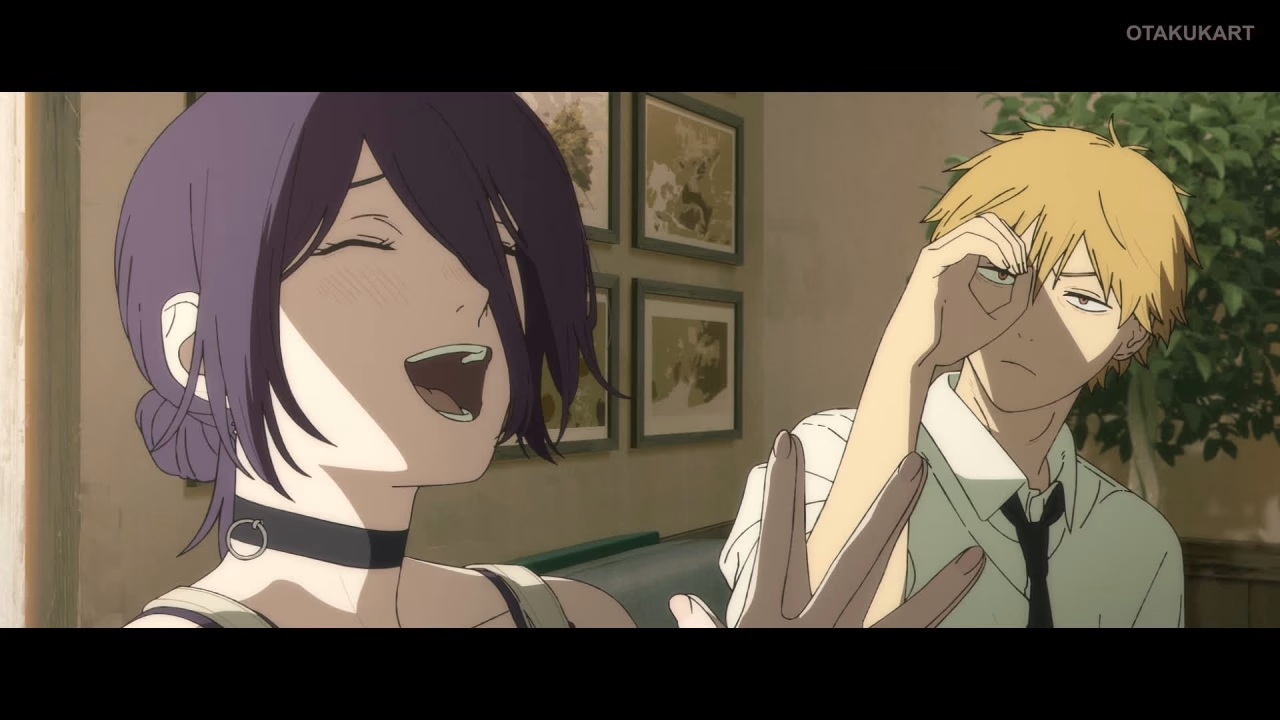
16. Chainsaw Man The Movie Reze Arc (2025)
Chainsaw Man The Movie Reze Arc became one of the standout anime films of 2025 by earning praise for its remarkable animation and cinematic presentation.
Rather than relying only on popularity, the film attracted attention for its craftsmanship. Many viewers highlighted the detailed animation, dynamic fight choreography, and careful pacing, calling it one of MAPPA’s finest productions to date.
The movie also proved that newer anime franchises could succeed in theaters without decades of history behind them. Despite releasing during a highly competitive year for anime films, Reze Arc achieved strong box office results while expanding the popularity of the Chainsaw Man franchise.
Its success reinforced the growing importance of theatrical anime adaptations. Studios increasingly recognized that well-produced anime films could generate significant revenue while delivering memorable experiences that complemented ongoing television series. Chainsaw Man The Movie Reze Arc demonstrated that artistic quality and commercial success can go hand in hand. It stands as another example of how modern anime films continue to raise expectations for animation, storytelling, and theatrical production.
17. Solo Leveling (2024 to Present)
Solo Leveling marked an important milestone by proving that Korean web novels and webtoons could become major global anime hits. Adapted from the hugely popular web novel by Chugong, the series attracted millions of viewers and quickly became one of the biggest anime successes of recent years.
The story follows Sung Jinwoo as he evolves from the world’s weakest hunter into one of its strongest warriors. Its exciting battles, rapid character growth, and polished animation helped the anime gain widespread popularity across international streaming platforms.
Solo Leveling also demonstrated that audiences were eager to embrace adaptations beyond traditional Japanese manga. Its success encouraged greater interest in Korean source material and opened new opportunities for future collaborations between Japanese animation studios and Korean creators.
The anime received widespread recognition through major industry awards and enthusiastic fan support, further confirming its global appeal. Its popularity highlighted how international audiences are increasingly shaping the anime industry’s future. As anime continues to expand worldwide, Solo Leveling represents a significant step toward a more diverse adaptation landscape. Its success has already influenced discussions about future webtoon adaptations and the evolving direction of the medium.
18. Jujutsu Kaisen (2020 to Present)
Jujutsu Kaisen has become one of the defining anime franchises of the modern era through its combination of outstanding animation, memorable characters, and exciting supernatural battles. Since its debut, the series has consistently ranked among the world’s most popular anime.
Produced by MAPPA, the anime is widely recognized for its fluid fight scenes, cinematic direction, and exceptional attention to detail. Many individual action sequences have become viral moments, showcasing how modern animation technology continues to push creative boundaries.
The series has also achieved remarkable commercial success through television ratings, manga sales, merchandise, and its blockbuster theatrical film. Its popularity demonstrates how today’s shonen anime can succeed across multiple forms of entertainment while reaching audiences worldwide.
Jujutsu Kaisen continues to influence newer action anime through its high production values and carefully choreographed battles. Many fans and industry observers believe it represents the next stage in the evolution of battle shonen storytelling. As the franchise continues to grow, its long-term legacy is still being written. However, its impact on modern anime is already undeniable, making Jujutsu Kaisen one of the most influential series shaping the industry’s future in 2026.