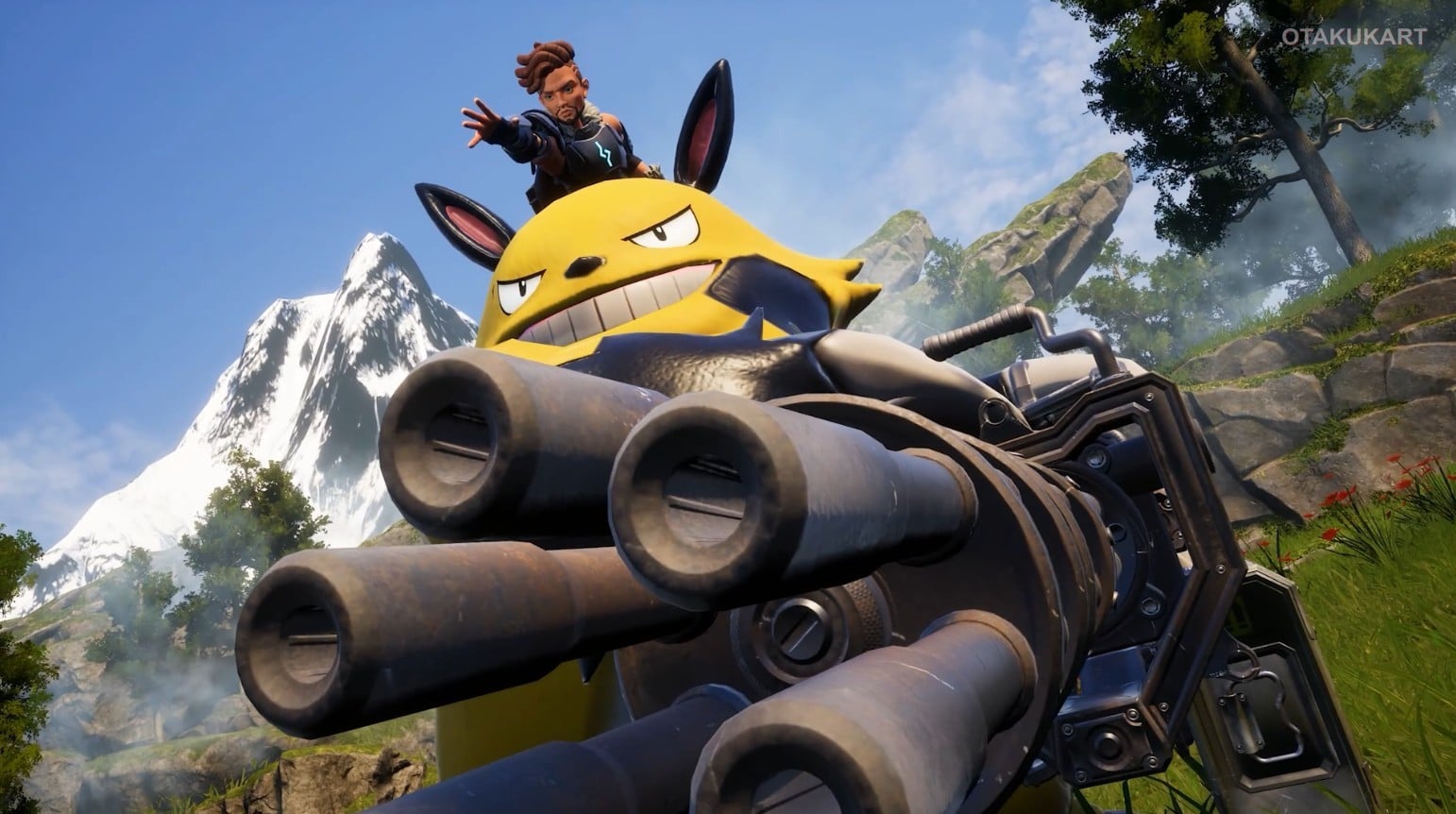
Nintendo and The Pokémon Company’s ongoing patent efforts tied to their legal battle with Palworld developer Pocketpair have encountered another setback in Japan. The Japan Patent Office (JPO) has upheld its rejection of a divisional patent application covering an in-game monster-catching system, while its unusually direct response to Nintendo’s objections has drawn widespread attention from legal observers and the Japanese gaming community.
The case centers on divisional patent application No. 2026-019762, which describes mechanics related to capturing monsters in a video game. Although the application belongs to the same patent family as patents involved in Nintendo’s lawsuit against Pocketpair, the latest ruling concerns only this specific divisional application and does not affect the validity of the patents currently being asserted in court.
JPO rejects Nintendo’s copyright-based arguments
One of the key reasons for the rejection was prior art found in a 2013 YouTube gameplay video of the fan-made title Pokémon Generations. The JPO argued that the footage demonstrated gameplay mechanics similar to those described in Nintendo’s patent application, including selecting a Poké Ball, throwing it at a Pokémon, and successfully capturing it.
Nintendo objected to the examiner’s reliance on the video, arguing that the fan game infringed its intellectual property and should not have been treated as though it were an authorized Pokémon product. The company repeatedly stated that the examiner had “acted extremely inappropriately by deliberately mischaracterizing an infringing product as though it were an authorized one.”
The patent office firmly rejected that argument. In its response, the examiner explained that whether the cited material infringes copyright has no relevance when assessing inventive step under Japanese patent law. The notice further stated that interpreting the examiner’s description as recognizing the fan game as an official Pokémon title was a “completely unreasonable misunderstanding.”
Examiner’s unusually blunt wording attracts attention
Beyond the legal outcome, the tone of the JPO’s written response has become a talking point in Japan. Japanese patent attorney Kiyoshi Kurihara commented that both Nintendo’s objections and the examiner’s reply contained “things rarely seen in standard patent practice,” highlighting how unusual the exchange was.
One section that circulated widely online addressed Nintendo’s complaint about how the rejection notice referred to copyrighted Pokémon characters. Nintendo argued that names such as Ash, Pikachu, and Poké Ball should instead have been described as characters or objects infringing on Nintendo’s copyrights.
The examiner responded with a sarcastic hypothetical, stating that if character names could not be used, the notice would have to rely on cumbersome descriptions such as “an object in the form of a small yellow animal” instead of Pikachu, “an object in the form of a boy wearing a red cap” instead of Ash, and “a spherical object with a red upper half and a white lower half” instead of a Poké Ball. The examiner concluded that changing the wording would not alter the legal reasoning behind the rejection.
Gameplay video dispute also dismissed
Nintendo also argued that a YouTube video alone could not establish the technical features required to evaluate the invention. The examiner interpreted the company’s position as either acknowledging the footage as genuine gameplay while disputing its evidentiary value or suggesting that the upload might simply be an animated video masquerading as gameplay.
The second possibility was swiftly dismissed, with the examiner remarking that such a scenario would make “the uploader’s behavior… way too preposterous.”
For now, the rejection remains in place. Nintendo can still appeal by filing a petition for a trial with the Commissioner of the Japan Patent Office within three months.
Importantly, this decision does not weaken the patents currently being asserted against Pocketpair in the Tokyo District Court. Instead, it only affects Nintendo’s attempt to secure an additional divisional patent covering similar monster-catching mechanics. Even so, the unusually sharp language used by the JPO has made this procedural patent ruling one of the most closely discussed developments in the ongoing Palworld legal dispute.

| Platforms | Microsoft Windows |
|---|---|
| Developer | Pocketpair |