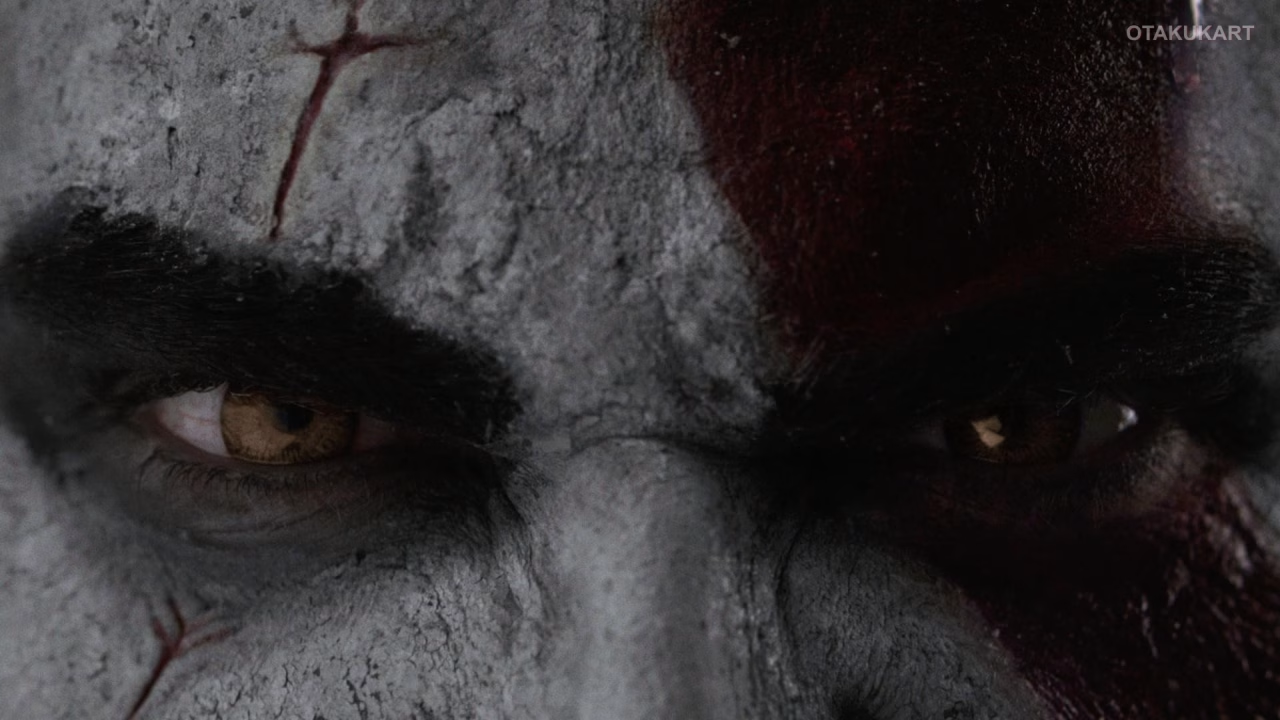
The influence of video games on modern television storytelling continues to grow, and House of the Dragon has now provided a striking example. Actor Abubakar Salim recently revealed that his portrayal of Alyn of Hull, particularly during one of Season 2’s most intense scenes, was directly inspired by Kratos. Speaking during a roundtable interview with Polygon, Salim detailed how he leaned into the iconic character’s rage-driven persona to elevate his performance.
Salim, who has deep roots in gaming culture, approached the role with a perspective that blends cinematic acting and interactive storytelling. His familiarity with emotionally layered video game protagonists allowed him to draw parallels between Kratos and Alyn, both of whom are defined by inner conflict, family trauma, and suppressed anger. This creative crossover has now become one of the most talked-about aspects of Alyn’s character arc.
Why Kratos Became the Blueprint for Alyn
During the interview, Salim highlighted the emotional similarities between the two characters, explaining that Kratos’ story provided a strong foundation for understanding Alyn. He described Kratos as
“a man who has also been wronged by his father, who is trying to start anew with a family,”
adding that the character’s journey is shaped by rage and resentment tied to his lineage.
That same emotional tension exists within Alyn, who is revealed to be the illegitimate son of Corlys Velaryon. Like Kratos, Alyn struggles to reconcile his past with the possibility of a new future, particularly as Corlys attempts to build a relationship with him. Salim emphasized that Alyn’s strength comes from
“this kind of unkempt anger,”
but warned that it is also what makes him dangerous in high-pressure situations.
He further explained that Alyn spends much of his time suppressing these emotions, choosing discipline and duty over confrontation. However, that restraint begins to crack as the story progresses, especially when his personal conflicts collide with the chaos of war.
The Battle Scene Where Everything Explodes
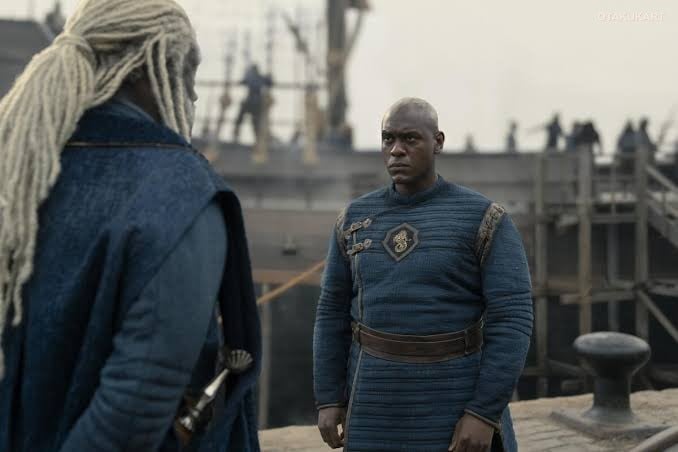
The influence of Kratos becomes most apparent during the Battle of the Gullet, one of the most ambitious sequences in Season 2. The large-scale naval conflict places Alyn in a brutal encounter with Admiral Sharako Lohar, played by Abigail Thorn. The scene combines physical intensity with emotional stakes, pushing Alyn to a breaking point.
Salim described the filming process as a collaborative effort focused on raw energy and realism. He praised Thorn’s performance, calling her “a force of nature,” and revealed that both actors committed to making the fight as visceral as possible. Their shared enthusiasm for storytelling and genre influences helped shape the tone of the sequence.
Reflecting on his approach, Salim made it clear just how central Kratos was to his mindset during filming.
“We’re both nerds, so we were both channeling some form of character or beast,”
he said, before delivering the standout line:
“I was very much leaning into Kratos that whole time. It was like God of War. Pull this in. Kill whatever I can.”
This quote has quickly become a defining insight into how the scene was crafted.
Gaming Influence Is Reshaping TV Performances
Salim’s comments highlight a broader trend where video game storytelling is influencing performances in high-budget television. Characters like Kratos have evolved beyond simple action heroes into deeply layered figures, making them valuable reference points for actors exploring similar emotional territory.
In Alyn’s case, this influence adds depth to a character who might otherwise be defined solely by his role in the larger narrative. His quiet demeanor, combined with explosive bursts of violence, mirrors Kratos’ journey from rage-driven warrior to a man seeking control over his past. This layered portrayal has resonated strongly with viewers, especially those familiar with the God of War series.
As House of the Dragon continues to expand its scope, performances like Salim’s demonstrate how cross-medium inspiration can elevate storytelling. By channeling one of gaming’s most iconic figures, he has delivered a portrayal that feels both grounded and intensely cinematic, helping to bridge the gap between two of entertainment’s most influential mediums.
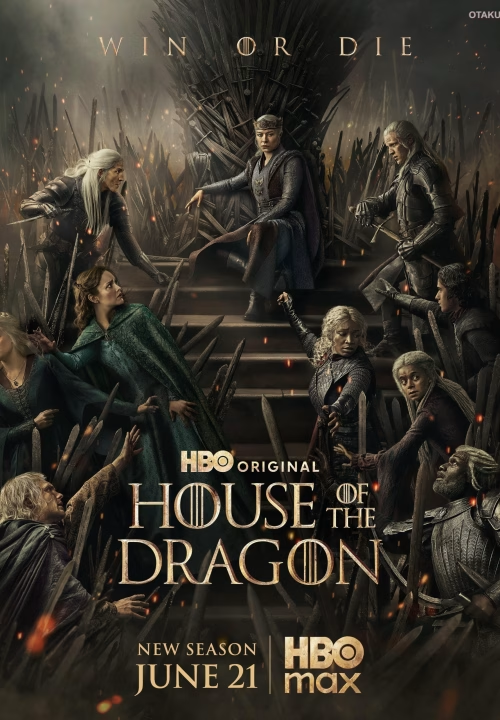
| Premiere Date | August 21, 2022 |
|---|---|
| Network / Service | HBO |
| Creator | Ryan Condal, George R.R. Martin |