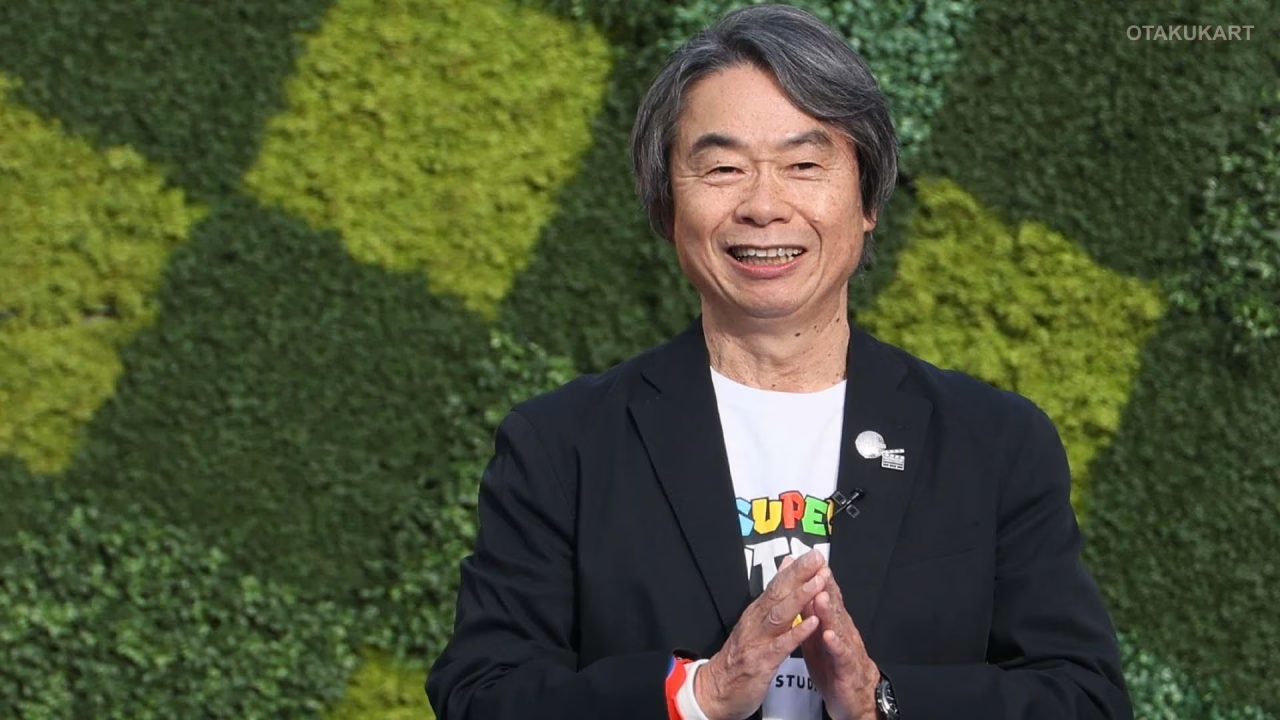
Nintendo’s long-running success has often been attributed to its iconic characters and innovative hardware, but according to Nintendo Representative Director and Fellow Shigeru Miyamoto, the company’s philosophy is much simpler: create games that are genuinely fun instead of following market trends.
Speaking in a recent interview with Famitsu, Miyamoto shared his perspective on why Nintendo continues to enjoy worldwide support decades after launching franchises such as Super Mario, The Legend of Zelda, and Pokémon. Rather than focusing on financial buzzwords or copying popular ideas, he believes Nintendo succeeds by putting players first and encouraging developers to build games around original concepts.
His comments come at a time when Nintendo is enjoying strong momentum. The original Nintendo Switch has become one of the best-selling consoles in gaming history, while Nintendo Switch 2 has also begun its lifecycle with impressive sales. At the same time, long-running series such as The Legend of Zelda, Animal Crossing, and Splatoon continue to expand their global audiences.
Miyamoto says Nintendo avoids chasing trends
During the interview, Miyamoto explained that Nintendo does not begin projects by asking what is currently popular. Instead, the company focuses on the people who will ultimately play its games.
“The reason Nintendo enjoys such strong global support is simply that we don’t start by asking: ‘What’s trending right now?’ Instead, we focus on who we’re actually doing this for.”
He also criticized the industry’s emphasis on financial metrics such as depreciation or quickly recovering development costs.
“I really dislike terms like ‘depreciation’ or ‘recouping costs.'”
According to Miyamoto, creating a game solely to achieve short-term profits risks wasting the talent and creativity of the development team. He believes the better approach is to spend time making the best possible product, with commercial success following naturally if players enjoy the experience.
Fun gameplay always comes before commercial success
Miyamoto said Nintendo’s design philosophy starts with understanding why people enjoy games rather than looking at competing titles for inspiration. While the company may analyze popular genres, the goal is never to imitate them.
Instead, developers begin with a simple question: What makes a game fun?
He pointed to Splatoon as an example of this approach. The game’s foundation was not based on existing shooters but on the idea of competing by covering territory with paint. From that unique concept, Nintendo built one of its newest blockbuster franchises.
Miyamoto argued that starting with a fresh gameplay idea often leads to experiences that stand apart from the rest of the market.

Mario and Pokémon reflect Nintendo’s creative philosophy
The veteran designer also reflected on the enduring popularity of Mario, joking about questions he has received over the years regarding the character’s appearance.
“People have long asked me, ‘Why does a mustachioed middle-aged guy like Mario sell so well?'”
For Miyamoto, the answer has never been Mario’s design alone. Instead, he believes the character became an icon because he first appeared in games that were enjoyable to play.
He applied the same thinking to Pokémon Red and Green, explaining that their success came from creator Satoshi Tajiri’s personal passion for insect collecting. Rather than following established RPG formulas, the games were built around collecting creatures, trading with friends, and completing a collection—ideas rooted in Tajiri’s own childhood experiences.
Miyamoto added that developers should embrace their individuality instead of trying to create products with broad appeal from the outset.
“You should turn your idea into a product in a way that best showcases the fact that you were the one who created it.”
That philosophy, he suggested, is what allows local, deeply personal ideas to resonate with audiences around the world. As Nintendo continues expanding its portfolio across games, film, and entertainment, Miyamoto’s comments reinforce the creative principles that have defined the company for decades and continue to shape its future.