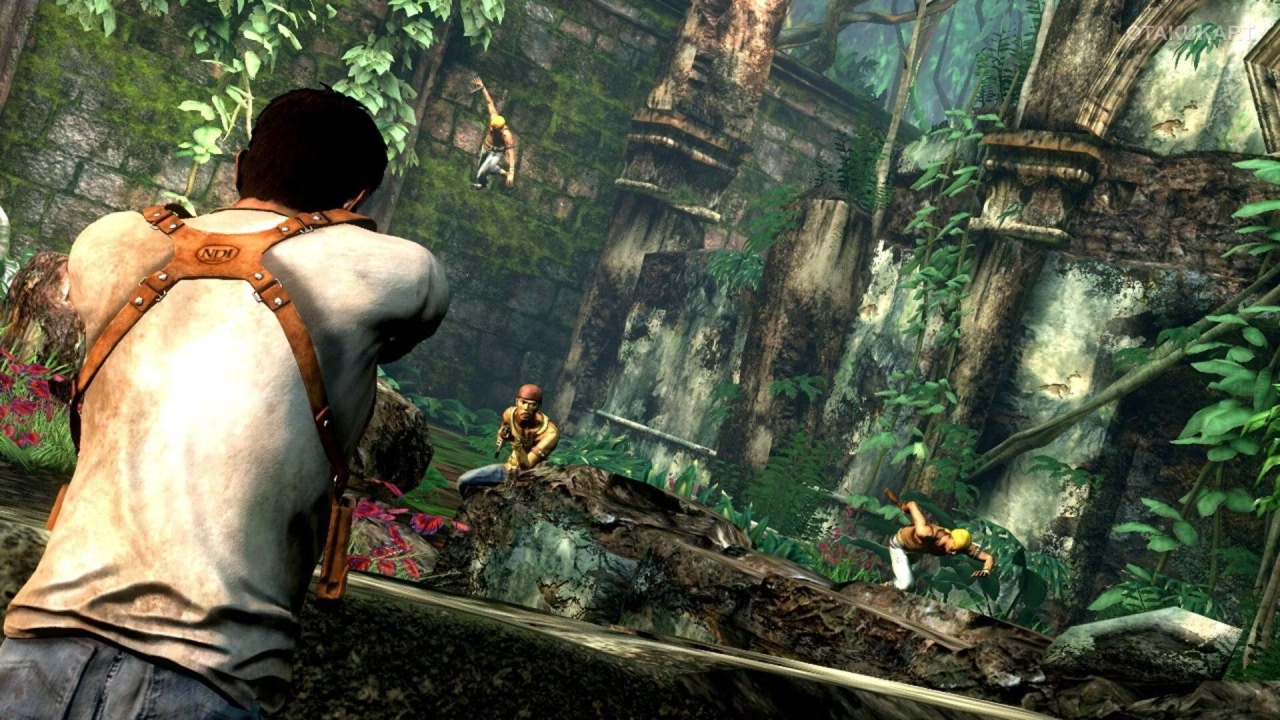
The original Uncharted: Drake’s Fortune reportedly used a controversial approach to difficulty that was designed not only to challenge players, but also to slow down those who were progressing too quickly. Former Naughty Dog designer Benson Russell has explained that the unusual system was introduced partly because the studio feared the PlayStation 3 adventure was simply too short.
Speaking to FRVR, Russell recalled that the development team initially realized the campaign could be completed in roughly five hours.
“When we were done, it’s like, this is a five-hour game.”
That created an immediate commercial concern for a full-priced game without multiplayer.
“We can’t charge 60 bucks for a five-hour game with no multiplayer! People are going to be pissed off!”
Uncharted’s Dynamic Difficulty Was Built Around Playtime
Russell explained that Naughty Dog subsequently implemented dynamic difficulty to control the pace of encounters. Rather than simply adjusting the experience according to how skilled a player appeared to be, the original system primarily looked at how quickly players completed combat encounters.
The team conducted focus testing and established average completion times for individual encounters. If a player finished an encounter faster than the expected average, the game would begin increasing the difficulty.
Russell summarized the system’s original purpose bluntly:
“It’s key thing was to slow the player down if they were too good.”
The system was therefore less about making every player’s experience perfectly tailored to their abilities and more about preventing skilled players from rushing through the campaign.

Russell said the feature initially helped Naughty Dog find an appropriate balance, but its purpose shifted during development toward extending the amount of time players spent progressing through the game.
Uncharted 2 and 3 Changed How Dynamic Difficulty Worked
The approach was later refined for the sequels. Russell confirmed that dynamic difficulty was used across the first three Uncharted games, but Uncharted 2: Among Thieves and Uncharted 3: Drake’s Deception changed how the system responded to players.
“In the second and third ones it was tuned to match [you]. It wasn’t tuned to delay the game, or slow you down, it was tuned to match your skill level.”
That distinction helps explain why the later games’ difficulty systems felt less artificially paced. Instead of deliberately extending encounters for players who were performing well, the system was adjusted to provide a challenge more appropriate to individual skill.
Russell worked at Naughty Dog until 2015 and contributed to both the Uncharted and The Last of Us franchises. His comments offer an unusual look at the practical development decisions behind one of PlayStation’s most recognizable series, showing how concerns about campaign length influenced the original Uncharted’s gameplay design.