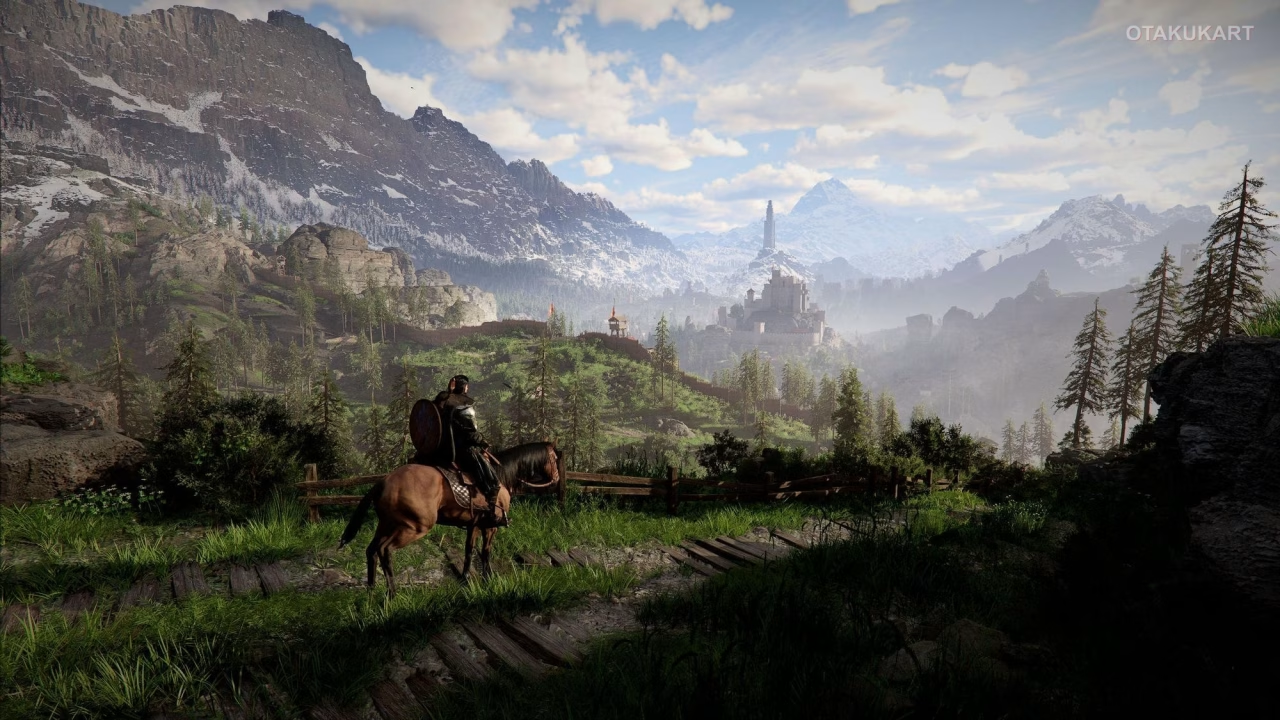
Pearl Abyss has offered one of its most detailed looks yet at the development philosophy behind Crimson Desert, revealing why the studio chose to build the game’s open world before creating its quests.
Speaking at CEDEC 2026, Japan’s largest game developer conference, Crimson Desert Design Office leads Doo Seung-bin and Kim Hyun-kyum explained how a team of around 200 developers tackled a project that would normally require a much larger workforce.
Rather than relying on a traditional quest-driven structure, Pearl Abyss focused on making the world enjoyable to explore on its own. Kim Hyun-kyum said the studio wanted players to feel rewarded regardless of whether they were following the main story, explaining,
“Exploration itself had to feel like real gameplay, with quests adding context and narrative on top of that.”
The presentation highlighted the production methods that allowed the team to complete the ambitious open-world RPG while also discussing the lessons learned from the approach.
Pearl Abyss flipped the traditional open-world design process
According to Kim Hyun-kyum, many open-world games begin by designing quests and then building the surrounding environments to support those objectives. Pearl Abyss decided to reverse that formula for Crimson Desert.
“We wanted the open world itself to be the primary source of gameplay,”
Kim explained during the CEDEC presentation. Instead of waiting for quests to define each location, the developers first created a world filled with exploration opportunities, enemies, wildlife, puzzles, and interactive systems. Story content was then layered on top of those areas rather than serving as their foundation.
Both player experience and production efficiency drove the philosophy. Kim explained that the previous quest-first workflow created long production chains where changes to quests often forced teams to rebuild environments and gameplay content. By creating the world’s playable foundation first, multiple departments could work simultaneously instead of waiting for one another.
This “world-first” pipeline also relied on a layered design structure. Separate environment, gameplay, and meta-game layers could be developed independently before being combined, making it easier to fill the vast world without manually crafting every encounter.
A 200-person team relied on scalable production instead of more developers
During the presentation, Doo Seung-bin revealed that Crimson Desert spent roughly seven years in development. Despite the scale of the project, the team remained relatively small compared to many modern AAA open-world productions.
“Our team was about 200 people, much smaller than most teams building open worlds of this caliber,”
Doo said. Rather than expanding the workforce, the studio focused on creating scalable production systems.
“Increasing productivity wasn’t just an option—it was the only way to finish the project.”
Those systems centered on three principles: fast iteration, maintainability, and parallel workflows. The developers also used procedural generation through Houdini to place large-scale world elements such as roads and rivers, while manually crafting important locations to preserve memorable gameplay moments. Designers further benefited from custom XML-based tools that allowed them to prototype gameplay systems without depending on programmers for every change.
Developers admit the approach also affected the story
While Pearl Abyss praised the productivity benefits of its workflow, the developers acknowledged that the system wasn’t without drawbacks.
Kim admitted that building exploration-focused environments before integrating the narrative sometimes weakened the game’s storytelling.
“Some players felt the story progression wasn’t as intense or cohesive as they had hoped,”
he said.
“We listened to that criticism, and honestly, I think our development method played a part in that.”
The studio is now exploring ways to strengthen narrative delivery without sacrificing the production efficiency that helped complete the project. According to Kim, maintaining that balance remains one of the team’s biggest development goals moving forward.
The comments were shared during Pearl Abyss’ presentation, “Crimson Desert: Building a Large-Scale Open World Development Process,” at CEDEC 2026 in Yokohama and first reported by Inven Global. The presentation offered developers an in-depth look at the production techniques behind one of 2026’s biggest open-world releases while openly discussing both the successes and compromises involved in creating it.
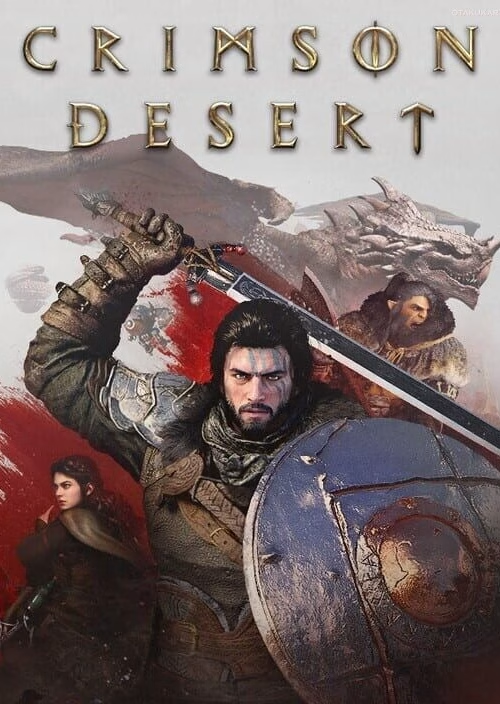
| Platforms | PC, PlayStation 5, Xbox Series X/S |
|---|---|
| Developer | Pearl Abyss |