
Saber Interactive chief creative officer Tim Willits has offered a blunt explanation for the studio’s approach to game development, arguing that Warhammer 40,000: Space Marine 2 demonstrates how controlling development costs can produce major commercial results.
According to Willits, Space Marine 2 cost roughly one-third as much to develop as a major game from a North American studio released around the same period, while selling 11 million more copies.
Speaking to GamesIndustry.biz, Willits also revealed that Saber now has
“no real development in North America any more.”
The company continues to maintain its US headquarters and publishing operations, but its development teams are distributed across international studios.
Why Saber Believes Lower Development Costs Matter
Willits argued that the cost of employing large teams in North America has become increasingly difficult for AAA publishers to sustain. He estimated that major North American development studios can burn through more than $2 million every month, meaning a five-year production could potentially spend around $120 million on salaries alone.
Saber instead operates development teams across countries including Serbia, Armenia, Georgia, Spain, Portugal, Sweden, Argentina and Australia. Willits said the company is willing to search globally for talent rather than assuming that the best programmers, artists or animators need to work in California.
“You don’t need to be in California to be a brilliant programmer or artist or animator,”
Willits told GamesIndustry.biz. He also pointed to SnowRunner as another example of Saber’s cost-conscious approach, saying the game cost approximately $6 million to develop while eventually generating hundreds of millions of dollars in revenue.
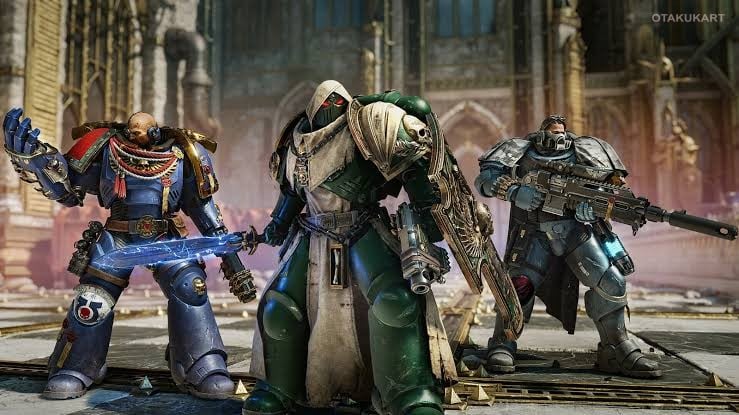
That philosophy was also applied to Space Marine 2, which became one of Saber’s biggest successes. The game launched in September 2024 for PlayStation 5, Xbox Series X|S and PC, with Saber and Focus Entertainment continuing to support it with new content.
Willits was particularly critical of what he considers excessive spending across the AAA market.
“Sometimes I play these games – I won’t mention the game – and I can just see the wasted money,”
he said, before arguing that Space Marine 2 achieved substantially more commercial success without requiring a $150 million development budget.
The comments underline Saber’s broader strategy of keeping teams flexible and projects appropriately scoped. Rather than relying on enormous teams dedicated to a single production, the company shifts developers between projects as their workloads change, allowing it to control costs while continuing to pursue major licensed properties.
Space Marine 2 has since surpassed 12 million players, according to Focus Entertainment, further strengthening Willits’ argument that a blockbuster game does not necessarily need an enormous development budget to reach a massive audience.