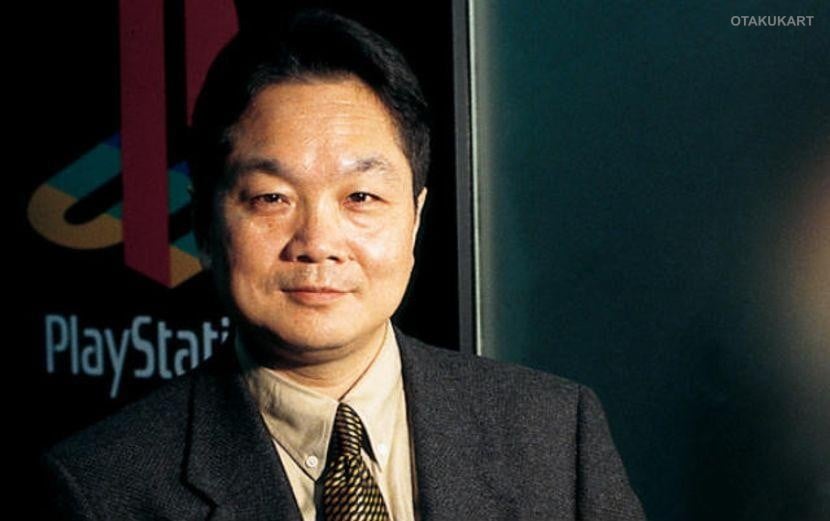
Ken Kutaragi, widely known as the Father of PlayStation, has reaffirmed his admiration for Nintendo despite the companies becoming competitors following the collapse of their original console partnership. During a recent interview with The Game Business, Kutaragi was asked whether he had forgiven Nintendo for the events that eventually led Sony to develop its own gaming platform. His response was straightforward:
“I love Nintendo.”
The statement offers a different perspective on one of the most significant business splits in video game history. Sony and Nintendo initially worked together on a CD-based gaming system before their partnership fell apart, paving the way for the original PlayStation. The fallout is often presented as the reason behind Sony’s entry into the console market, but Kutaragi has pushed back against the idea that the PlayStation was created as an act of revenge.
In the interview, published on November 24, 2026, Kutaragi also discussed his early work with Nintendo, Microsoft’s decision to enter the console business, and the possibility that traditional gaming hardware could eventually disappear.
KEN KUTARAGI SAYS PLAYSTATION WAS NEVER ABOUT GETTING REVENGE ON NINTENDO
Kutaragi explained that he had a close working relationship with Nintendo long before Sony became one of its biggest competitors. He recalled travelling by bullet train to Nintendo’s headquarters every week while working on their collaboration.
“We never think about Sony as a separate entity,”
he said, describing how he approached the partnership. He also recalled that one Nintendo employee even assumed he worked for the company because of how frequently he visited.
Their relationship included Kutaragi’s work on the Super Famicom’s sound hardware. He proposed a more advanced audio solution, which Nintendo eventually adopted for the console. He later pushed for a CD-based system that could offer an alternative to cartridges, although Nintendo remained committed to its existing approach.
The disagreement eventually contributed to the collapse of their planned partnership. Nintendo moved towards working with Philips on CD technology, while Sony continued exploring its own gaming hardware.
However, Kutaragi rejected the suggestion that Sony developed PlayStation to retaliate against Nintendo.
“Many of the media said, ‘Sony suffered a betrayal, they will take some revenge.’ No. Totally no. We are all friends,”
he explained.
He added that he still enjoys Nintendo’s games and maintained that his relationship with the people he worked with there was positive.
PLAYSTATION CREATOR ALSO WANTED MICROSOFT TO DEVELOP XBOX
Kutaragi also shared an interesting detail about Microsoft’s entry into the console industry. Before the original Xbox arrived, he met with Microsoft’s leadership and discussed Sony’s work on real-time 3D graphics for home entertainment.
Microsoft reportedly offered Sony free hard drives and licensing rights, but Kutaragi turned down the proposal. He explained that he had another intention behind rejecting the offer.
“I had a dream: if I said no, they would start to bring in another games platform after PC,”
he said. Kutaragi described this as his “secret intention,” suggesting he wanted Microsoft to enter the gaming hardware market rather than simply become a technology partner for Sony.
Microsoft eventually launched the original Xbox in 2001, establishing another major competitor in the console industry. Kutaragi said the companies subsequently worked together to expand the gaming market.
KUTARAGI QUESTIONS WHETHER TRADITIONAL GAME CONSOLES HAVE A FUTURE
Beyond his memories of Nintendo and Xbox, Kutaragi discussed the rising cost of gaming hardware and how it could affect the industry’s future. He argued that modern consoles have become increasingly expensive, partly because of the high cost of graphics hardware and the industry’s move towards PC-like architectures.
“Currently the machines are super expensive,”
he said, describing the situation as unhealthy for the industry. He also pointed to the growing costs of PCs, which have become increasingly powerful but expensive to build.
Kutaragi believes artificial intelligence could eventually change how computing hardware works. He suggested that future AI systems may become smaller and more energy-efficient, connecting through lightweight platforms rather than relying on large dedicated machines.
“The age may be coming where we don’t need any consoles,”
he said. He clarified that this was his personal view, not an official statement from Sony Interactive Entertainment.
He also expressed optimism about AI’s potential to transform entertainment, suggesting that developments in the technology could arrive much sooner than expected.
KUTARAGI RECALLS HOW QUICKLY DEVELOPERS BROUGHT GAMES TO PLAYSTATION
The interview also revisited the original PlayStation’s early development and the support it received from third-party studios. Kutaragi recalled that Namco managed to bring its arcade racing game Ridge Racer to the PlayStation in just a couple of months.
He also highlighted Tamsoft’s work on Toshinden, explaining that the texture-mapped fighting game took close to one month to develop with fewer than 10 people. Sony provided developers with guidebooks, sample code, and tools to help them understand the console’s hardware capabilities.
These examples reflected Kutaragi’s efforts to make PlayStation an attractive platform for developers while establishing 3D gaming as a new form of home entertainment.
His latest comments offer a glimpse into the relationships and decisions that helped shape the modern console market. Despite Sony and Nintendo’s long history as competitors, Kutaragi’s position remains clear: he still loves Nintendo and does not view the creation of PlayStation as an attempt to get even with the company.