

The ongoing debate around whether multiplayer titles are “dead” has resurfaced, with games like Arc Raiders and Marathon facing criticism over fluctuating player counts. However, a senior voice from Palworld developer Pocketpair is pushing back against what he calls a widespread misunderstanding of player metrics.
John “Bucky” Buckley, global community manager and publishing head at Pocketpair, recently addressed the issue in a public post, arguing that concurrent player numbers alone do not determine a game’s success or longevity. His remarks come amid growing online discourse labeling several live-service and extraction shooters as “dead” shortly after launch or during player dips.
Why Concurrent Player Counts Can Be Misleading
Buckley’s core argument centers on how gamers interpret CCU (concurrent users). According to him, many players assume that a drop in visible player numbers reflects a shrinking or inactive player base, which isn’t necessarily true.
“Do many fundamentally misunderstand what CCU means?”
Buckley questioned in his post. He explained that player turnover happens constantly, meaning the people online at one moment are not always the same individuals present minutes later.
“This is why DAU and MAU… the tracking of ‘unique players’ over a period of time, is significantly more important,”
he added. In other words, long-term engagement metrics offer a clearer picture than moment-to-moment player counts.
He illustrated this with a gameplay example, noting that even in a game with thousands of daily users, players might only encounter a small fraction of the community during a session.
Buckley also pointed out that the “dead game” label is often amplified for attention rather than accuracy. He suggested that dramatic claims about player decline tend to generate clicks and engagement online, even if they lack context.
“Yes, we want games to have millions… but there comes a point where games are prematurely being called ‘dead’ because it just gets the views,”
he said. The statement highlights a growing trend where social media discourse shapes perception more than actual player data.
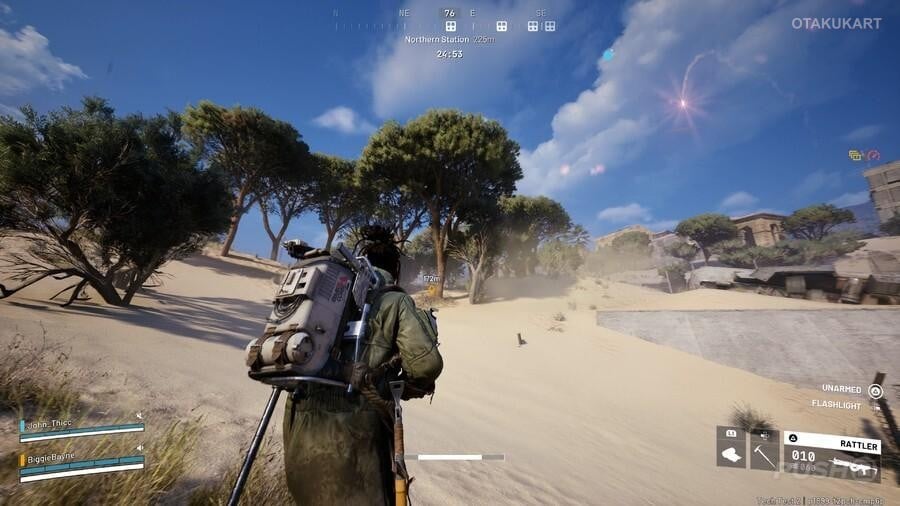
He further described the debate as exhausting, stating,
“One side… is bad actors just throwing out Steam charts… and the other side are just fans who are worried that the game they love is on the way out.”
This reflects a broader tension within gaming communities, where data visibility has made player trends more transparent—but not necessarily better understood.
Smaller Player Bases Can Still Sustain Games
A key takeaway from Buckley’s comments is that not every successful multiplayer game needs massive numbers. He pointed to niche titles that continue to thrive despite relatively low concurrent player counts.
“Most games can chug along with a few thousand players every day and be just fine,”
he explained, referencing Foxhole as an example of a long-running title with a dedicated community rather than blockbuster-scale numbers.
This perspective challenges the assumption that only top-charting games are viable. In reality, many multiplayer titles operate sustainably with smaller, consistent audiences.
While defending the broader industry, Buckley did acknowledge that some live-service games do fail outright. “I’m not denying that some games do ‘die.’ Some games DO die,” he admitted.
Recent years have seen high-profile shutdowns and underperforming releases, fueling skepticism around the live-service model. However, Buckley emphasized that these cases are exceptions rather than the rule.
“There’s thousands of games a year, and to blow the ‘DEAD GAME’ horn at them all is disingenuous,”
he said, calling for a more balanced and informed discussion.
Ultimately, Buckley’s message is a push for nuance. Instead of relying on surface-level metrics like CCU, he encourages players and commentators to consider broader indicators of a game’s health, including engagement trends and community retention.
“Not every game needs an hourly look at Steam charts,”
he concluded, reinforcing the idea that constant scrutiny can distort reality.
As live-service gaming continues to evolve, his comments highlight a crucial point: player numbers fluctuate, but that alone doesn’t determine whether a game is thriving or fading.

| Release Date | February 14, 2023 |
|---|---|
| Platforms | Oculus Quest, HTC Vive, Valve Index |
| Developer | Vertigo Games |