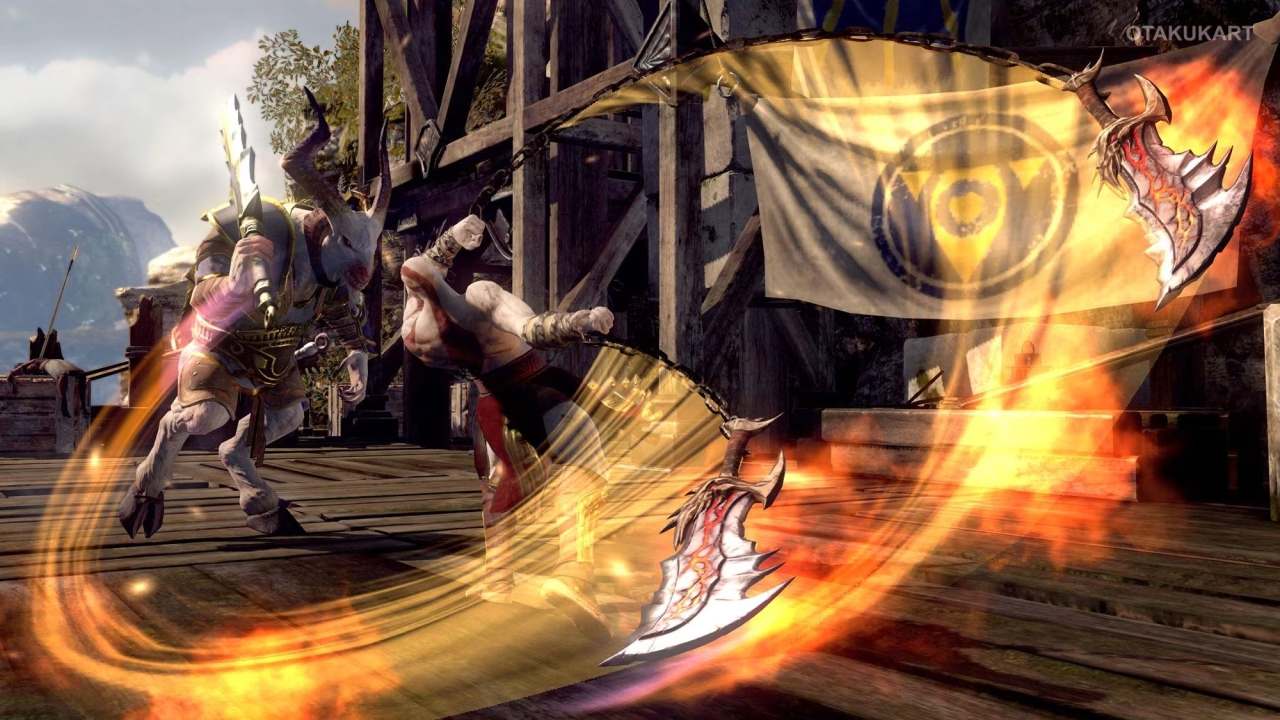
An unofficial NVIDIA DLSS 5 modification has produced an unexpected result in God of War: Ascension running through the RPCS3 PlayStation 3 emulator. Instead of improving performance, the experimental implementation reportedly places such a heavy load on the GPU that the game can no longer consistently maintain its native 60 FPS target.
The testing is particularly interesting because God of War: Ascension can already run at a stable 60 FPS through standard RPCS3 emulation without the additional AI rendering technology. The results therefore highlight the considerable hardware cost of applying DLSS 5 to an older game that was never designed around the technology.
DLSS 5 Creates Visual Improvements at a Major Performance Cost
The tests examined multiple neural-rendering profiles, with different presets producing noticeably different results. One profile increased sharpness while darkening the image and adding a warmer brown tint, while another delivered a softer and more saturated presentation. Increasing the AI processing level placed even greater pressure on the GPU’s Tensor Cores and cooling system.

The biggest problem was performance. Activating the unofficial DLSS 5 pipeline caused God of War: Ascension to lose its previously stable frame rate, with the game dropping below 60 FPS across many areas.
Some visual issues also remained despite the additional processing. Kratos’ face can still appear blurry when viewed from a distance, with the testing reportedly finding that returning to the game’s native 720p resolution was necessary to eliminate the particular issue.
The results arrive shortly after NVIDIA officially launched DLSS 5, which uses 3D-Guided Neural Rendering to add more realistic lighting and material detail to supported games. NVIDIA describes the technology as a major step toward more photorealistic real-time graphics, although its current hardware demands have also generated criticism.
Because this God of War: Ascension implementation is unofficial, the results should not be treated as representative of optimized DLSS 5 performance in officially supported games.