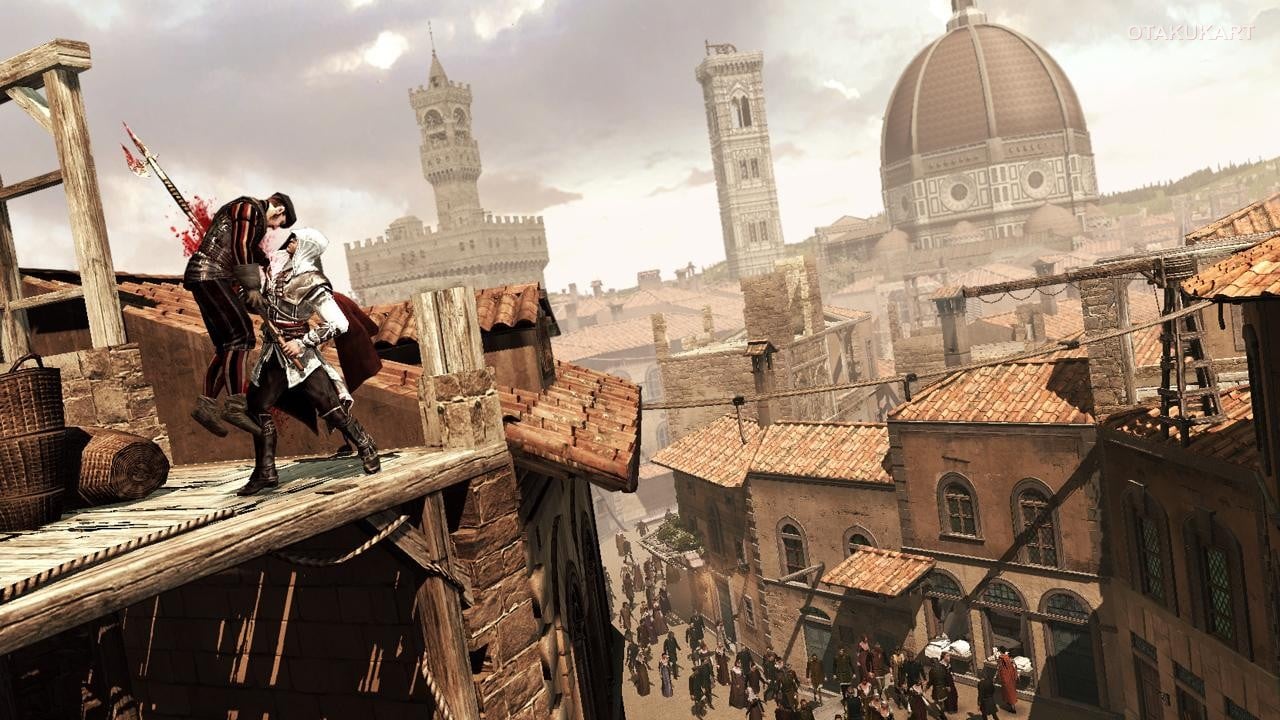
Assassin’s Creed II could have been a very different game. According to longtime Assassin’s Creed veteran Jean Guesdon, Ubisoft originally envisioned Ezio Auditore’s story extending from his childhood all the way to his rise as Mentor of the Assassins, meaning much of what eventually became Assassin’s Creed: Brotherhood was initially intended for the second game.
Guesdon discussed the original plans in an interview with Retro Gamer Issue 287. He explained that the team eventually realized the proposed story was simply too large to deliver properly within the development schedule.
“When we designed Assassin’s Creed II, Ezio’s story arc was roughly from his birth to him becoming the mentor.”
Ezio ultimately reaches that position near the end of Brotherhood, which means Ubisoft’s early concept for Assassin’s Creed II was considerably more ambitious than the game that eventually shipped.
Why Assassin’s Creed II Couldn’t Tell the Entire Ezio Story
The biggest obstacle was development time. Guesdon explained that delivering Ezio’s complete journey in a single game would have been extremely difficult given the roughly two-year production period.
“In practice this was way too ambitious to deliver properly in one game developed in two years.”
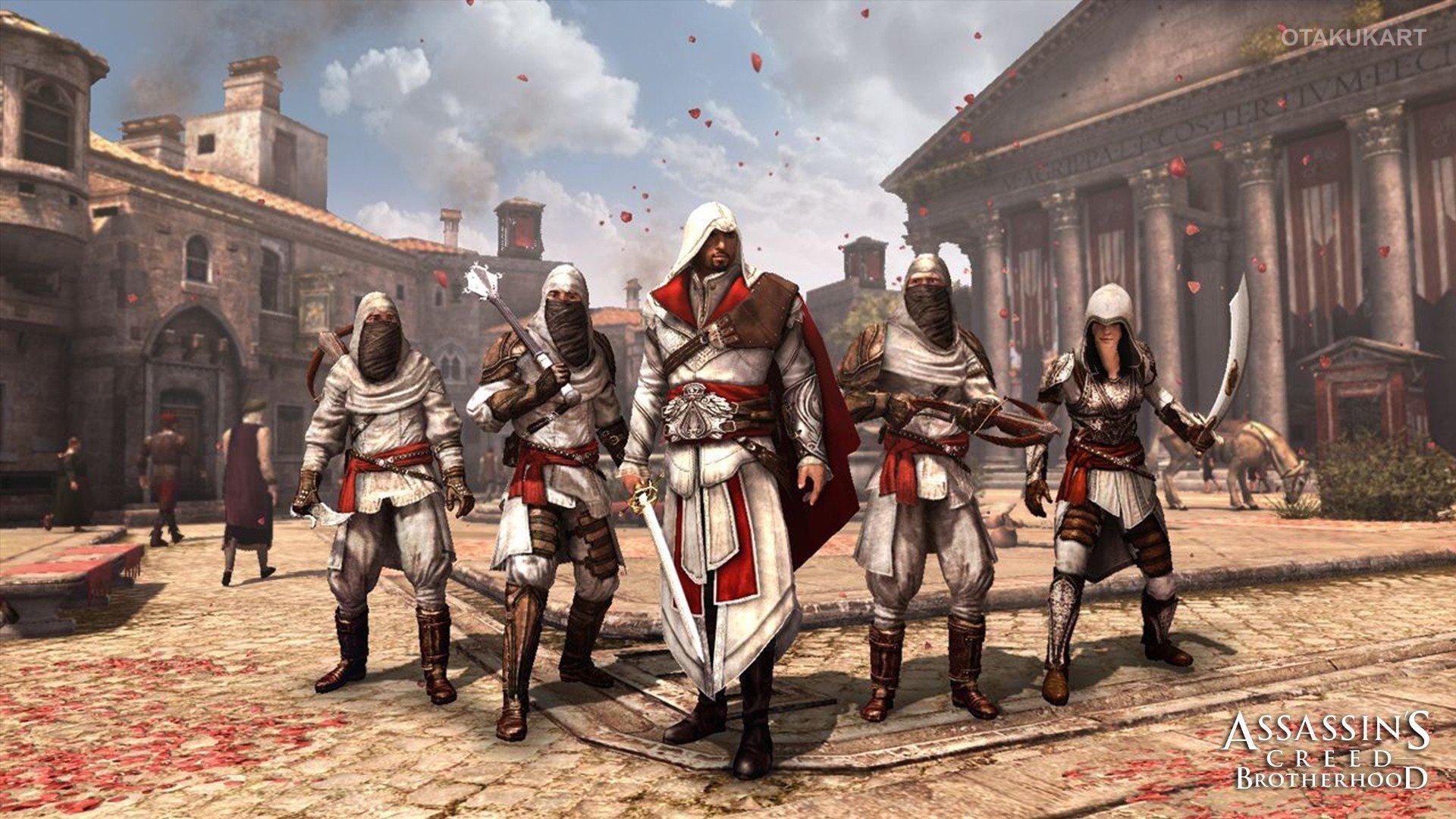
Rather than abandoning those ideas, Ubisoft used them as the foundation for expanding Ezio’s story across additional games. Brotherhood continued directly from Assassin’s Creed II, moving Ezio into a leadership role while introducing Rome as the central setting and expanding the Assassin Brotherhood mechanics.
Ezio’s storyline then concluded with Assassin’s Creed: Revelations in 2011. This ultimately created one of gaming’s most recognizable trilogies, even though the three-game structure was not necessarily the original plan.
Guesdon’s own history with the franchise gives his comments additional context. He worked on Assassin’s Creed II as a game designer and later contributed to Brotherhood, Revelations, Assassin’s Creed III, Black Flag and other entries. He eventually became creative director of both Black Flag and Origins. Ubisoft appointed him Head of Content for Assassin’s Creed in 2026, placing him in charge of the franchise’s overall creative direction.
Ubisoft Expanded Assassin’s Creed Through Multiple Teams
Guesdon also explained how Ubisoft eventually scaled the franchise’s production model. Rather than developing every game sequentially, different Ubisoft studios began working on projects simultaneously, allowing the series to maintain a much faster release schedule.
“The games are not developed one after another. They are always cascaded so that we can work in tandem.”
That approach helped Assassin’s Creed transition from the relatively contained productions of its early years into much larger projects such as Valhalla and Shadows.
For Ezio, however, dividing the original concept across multiple games ultimately allowed Ubisoft to give his character more room to develop. What began as an overly ambitious plan for Assassin’s Creed II therefore became the foundation for one of the franchise’s most celebrated story arcs.