
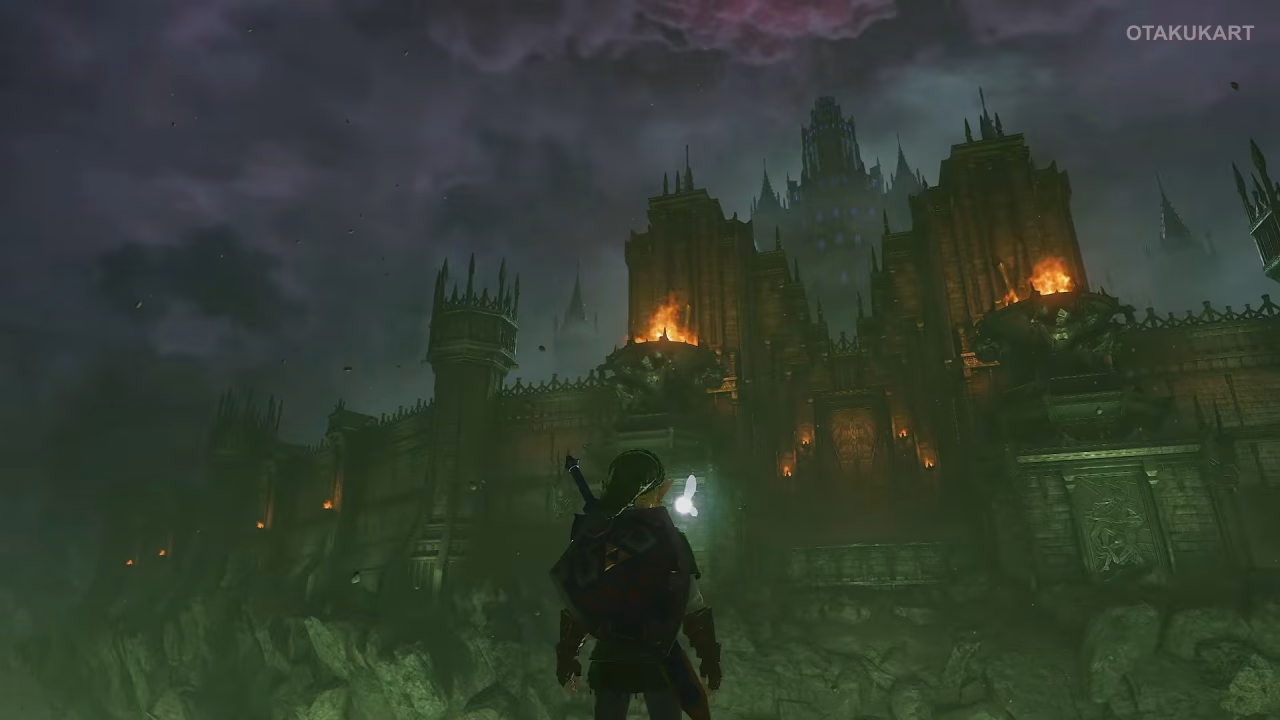
Nintendo’s The Legend of Zelda: Ocarina of Time remake is shaping up to be one of the most technically ambitious updates to a classic Nintendo game. The upcoming Nintendo Switch 2 release reportedly targets 60 frames per second (FPS), doubles the original game’s frame rate, and supports resolutions of up to 1440p when played in docked mode.
The technical findings come from a detailed analysis by Digital Foundry, which examined the remake’s performance, visual improvements, and underlying technology. The results suggest Nintendo has rebuilt substantial parts of the original experience rather than simply increasing its resolution.
Dynamic Resolution and Visual Improvements on Switch 2
According to the analysis, the remake uses dynamic resolution scaling, reaching up to 1440p in docked mode and dropping to approximately 1080p when required. Handheld mode reportedly operates between 720p and 1080p, with reduced texture filtering and slightly shorter level-of-detail distances.
Interestingly, the game does not appear to use NVIDIA DLSS. Instead, it reportedly combines SMAA anti-aliasing with AMD’s FSR 1 upscaling technology.
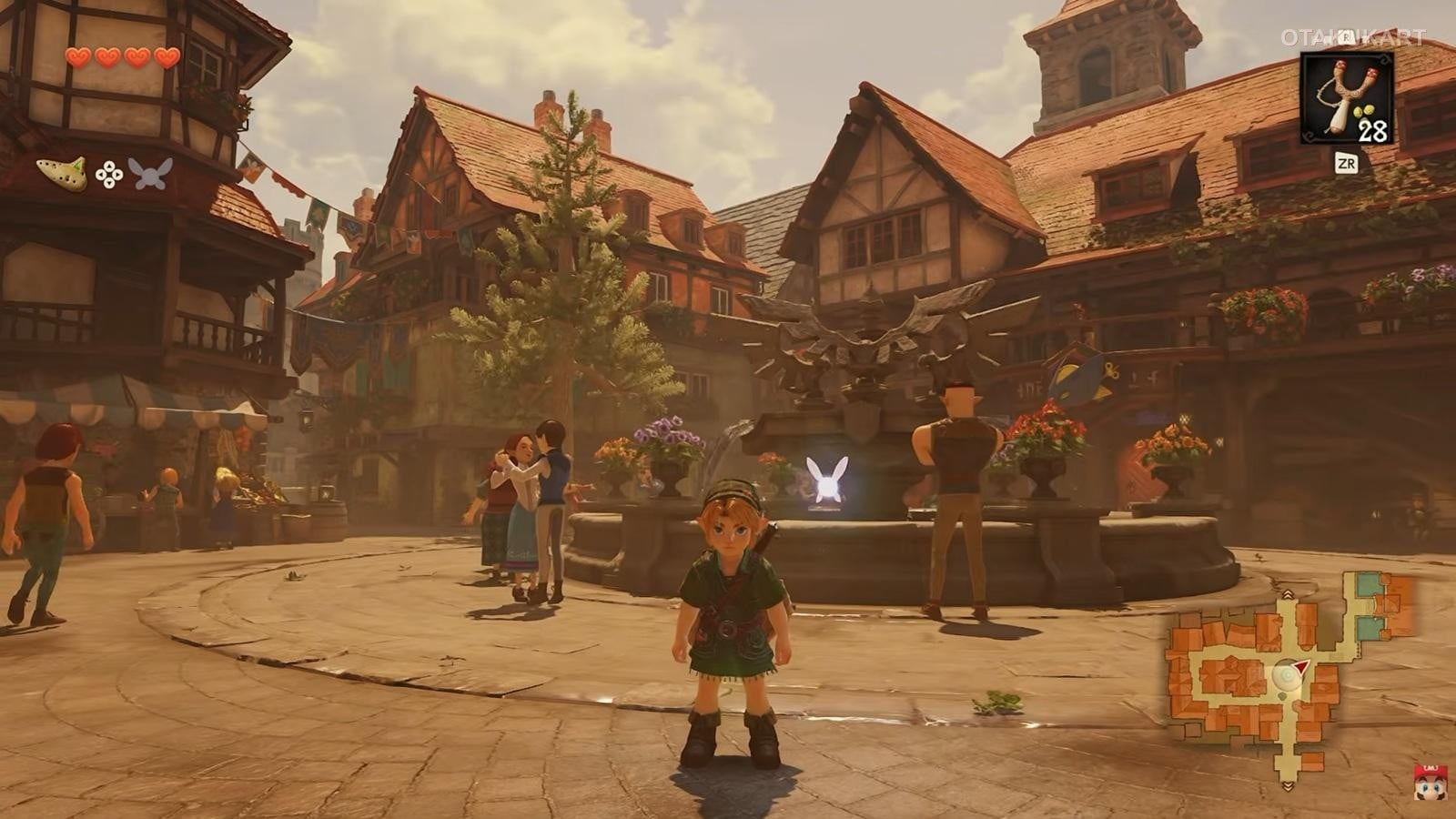
The visual overhaul also introduces physically based materials, improved global illumination, detailed architecture, and more advanced ambient occlusion. Environmental elements react to Link’s movement, while Navi now functions as an actual light source.
Nintendo has also redesigned several environments, including Hyrule Castle Town, which is now fully seamless. Breaking objects produces physical fragments that remain in the environment, while climbing mechanics allow Link to move in all directions.
The original Nintendo 64 version ran at 20 FPS, while the Nintendo 3DS remaster offered 30 FPS. The Switch 2 remake’s reported 60 FPS target represents a substantial improvement.
Nintendo has additionally confirmed fully voiced cutscenes, expanded dialogue, and symphonic orchestral music through its official announcement. The remake launches November 5, 2026, exclusively on Nintendo Switch 2.
| Release Date | November 21, 1998 |
|---|---|
| Platforms | Nintendo 64, Nintendo GameCube, iQue Player, Nintendo 3DS +1 more |
| Developer | Nintendo EAD |
| Director | Eiji Aonuma Yoshiaki Koizumi |
| Writer / Narrative | Nintendo EAD Toru Osawa |