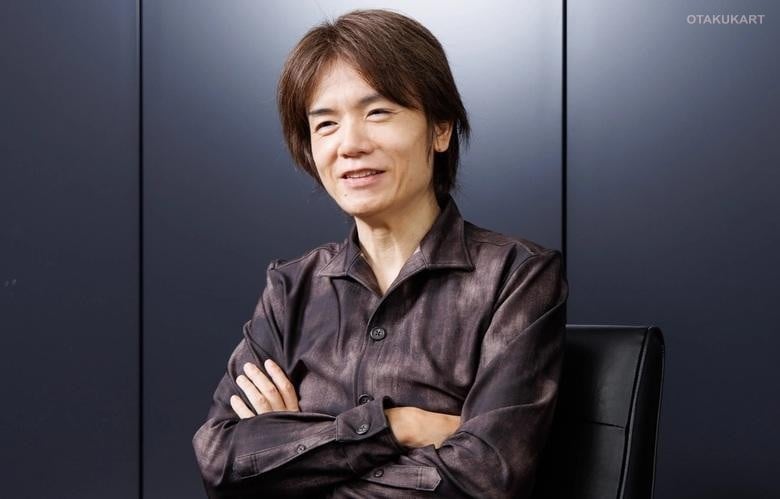
Masahiro Sakurai, the acclaimed director behind Super Smash Bros. and Kirby, has warned that artificial intelligence could worsen the video game industry’s growing originality problem. In a recent interview with Denfaminicogamer, the veteran developer argued that AI could accelerate the production of derivative games, flooding digital storefronts with titles that offer little innovation and may struggle to deliver playable experiences.
Sakurai discussed the challenges of creating distinctive games and explaining their appeal to publishers and development teams. His comments come as the number of games released on Steam continues to grow, raising questions about discoverability and the impact of generative AI on game development.
Sakurai previously helped establish the Game Designers Award at the Tokyo Game Show in 2010 to recognize creative innovation. After 16 years of involvement, he announced the initiative’s end, citing difficulties finding an appropriate successor to continue its work.
MASAHIRO SAKURAI EXPLAINS WHY ORIGINAL GAME DESIGN IS DIFFICULT
Sakurai believes originality requires more than improving an existing concept. Developers must create mechanics that offer players something genuinely new, then communicate why those ideas are enjoyable to publishers and development teams.
“The first important thing is whether or not you can come up with an original idea,”
Sakurai explained in the interview with Denfaminicogamer.
He also highlighted the difficulty of pitching unfamiliar gameplay systems when there is no established comparison to help others understand their appeal. This creates a challenge for both developers trying to secure support and publishers attempting to identify a game’s selling points.
According to Sakurai, the industry frequently describes new releases as similar to established games. While familiar concepts can help audiences understand a product, he believes genuine originality requires creating experiences players have not yet realized they want.
“Originality means you have to create something that isn’t already what people are after,”
he said, emphasizing how difficult it can be to develop something truly distinctive.
AI COULD ACCELERATE THE SPREAD OF COPYCAT GAMES
Sakurai pointed to Steam’s growing release numbers to explain why he expects the problem to intensify. When he established the Game Designers Award in 2010, approximately 275 games were released on Steam annually. That figure has since risen to more than 19,000 titles per year, according to the figures discussed in the interview.
“Although 19,000 titles is a lot, I think that number will only grow from now on, because AI will be used to turn them out,”
Sakurai warned. He predicted that many of these releases could be unplayable or difficult for players to discover among the growing volume of games.
In the interview, he also cited the spread of imitators following the release of Librarian, a puzzle game about reorganizing books in a magical library. Sakurai mentioned similar titles, including Supermarket Chaos and Needle in a Haystack Simulator, as examples of how straightforward gameplay concepts can inspire numerous imitations.
His concern is that generative AI could make reproducing existing mechanics easier, increasing the number of games that resemble one another instead of introducing distinctive ideas.
WHY SAKURAI BELIEVES HUMAN CREATIVITY WILL REMAIN IMPORTANT
Sakurai distinguished between recreating an existing creative style and inventing something that has never existed before. He used acclaimed developer Fumito Ueda, known for ICO and Shadow of the Colossus, to illustrate his point.
AI might eventually analyze Ueda’s earlier games and produce something with a similar atmosphere, Sakurai suggested. However, he argued that it could not anticipate the new creative direction Ueda might choose for a future project.
For Sakurai, this distinction highlights why original thinking remains essential to game development. His warning is not simply about the number of AI-generated releases, but about whether developers can continue creating experiences that move beyond established formulas.
As generative AI becomes more accessible, his comments raise a broader question for the industry: how can genuinely innovative games stand out when producing familiar ideas becomes increasingly easy?