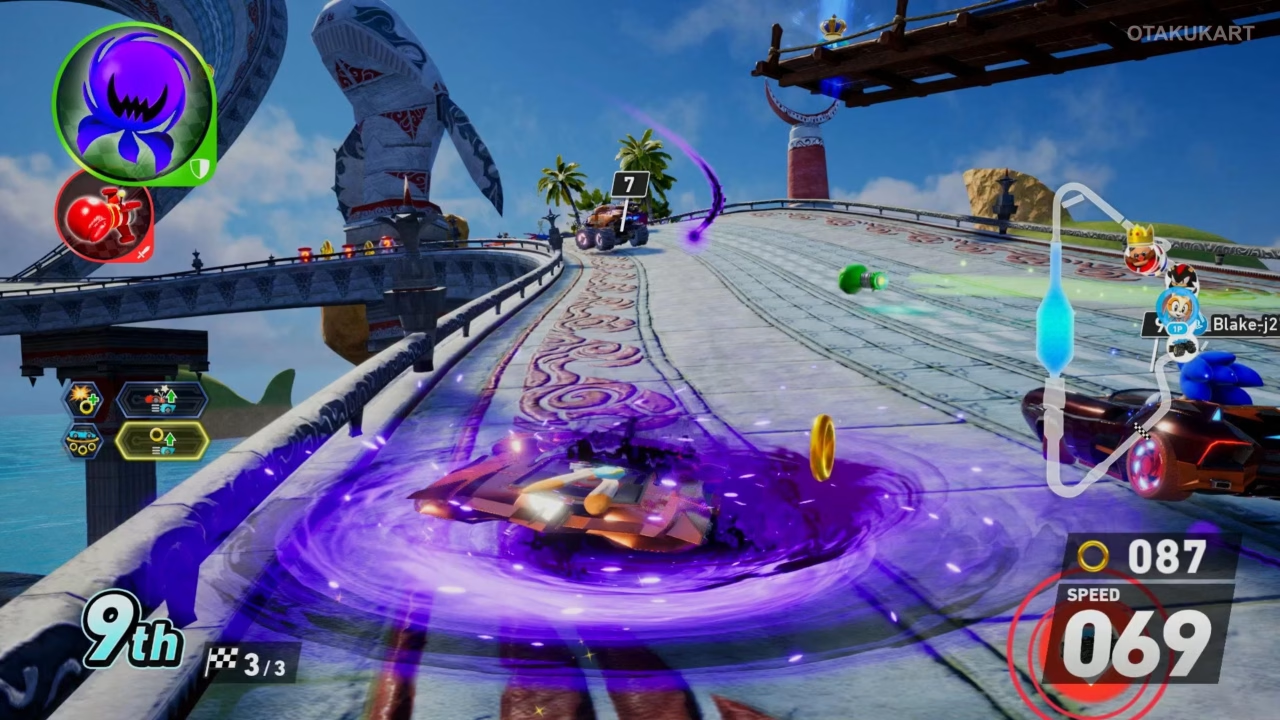
Sega has acknowledged that two of its recent high-profile releases—Sonic Racing: CrossWorlds and Shinobi: Art of Vengeance—failed to meet internal sales expectations, despite receiving strong critical and user reviews.
The update comes from the company’s latest business report, where Sega also revealed plans to significantly overhaul its marketing strategy by leaning heavily into influencers and community-driven promotion.
The move signals a broader shift in how the publisher intends to compete in an increasingly digital and engagement-driven gaming market.
Strong Reviews, But Sales Fall Short
Both titles performed well critically, suggesting that quality was not the issue behind their underperformance. Sonic Racing: CrossWorlds launched with more than one million units sold and achieved a Metacritic score of 82, alongside a strong user rating of 8.6. Similarly, Shinobi: Art of Vengeance earned even higher critical praise, posting a Metacritic score of 87 and a user score of 8.3.
However, these positive metrics did not translate into the level of commercial success Sega had projected. In its report, the company admitted that the results “fell short of expectations,” highlighting a disconnect between critical reception and market performance.
This gap has prompted Sega to reevaluate not just its sales projections, but also how it promotes its games globally.
A key takeaway from Sega’s business update is its planned shift toward influencer-driven marketing. The company emphasized the importance of building stronger connections with gaming communities and leveraging third-party voices to amplify its titles.
Sega described this transition as a “significant transformation” in both its “organizational structure and mindset,” with a renewed focus on “building and expanding fandom that drives sales.” The company further noted that it aims to increase “third-party recommendations, including those from influencers and users.”
This marks a departure from more traditional targeted advertising strategies, suggesting Sega sees greater long-term value in organic engagement and community endorsement.
Catching Up in Digital and Data-Driven Strategy
The shift also comes after Sega admitted earlier in 2026 that it has been lagging behind competitors in areas such as digital sales optimization and data-driven marketing. Rival Japanese publishers like Capcom have found significant success by embracing analytics and global digital strategies, something Sega is now looking to replicate.
As part of this effort, Sega is reviewing its current publishing structure, which has traditionally been divided by region. The company plans to transition toward a more unified global framework, allowing for more cohesive campaigns and better alignment across markets.
This restructuring is expected to play a crucial role in how future titles are marketed and launched.
Despite the recent sales disappointment, Sega’s upcoming lineup suggests the company remains confident about its future. According to the report, two unannounced “flagship IP” titles are scheduled for release before March 31, 2027.
These projects will join an already ambitious slate that includes titles such as Persona 6, Crazy Taxi: World Tour, Virtua Fighter Crossroads, Total War: Warhammer 40,000, Total War: Medieval III, and Alien: Isolation 2. Sega is also continuing to build momentum with previously announced games like Stranger than Heaven and Persona 4 Revival.
The company appears to be betting that a combination of strong IPs and improved marketing execution will drive better results moving forward.