
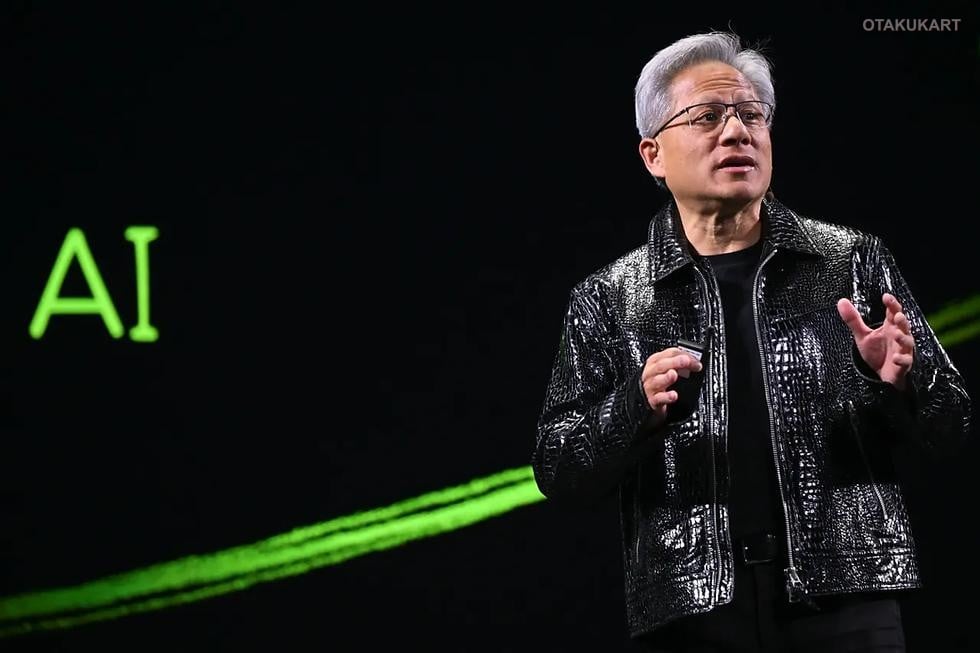
Nvidia CEO Jensen Huang has sparked a debate over the impact of artificial intelligence on education after arguing that people becoming worse at basic mathematics may not necessarily be a problem. Speaking with New York Times journalist Ezra Klein on The Ezra Klein Show, Huang acknowledged that AI can weaken the retention of skills such as long division and multiplication, but questioned whether those abilities will remain important in an AI-driven world.
The comments came during a discussion about research examining how students perform after gaining access to AI tools. Rather than disputing the possibility that AI could weaken certain skills, Huang agreed with the concern before offering a different interpretation of what those changes could mean for future generations.
Jensen Huang Questions Whether Basic Math Still Matters
Klein brought up research suggesting that students can complete academic work more efficiently with AI while struggling to retain the skills involved once the technology is removed. Huang agreed that this effect is real, pointing to the decline of basic mathematical skills as an example.
“Try to get a kid to do long division right now,”
Huang said during the interview.
“The multiplication table is starting to be forgotten. Doing square roots, my goodness. I mean, it’s just basic math is being forgotten. Does it matter?”
When Klein asked whether it actually matters, Huang gave a straightforward answer.
“Yeah. I don’t think it does. I don’t think it does,”
the Nvidia CEO responded. He argued that AI could lead society toward developing different abilities instead of maintaining every traditional skill.
Huang compared the shift to other everyday skills people have gradually stopped memorizing because technology makes them less necessary. He said he does not even remember his own phone number or ZIP code, suggesting that losing certain forms of memorization does not automatically represent a decline in human capability.
Huang Believes AI Could Shift What Humans Learn
The Nvidia CEO’s broader argument is that AI may change the definition of useful knowledge rather than simply make people less capable.
Huang suggested that people could lose some “finer intellectual dexterity” while becoming better at systems-level thinking. His position is that AI can take over repetitive or easily automated tasks, leaving humans to concentrate on abilities that become more valuable in an AI-driven economy.
The debate is particularly notable because Nvidia sits at the center of the AI boom. The company reported $193.7 billion in fiscal 2026 Data Center revenue, while its Gaming business generated $16 billion during the same period.
That financial reality adds another layer to Huang’s comments. Nvidia has a significant commercial interest in continued AI adoption, while Huang has consistently positioned himself as an AI optimist and pushed back against predictions of catastrophic outcomes.
The question raised by his comments, however, extends beyond Nvidia. If AI makes certain skills unnecessary, the difficult issue is deciding which skills society can safely afford to lose and which ones remain essential for independent thinking.