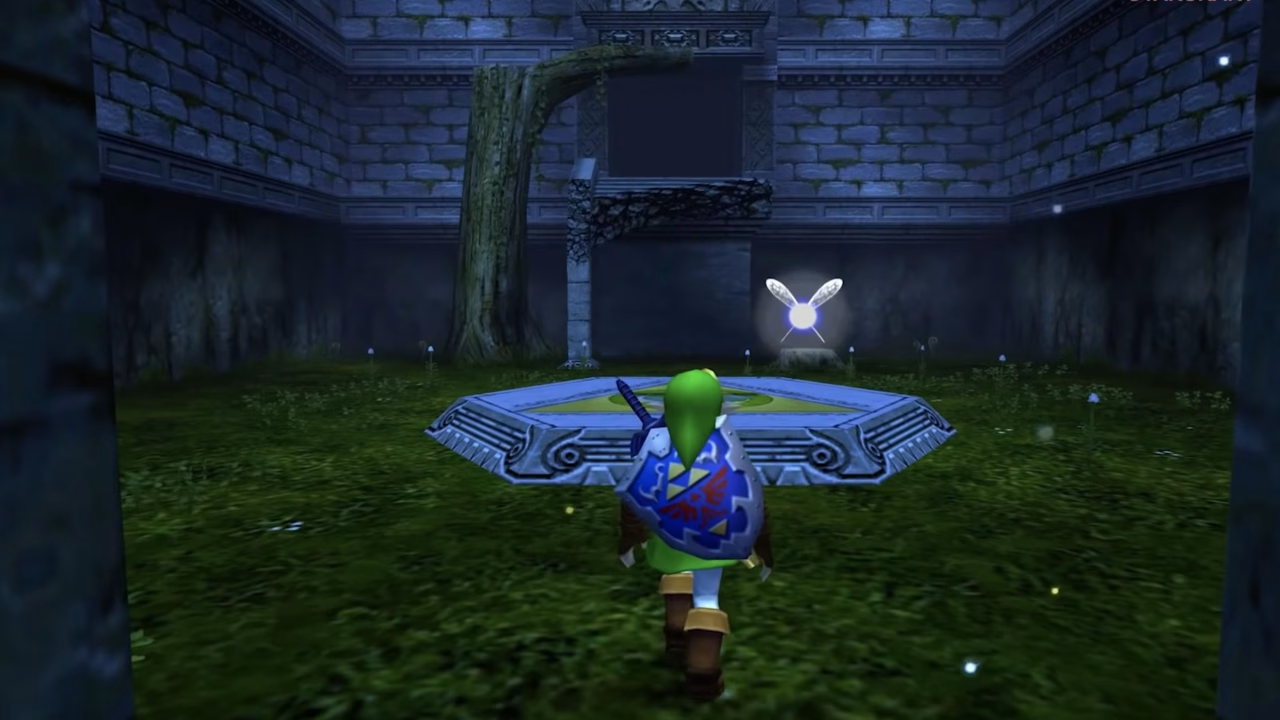
During the development era of The Legend of Zelda: Ocarina of Time, Nintendo’s Shigeru Miyamoto openly questioned one of the franchise’s most iconic pillars—its dungeons. In a 1999 developer interview originally published in a Japanese strategy guide and later archived by Shmuplations, Miyamoto reflected on how 3D game design forced a rethink of traditional Zelda structures.
When discussing dungeon design, Miyamoto admitted that the team began to feel that traditional maze-like structures were no longer the most engaging approach in a fully 3D world. He explained that the idea of “linking corridors and mapping routes” had started to lose its appeal in the transition from 2D to 3D gameplay spaces.
“It’s not really that much fun,”
Miyamoto said, referring to classic linear maze navigation. Instead, he emphasized that the focus should shift toward tension, exploration, and emotional engagement—what he described as “emotional immediacy.”
Why 3D Zelda Changed the Meaning of Dungeons
Miyamoto’s comments were not a dismissal of dungeons entirely, but rather a redefinition of their purpose. As noted in the interview archived by Shmuplations, the development team struggled with how to translate traditional Zelda dungeon design into a fully immersive 3D space.
He argued that instead of relying on strict maze navigation, developers should focus on how players feel while playing—pressure, discovery, and unpredictability. This approach became a defining design principle in Ocarina of Time, where dungeons were restructured to emphasize puzzle flow and atmospheric storytelling rather than purely navigational complexity.
Miyamoto also highlighted that early Zelda titles were almost entirely dungeon-focused, but that philosophy evolved as the series expanded. With Ocarina of Time, Nintendo deliberately reduced emphasis on complex maze structures in favor of pacing, cinematic transitions, and environmental storytelling.
One of the most important concepts Miyamoto introduced in this interview was “emotional immediacy.” Rather than forcing players to mentally map out complex dungeon layouts, he wanted them to feel present in the world at every moment.
He explained that video games should not rely on the same logic as books or turn-based RPGs. Instead of rewarding statistical progression or careful mapping, Zelda should prioritize the moment-to-moment experience—facing enemies, solving puzzles, and reacting instinctively to environments.
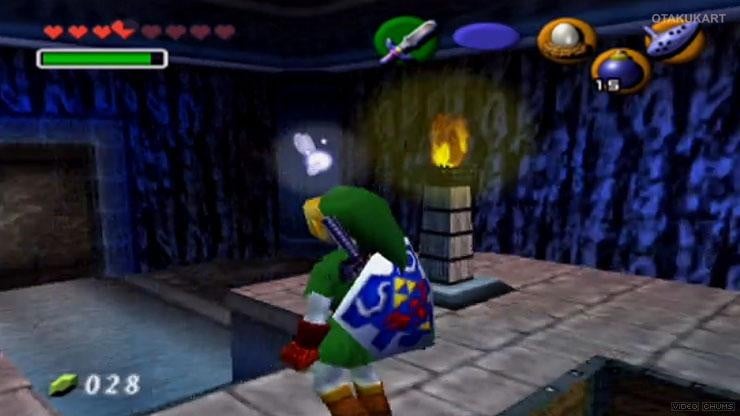
This philosophy also influenced how Nintendo handled guidance systems in Ocarina of Time, including Navi’s famously repetitive hints. Miyamoto admitted that the system was intentionally simplified, as designing adaptive hint systems for 3D gameplay would have required enormous development time.
Miyamoto also suggested that some traditional dungeon formats might not translate well into modern 3D design, reinforcing how experimental the team was during that era.
The Lasting Impact on the Zelda Franchise
The design decisions made during Ocarina of Time had long-term consequences for the Zelda series. Later titles such as Majora’s Mask, The Wind Waker, and even modern entries like Breath of the Wild continued to experiment with dungeon structure and overworld balance, often moving further away from rigid labyrinth-style progression.
While classic dungeon fans continue to celebrate titles like the Forest Temple or Water Temple, Miyamoto’s philosophy helped reshape Zelda into a more cinematic, exploration-driven experience. The idea of “emotional immediacy” remains a core part of Nintendo’s design identity today, influencing how puzzles, combat, and exploration are blended across the franchise.