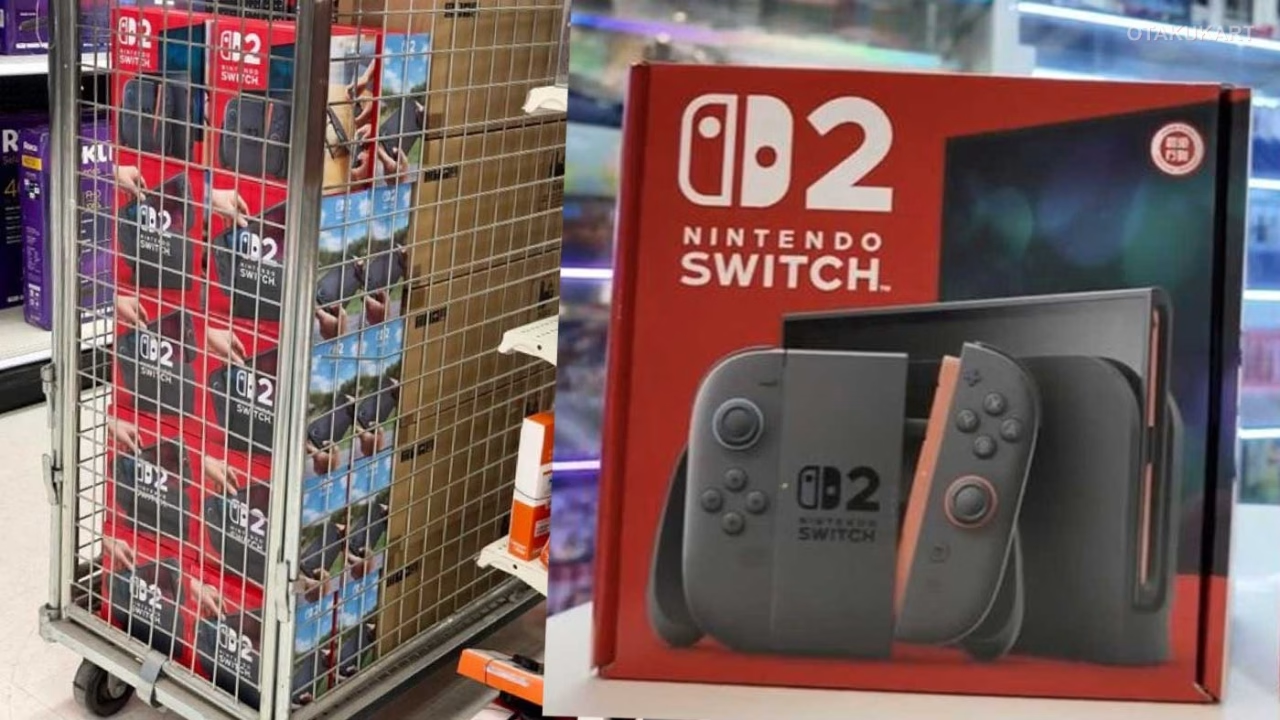
Nintendo has introduced strict new measures to combat scalping of the upcoming Nintendo Switch 2 in Japan, and the move is already drawing attention across the gaming community. In an official post shared on its Japanese X account, the company confirmed it had detected “multiple orders suspected of scalping,” prompting immediate action.
Rather than simply warning resellers, Nintendo has gone a step further by temporarily suspending sales of certain models while introducing new purchase restrictions. The goal is clear: ensure that consoles reach genuine players instead of being resold at inflated prices.
Nintendo Suspends Sales After Detecting Scalping Activity
Nintendo’s statement makes it clear that the company is actively monitoring suspicious buying patterns. In the translated message, the company explained it had identified orders linked to
“scalping and other such activities,”
leading to a temporary halt in sales of the multi-language version of the console.
This is a notable move, especially given how widespread scalping has been in recent console launches. By directly intervening at the sales level, Nintendo is attempting to avoid the kind of shortages and inflated resale prices seen during the launches of PlayStation 5 and Xbox Series X.
The company also reassured customers that domestic Japanese versions of the console are unaffected, signaling that the restrictions are targeted specifically at versions most likely to be exported or resold internationally.
The most talked-about change is a new eligibility requirement tied to user activity. To purchase the multi-language version of the Switch 2, buyers must have logged at least 50 hours of gameplay on their Nintendo Switch account as of May 31, 2026.
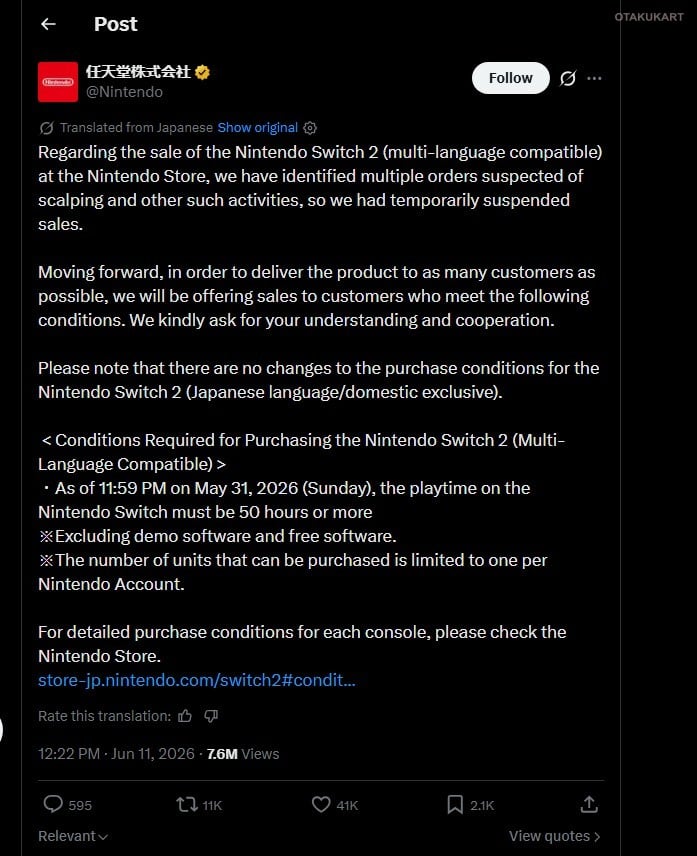
Importantly, this playtime must come from paid software, meaning demo and free-to-play titles do not count toward the requirement. This effectively filters out accounts created solely for resale purposes and prioritizes long-time players.
Nintendo has also introduced a one-unit-per-account limit, further reducing the chances of bulk purchases by scalpers. These combined measures represent one of the most aggressive anti-scalping strategies seen in the industry so far.
Why the Multi-Language Version Is Being Targeted
The restrictions are specifically aimed at the multi-language version of the Switch 2, which has become a target for resellers due to price differences between regions. In Japan, the console is often cheaper than in Western markets, making it attractive for international buyers looking to import units.
This pricing gap has created an opportunity for scalpers to buy consoles in Japan and resell them abroad at a profit. By limiting access to users with verified play history, Nintendo is attempting to close that loophole.
The move comes ahead of a planned price increase for the console later this year, which is expected to further drive demand and potentially worsen scalping issues if left unchecked.
Nintendo’s approach stands out when compared to previous console launches across the industry. The PlayStation 5 and Xbox Series X both faced significant supply issues, with scalpers dominating early sales and driving up resale prices.
By introducing restrictions before the problem escalates, Nintendo is taking a more proactive stance. The requirement for actual gameplay history ensures that consoles are more likely to end up with genuine fans rather than resellers.
This strategy also reflects a broader shift in how companies are addressing supply and demand challenges. Instead of relying solely on production increases, platform holders are now focusing on controlling who can access limited inventory.