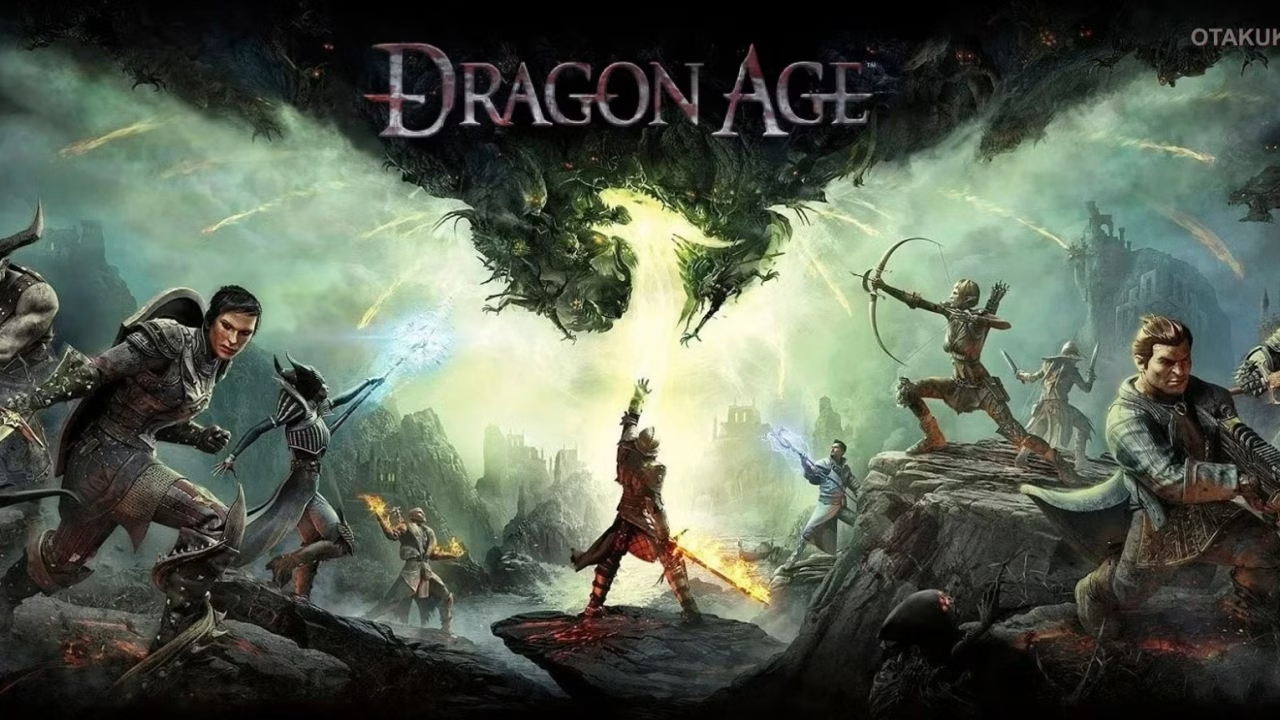
Generative AI continues to divide the video game industry, and few developers have been as outspoken as former David Gaider. The longtime narrative designer behind much of BioWare’s early success believes the technology is being adopted far too quickly, largely because executives see it as a solution before it has proven its value.
Speaking to GamesRadar+ about the growing use of generative AI in game development, Gaider described the technology as “not ready for prime time” and questioned whether it genuinely improves the creative process.
The veteran writer, who now co-founded Summerfall Studios, said current AI tools create more problems than they solve and warned that rushing adoption could have lasting consequences for developers and players alike.
Gaider says executives are pushing AI before it’s ready
Gaider believes enthusiasm for generative AI is being driven from the top rather than by the developers expected to use it.
“It’s not ready for prime time. There’s just a lot of executives who really, really want it to be.”
While he acknowledged AI could eventually become a useful development tool, he argued the current technology falls well short of what many companies expect. According to Gaider, one of AI’s biggest weaknesses is iteration—the constant process of refining ideas that lies at the heart of game development.
He explained that “generative AI is terrible at iteration” because it struggles to make consistent adjustments to existing work. For a medium where ideas are revised repeatedly throughout production, he believes that limitation makes AI unsuitable for handling major creative tasks.
One of Gaider’s strongest criticisms centers on the assumption that AI saves time.
“Honestly, what does it help with? Does it make the work more efficient? Does it improve the work?”
Rather than accelerating production, he argued that developers often spend more time correcting AI-generated output than they would creating the content themselves. Drawing from his years as a narrative designer, Gaider said he had never encountered a situation where editing an inferior draft was faster than starting over.
He also questioned the growing trend of assigning AI the creative work while leaving developers responsible for cleanup.
“The AI is set to do the important work and the worker is around to ‘clean up.'”
According to Gaider, that approach risks producing work that feels mediocre instead of improving quality.
Legal, ethical, and creative concerns remain
Beyond workflow concerns, Gaider also criticized the way many generative AI models are trained.
He argued that AI systems are frequently built using creative material without permission, creating potential legal and ethical issues for studios that rely on them. Referring to the argument that unrestricted data collection is necessary for AI improvement, Gaider dismissed the justification by saying,
“‘If we’re not allowed to steal whatever we need, then the AI won’t work as well!’ isn’t a very compelling argument.”
He also warned that placeholder AI assets created during early development can accidentally make their way into final releases if teams aren’t careful.
The future of game development still needs human creativity
Gaider expressed concern that excessive AI adoption could harm the next generation of developers by removing entry-level work traditionally used to build skills.
He questioned how studios expect junior designers, artists, and writers to grow if AI replaces the tasks that teach fundamental development principles. He also criticized AI-generated concepts, calling them “soulless” and filled with errors that artists often cannot effectively build upon.
Although Gaider isn’t completely opposed to future AI technology, he believes today’s tools require stronger regulation and responsible implementation before they become standard across the industry.
Summing up his position, he argued that until AI is trained on legally sourced material and no longer viewed as a shortcut to replacing creative workers,
“It should be treated like the virulent plague it is.”