The future of Invincible just got even bigger—and more controversial. At the Annecy debut panel, creator Robert Kirkman confirmed that Season 5 will introduce a new character voiced by Jack Quaid, while also revealing that the show has already been renewed for Season 6. The announcement came during the Annecy Animation Festival, marking a major milestone for the series and its streaming home, Prime Video.
Yet, instead of pure celebration, the conversation quickly shifted. While the show continues to dominate viewership charts and critical scores, a growing debate has taken over fan communities and industry circles alike. At the center of it all is a paradox: how can one of the most successful animated shows on streaming also be one of the most criticized for its animation quality?
This tension between blockbuster voice casting and perceived declining visual quality is now shaping the narrative around Invincible as it heads into its next phase.
Annecy Announcement: Season 6 Renewal and New Casting Revealed
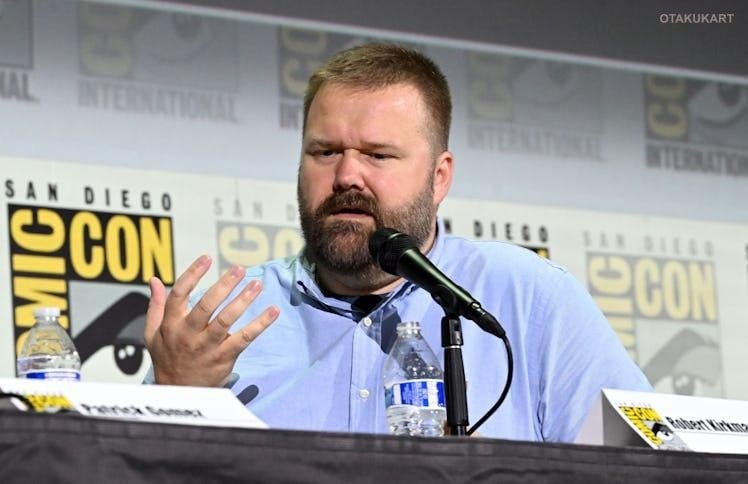
The biggest headline coming out of Annecy was simple but significant. Invincible is not slowing down anytime soon, with Season 6 officially greenlit even before Season 5 has premiered. That decision places the series among the longest-running animated titles in the streaming era, matching the longevity of BoJack Horseman in terms of season count.
Alongside the renewal, Kirkman revealed that Jack Quaid will voice a new character named Gravitator, also known as Chris. This casting adds another recognizable name to a roster already packed with Hollywood talent, reinforcing the show’s strategy of blending comic book storytelling with A-list performances.
Season 5 itself is expected to arrive in 2027, although no exact release window has been confirmed. The long gap suggests continued production challenges, but also hints at the scale the team is aiming to maintain. Returning cast members include Matthew Rhys as Dinosaurus and Lee Pace as Thragg, both of whom play major roles in the source material.
However, not every familiar voice is guaranteed to return. Jeffrey Dean Morgan will not reprise his role as Conquest, while Aaron Paul, who previously stepped away from Powerplex, has teased a possible comeback through social media.
This combination of expansion and uncertainty reflects a show that is still evolving creatively, even as it becomes a major streaming pillar.
A Star-Studded Voice Cast That Defines the Show
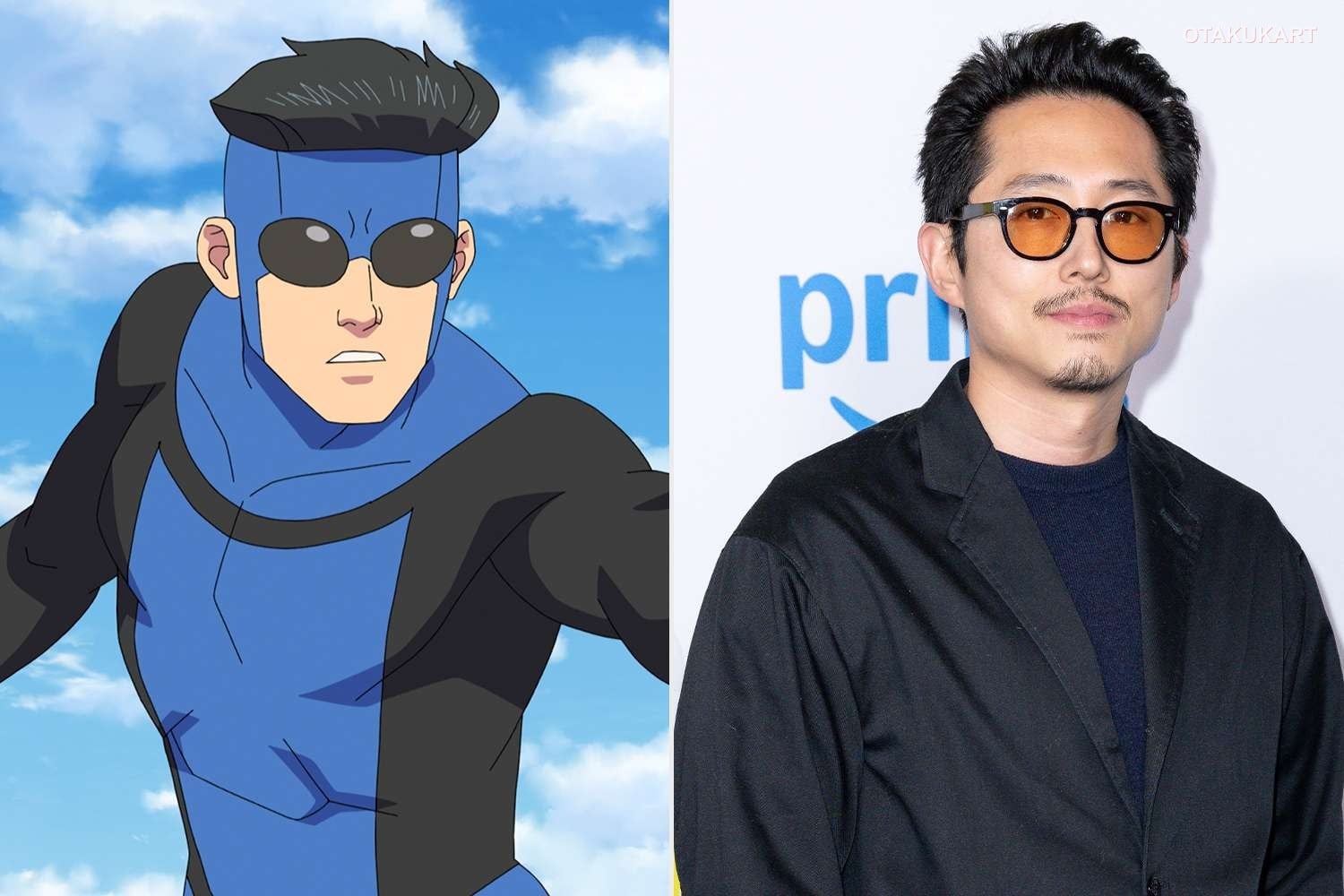
From the very beginning, Invincible distinguished itself with a voice cast that rivals major live-action productions. The core trio includes Steven Yeun as Mark Grayson, J.K. Simmons as Omni-Man, and Sandra Oh as Debbie Grayson.
Beyond the main family, the supporting cast reads like a Hollywood guest list. Actors such as Seth Rogen, Walton Goggins, Zazie Beetz, Mark Hamill, and Mahershala Ali have all contributed performances.
Even minor roles have featured major names. Jon Hamm voiced a security guard in a brief appearance, while Bruce Campbell joined Season 4 as Satan during the show’s controversial Hell storyline.
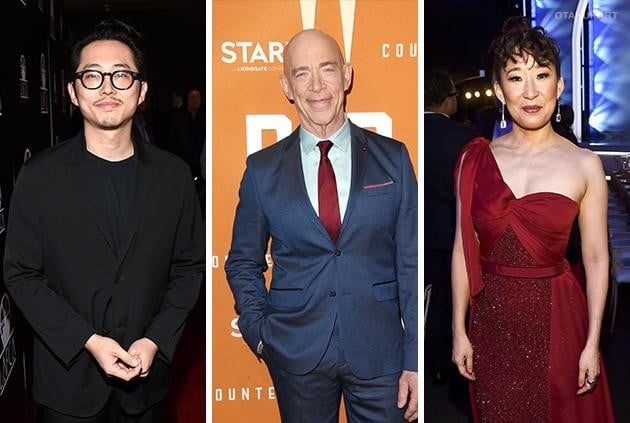
This casting approach has become a defining feature of the series. It enhances character presence and adds mainstream appeal, helping Invincible stand out in a crowded streaming market.
However, it is also the foundation of the criticism now facing the show.
Breaking Down the Budget: Expensive, But Not Where It Shows
Estimating the true budget of Invincible is complicated, as Amazon has never released official figures. Still, industry estimates place the cost between $2.5 million and $4 million per episode in recent seasons.
That would translate to roughly $20 million to $32 million per season, given the standard eight-episode structure. These numbers position the show in a mid-budget tier—far cheaper than live-action blockbusters but significantly more expensive than most animated productions.
Executive producer Marge Dean has offered additional context, noting that the show operates at about a quarter of the budget of The Boys. With The Boys reportedly costing around $11 million per episode, Invincible sits at approximately $2.75 million per episode in comparison.
Some outlier estimates even suggest the budget could be as low as $750,000 per episode based on earlier production stages. However, these figures are widely considered outdated and not reflective of the show’s current scale.
The key takeaway is clear. Invincible is not cheap, but it is also not operating at the level of premium animated projects like Arcane, which reportedly cost around $14 million per episode.
The “Names Over Frames” Debate Explained
The central criticism surrounding Invincible can be summed up in one phrase: “names over frames.” Critics argue that the show prioritizes celebrity casting over animation quality, directing a significant portion of its budget toward securing high-profile actors.
Reports suggest that leading voice actors like J.K. Simmons and Steven Yeun command tens of thousands per episode, with supporting actors earning similarly substantial fees. When aggregated across the cast, the voice budget may rival—or even exceed—the animation budget itself.
This has led to what some critics call the “celebrity tax.” The argument is that money is being funneled through Hollywood talent agencies rather than invested in animation resources, resulting in a visual presentation that does not match the show’s financial scale.
A frequently cited example is Jon Hamm’s brief role. Critics question whether a few seconds of dialogue justify the cost of hiring a major Hollywood star, especially when experienced voice actors could deliver similar performances at a fraction of the price.
While the casting undeniably boosts the show’s profile, it has become a focal point for debates about resource allocation.
Criticism around the show’s animation quality has also surfaced in tech and media coverage. In its analysis of the series, NotebookCheck noted that while performances remain strong, the visuals are not keeping up with expectations.
“Critics are saying that while the voice acting is solid, the animation has devolved into a series of ‘moving PNGs’ and repetitive, uninspired fight choreography,” the outlet reported.
Production Challenges and the Decline in Animation Quality
To understand the criticism fully, it is important to look at how the show’s production evolved over time.
Season 1, released in 2021, benefited from nearly three years of development. This extended timeline allowed animators to achieve a higher level of detail and polish, setting a strong visual benchmark for the series.
The transition to Season 2 marked a turning point. Skybound made the decision to build its own animation division rather than relying entirely on external studios. Combined with pandemic-related disruptions, this shift created production challenges that affected the final output.
Subsequent seasons relied on multiple studios, including NE4U and Tiger Animation, to keep up with demand. While this approach enabled faster production, it also introduced inconsistencies in animation quality.
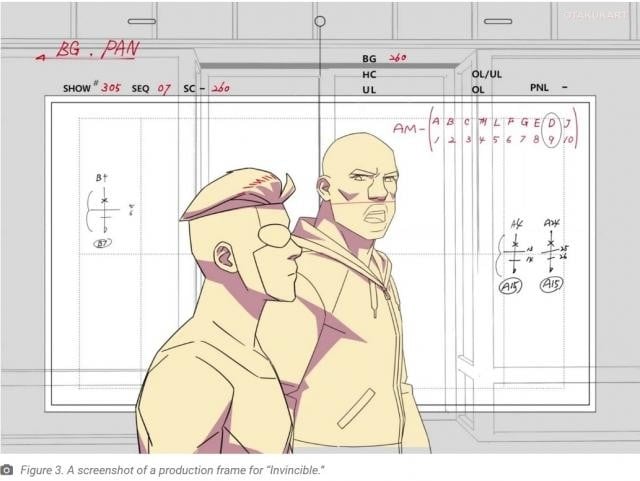
By Season 3 and Season 4, fan complaints had become more pronounced. Viewers pointed to reused shots, minimal character movement, and scenes where characters appeared to slide across the screen rather than move naturally.
A former team member reportedly revealed that a small compositing crew—sometimes as few as four people—was responsible for managing hundreds of shots per episode. This level of workload makes it difficult to maintain consistent quality, regardless of budget.
Fan discussions on Reddit have echoed similar concerns, particularly about how scenes are staged and animated. One user in a CharacterRant thread highlighted issues with the show’s visual storytelling.
“Many shots and sequences are boring, static, and dialogue between characters often suffer from lazy ‘shot/reverse shot’ storyboarding,” a user wrote on Reddit.
The perception that animation quality declined after the first season has been widely discussed online. In one comparison thread, a viewer described the difference in feel between early and later episodes.
“Season 1 animation, despite its flaws felt powerful. Every hit felt heavy. The characters felt solid and their proportions definitive. Season 2 feels floaty and not in a good way, sometimes the proportions are out of whack, sometimes the characters look off, the punches feel light,”
a Reddit user commented while comparing it to the more polished first season.
Season 4 Flashpoints: “Hurm” and Thragg Controversy
Season 4 became the tipping point for the animation debate. Despite achieving major success in terms of viewership and critical reception, it also generated some of the most intense backlash the series has faced.
One of the biggest controversies centered on the episode “Hurm,” which introduced an original Hell storyline not present in the comics. The episode became the lowest-rated installment on IMDb, with fans criticizing both its narrative direction and visual execution.
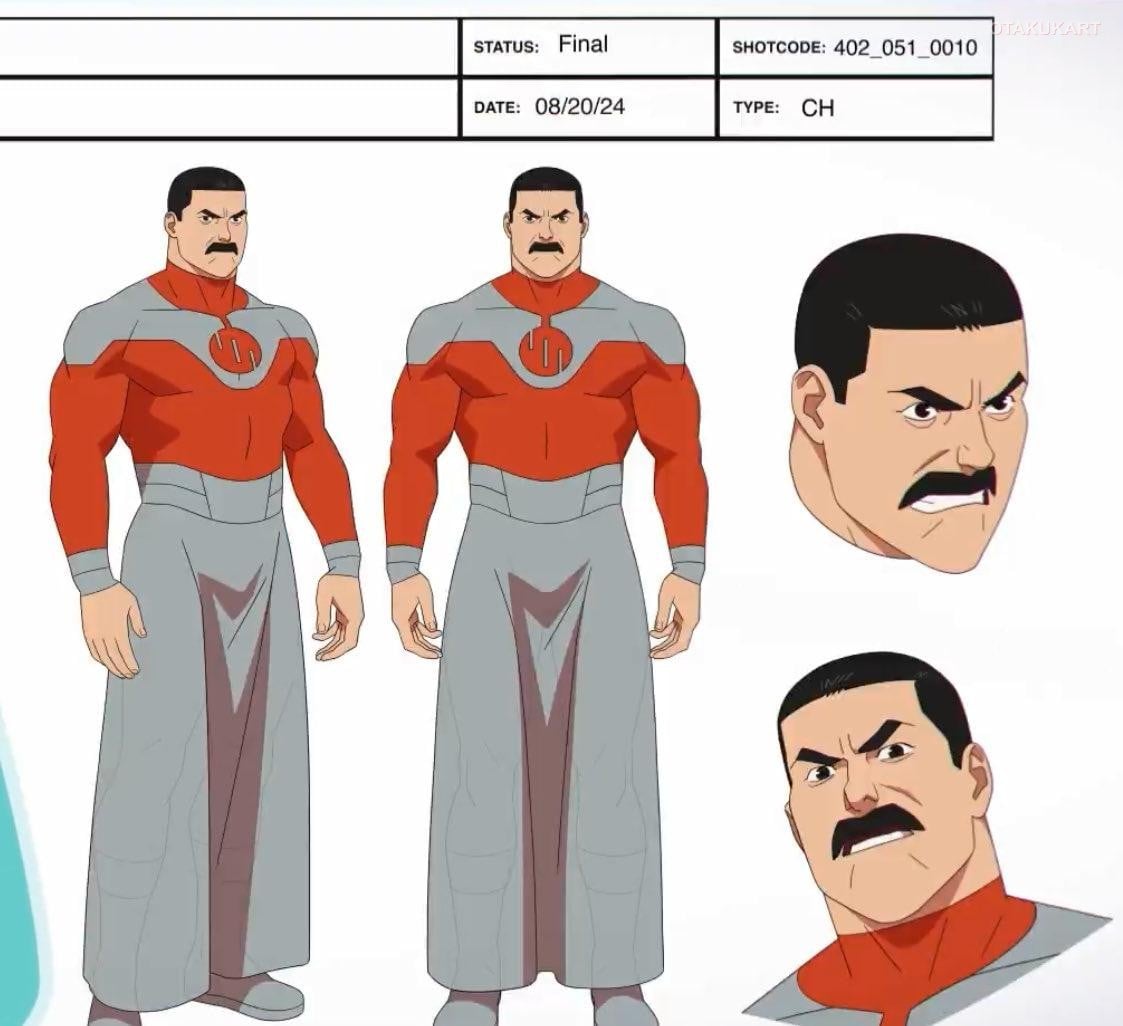
Another major talking point was the design of Thragg, one of the most powerful villains in the Invincible universe. Fans widely mocked the character’s appearance, describing it with phrases that ranged from humorous to harsh. Instead of feeling like a galactic threat, the design was seen as underwhelming.
These moments highlighted a growing disconnect between audience expectations and the show’s execution, particularly when it comes to visual storytelling.
Fans were quick to react to his on-screen appearance. Some reactions went further, turning the criticism into jokes.
“Weird baby face. Completely unintimidating voice. Doesn’t actually do anything. Yeah I am not sold on him as the biggest bad there is, which he is apparently supposed to be according to the spoilers I get subjected to regularly.
Also I get the intention of the coat, but it just highlights his baby face, while also giving him “three kids in a trenchcoat” syndrome,”
a user wrote on Reddit while reacting to Thragg’s debut.
The Schedule Problem: Fast vs Quality Trade-Off
A significant factor behind these issues is the show’s release strategy. Kirkman has pushed for a near-yearly release schedule, aiming to keep the series consistently present in the streaming terrain.
This approach places the show within the classic “fast, good, cheap” triangle of production. In choosing speed, compromises become inevitable, particularly in animation, where time is a critical resource.
With approximately eight hours of content per season, maintaining high-quality animation on a tight schedule is extremely challenging. The result, according to critics, is a reliance on shortcuts such as static models and limited motion techniques.
While this strategy ensures regular content drops, it also contributes to the perception that the show’s visual quality is slipping.
Professional reviews have also pointed out noticeable limitations in motion and scene construction. In its coverage of Season 4, GamesRadar criticized how some sequences are presented.
“There are still scenes that resemble a picture being dragged across a background by a mouse cursor,” GamesRadar noted in its review.
Comparing Invincible to Other Animation and TV Giants
The debate around Invincible becomes even sharper when compared to other productions.
High-end anime series like Demon Slayer and Jujutsu Kaisen are often cited as benchmarks for visual quality. Despite having significantly lower budgets—sometimes under $100,000 per episode—these shows deliver highly dynamic animation.
On the Western side, Arcane represents the opposite extreme, with a massive budget and a large production team that enables its cinematic visuals.
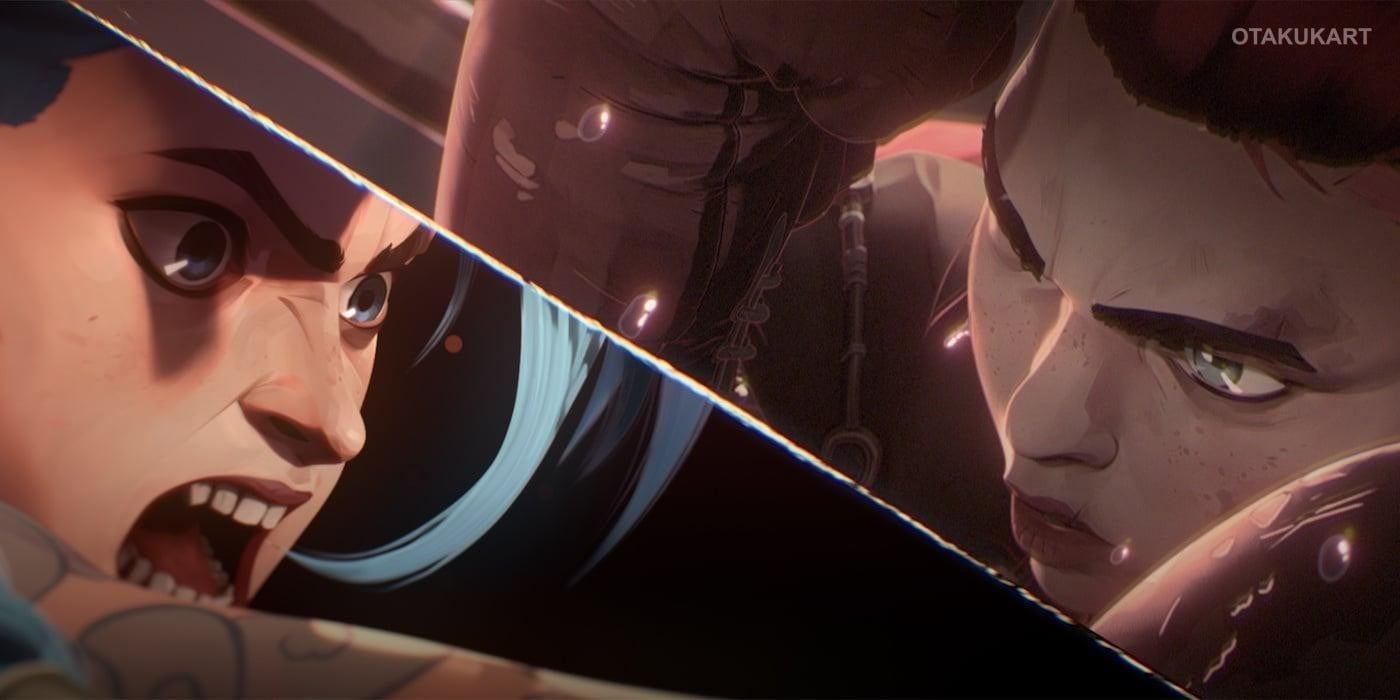
Live-action series push the comparison further. Shows like The Rings of Power and Citadel operate at budgets exceeding $50 million per episode, making Invincible look relatively modest by comparison.
This creates a unique tension. The show is expensive for animation but modest within the broader streaming ecosystem. That middle ground is both its strength and its biggest challenge.
The Counterargument: Why the Criticism Isn’t the Whole Story
While the animation debate is valid, it does not tell the full story of Invincible’s success.
The series continues to receive widespread acclaim for its writing, character development, and emotional depth. Season 4 achieved a perfect score on Rotten Tomatoes and became the most-watched season in the show’s history.
It also climbed to the top of Prime Video’s charts, surpassing even the final season of The Boys. These achievements demonstrate that audiences are still deeply engaged with the story, regardless of animation concerns.
Additionally, it is important to consider the differences between American and Japanese animation industries. Anime studios often operate under intense working conditions, allowing them to produce high-quality visuals at lower costs. In contrast, Western productions typically adhere to stricter labor standards, which can increase expenses.
Executive producer Marge Dean has emphasized that Invincible has succeeded largely through word of mouth, with limited marketing compared to other Amazon shows. This organic growth speaks to the strength of its storytelling.
What Season 5 and Season 6 Mean for the Future
As Invincible moves toward Season 5 and beyond, the stakes are higher than ever. The introduction of new characters like Gravitator and the continuation of major story arcs promise even more ambitious storytelling.
However, the ongoing debate about animation quality cannot be ignored. Fans are increasingly vocal about their expectations, and the show’s creative team will need to address these concerns if it wants to maintain its momentum.
The key question is whether future seasons will rebalance their priorities. Will more resources be directed toward animation, or will the focus remain on star power and rapid production?
With Season 6 already confirmed, the series has a rare opportunity to refine its approach and redefine what it means to be a premium animated show on streaming.
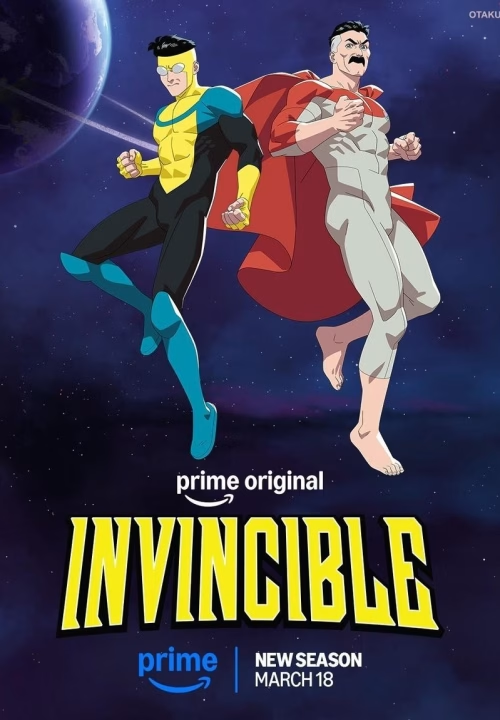
| Premiere Date | March 26, 2021 |
|---|---|
| Network / Service | Amazon Prime Video |
| Creator | Robert Kirkman, Simon Racioppa |