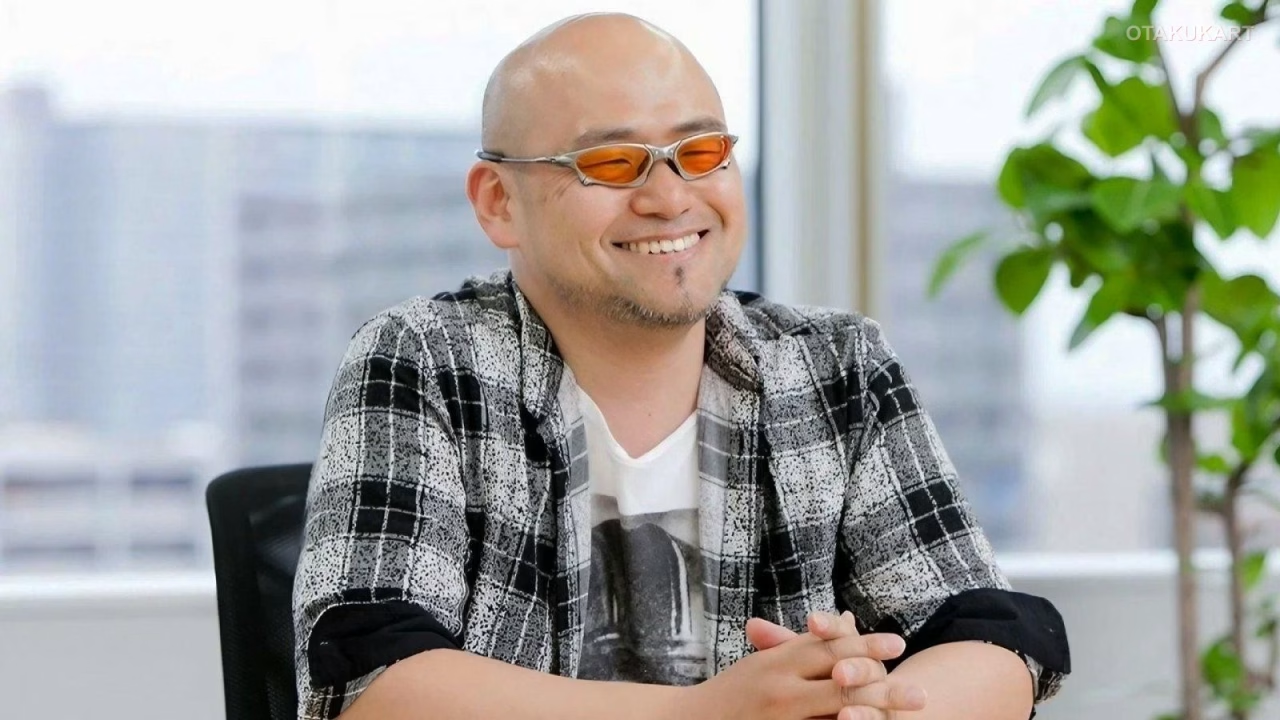
Hideki Kamiya has publicly criticized DualShockers after the gaming outlet published a report claiming he suggested women lack the “director temperament” needed to lead game development. The Devil May Cry and Bayonetta creator responded to the outlet’s post on X, accusing the writer of producing a fact-twisting, prejudice-filled report.
The dispute follows Kamiya’s comments about the limited number of women in senior directorial positions within Japan’s video game industry. While his original remarks discussed the qualities he associates with directing games, the DualShockers headline framed them as a claim that women lack those qualities. A community note attached to the outlet’s social media post subsequently challenged that interpretation, stating that Kamiya did not say women inherently lack director temperament.
The exchange has renewed discussion about how developers’ comments are reported, as well as the broader question of female representation in game development leadership.
WHAT HIDEKI KAMIYA ACTUALLY SAID ABOUT FEMALE GAME DIRECTORS
In the posts discussed by DualShockers, Kamiya said he had the impression that relatively few women displayed what he called “director temperament.” He described the term as having a strong creative vision, pushing to realize it, and leading other staff members.
However, he also clarified that people with these qualities are uncommon regardless of gender. Kamiya pointed to the limited number of director positions available in the industry as another factor affecting opportunities to enter such roles.
The discussion began after a female employee at a Japanese game company commented on a photograph shared by Super Smash Bros. creator Masahiro Sakurai. The image showed several prominent game directors, including Kamiya, Sakurai, Yoko Taro, Shinji Mikami, Fumito Ueda, and Undertale creator Toby Fox. The employee expressed sadness that the gathering included only men and suggested that the structure of Japanese companies could make it difficult for women to reach creator positions.
The distinction between Kamiya’s comments and the headline became central to the subsequent controversy.
COMMUNITY NOTE CHALLENGES DUALSHOCKERS’ INTERPRETATION
A community note attached to the DualShockers post disputed the headline’s framing. It stated that Kamiya had not explicitly claimed women lacked director temperament, but had instead described his impression that few women had occupied such positions. The note also highlighted his explanation that the leadership qualities he described were rare regardless of gender.
Kamiya then responded directly to the outlet’s post. In the machine-translated text shown in the screenshot, he called the report fact-twisting and prejudice-filled, and sarcastically urged readers to remember the writer’s name.
His response escalated the dispute beyond the original discussion about representation, drawing attention to whether the headline accurately reflected the developer’s full remarks.
DEBATE SHIFTS TO REPORTING AND REPRESENTATION
Kamiya’s comments had already prompted differing reactions online. Some users questioned whether women in Japan’s gaming industry receive the same opportunities to develop leadership skills, while others criticized his framing of the issue. The discussion reflects a broader disagreement about how individual qualifications, workplace culture, and access to senior positions affect representation.
Kamiya is known for outspoken interactions on social media, but the immediate issue here is the gap between his reported remarks and the headline’s interpretation. His criticism does not settle the debate about female representation in game development, nor does the community note establish the writer’s intentions. It does, however, put the accuracy of the report under scrutiny.