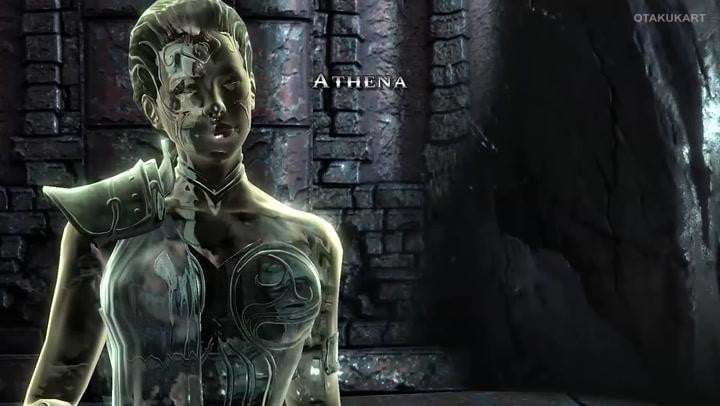
A new wave of fan theories is reshaping how players interpret the upcoming God of War spin-off centered on Laufey, also known as Faye. Following the official reveal, one question has dominated discussion: how did Faye, a Jötunn rather than a god, end up in the mysterious afterlife realm known as the “Everywhen”?
While developers have already clarified some aspects of this realm, emerging theories suggest something far more complex may be happening behind the scenes. The idea gaining traction now is that Faye’s arrival, her sudden death, and Athena’s fate could all be part of a larger time loop that redefines the series’ mythology.
The “Everywhen” explained and why Faye shouldn’t be there
According to narrative director Ariel Lawrence, the Everywhen is not a typical afterlife but a cosmic space tied to all magic in the God of War universe. In an interview with Skill Up, she explained that it functions as an “all-time, no-time” realm where past, present, and future exist simultaneously.
This detail is crucial because it explains why more than just gods can enter it. Weapons, magical entities, and even beings like Jötnar may be drawn into this realm. However, this creates a contradiction. Based on established lore, Faye should have gone to the Light of Alfheim after her death, not the Everywhen.
Faye herself acknowledges this discrepancy, suggesting that something unusual altered her fate. That inconsistency has become the foundation for deeper speculation.
One widely discussed theory points to Odin’s mask as the trigger behind Faye’s unexpected journey. The artifact has long been linked to a higher plane beyond gods and mortals, and its fragments appear to hold immense power.
In the reveal, Faye is shown with a piece of the mask embedded in her hand, seemingly catching her off guard. This detail is important because it suggests the fragment was not something she carried for years but something she acquired shortly before her death.
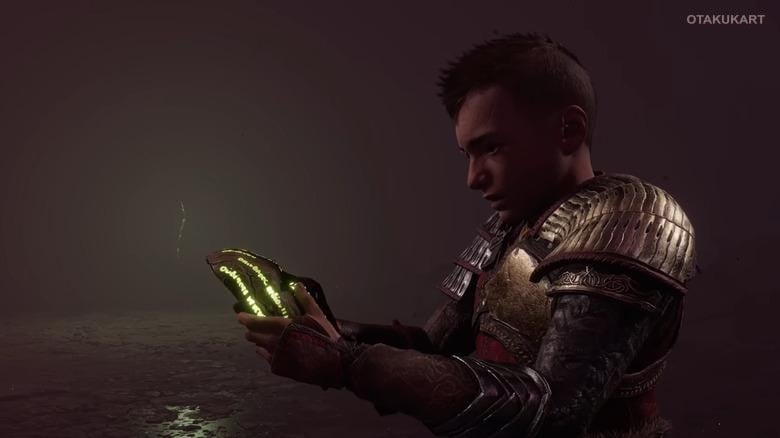
The theory proposes that Faye may have encountered a mysterious entity, possibly emerging from a rift, which attacked her and left the mask fragment behind. The sudden nature of her death, combined with her line about not being able to say goodbye, supports the idea that she did not foresee this moment despite her prophetic abilities.
A hidden connection to Athena’s return
The most intriguing part of the theory involves Athena, one of the few characters known to have escaped death in the series. After the events of God of War III, Athena exists in a higher, undefined state, leaving her ultimate fate unclear.
Fans have long speculated that Athena’s post-death existence is tied to the same cosmic forces represented by the rift and the mask. If that connection is real, it opens the possibility that Athena herself may have influenced Faye’s journey to the Everywhen.
Some interpretations suggest that Athena needed a way back and used Faye as a catalyst. In this scenario, Faye unknowingly becomes part of a larger plan, carrying the mask fragment that allows her to access the realm where Athena is trapped.
The idea becomes even more compelling when considering how time functions in this realm. Since the Everywhen operates outside linear time, events do not occur in a traditional sequence. Past, present, and future can overlap, meaning characters from different eras could interact.
This creates the possibility of a time loop. Faye could meet Athena inside the Everywhen, help her escape, and unknowingly set in motion the very events that lead to her own death. In other words, Athena’s future actions could be the cause of Faye’s past fate.
Such a loop would explain several inconsistencies at once, including Faye’s surprise at the mask fragment and her inability to predict her own death.