
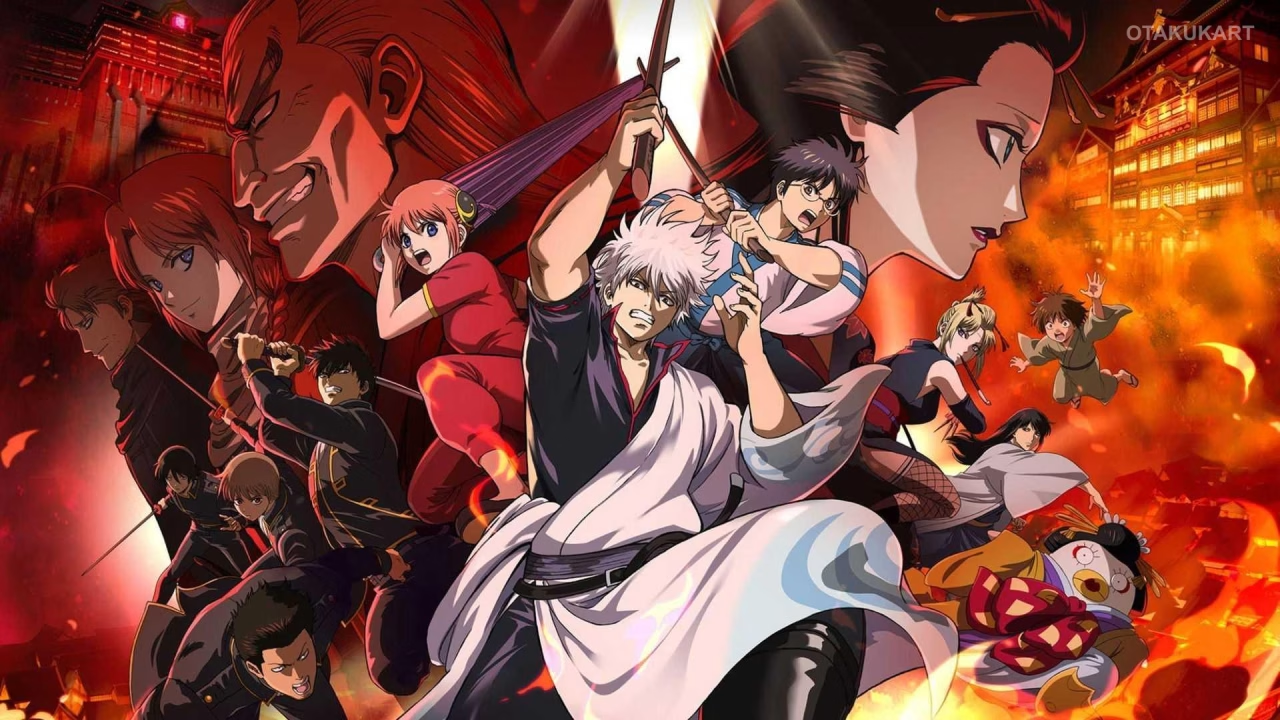
Gintama: Yoshiwara in Flames is bringing a major change to one of the franchise’s most popular story arcs: this time, Yoshiwara actually burns. Director Naoya Andô revealed that the filmmaking team deliberately chose to show the destruction of the district, unlike the earlier television adaptation, which did not depict the town burning despite the arc’s title.
In an interview with Variety, Andô explained that he raised the difference with producer Takashi Maekawa, who had also worked on the TV anime. When the director asked whether they would finally burn the town in the movie, Maekawa reportedly responded:
“Yes this time we’re going to burn everything.”
The filmmakers then discussed how to bring that decision to the screen before agreeing to make the destruction part of the film. The change gives the theatrical adaptation a more definitive visual interpretation of the Yoshiwara in Flames storyline, which was already popular among manga and anime audiences.
Gintama Movie Finally Shows Yoshiwara Burning
The decision to depict Yoshiwara’s destruction is one of the clearest differences between the new movie and the television version of the arc. Rather than simply retelling the familiar story, the filmmakers wanted to use the theatrical format to present certain moments on a different scale.
Producer Ryo Nakamuray acknowledged the expectations surrounding the adaptation, noting that the Yoshiwara arc was hugely popular in both Hideaki Sorachi’s original manga and the anime. However, the team believed enough time had passed to revisit the material, while the movie format offered opportunities to approach it differently.
Gintama originally began as a manga set in an alternate, science-fiction version of late-Edo-period Tokyo, where Earth has been invaded by an alien species known as the Amanto. The franchise later expanded into a 367-episode television anime and three previous theatrical spin-offs. Yoshiwara in Flames is its fourth big-screen outing.
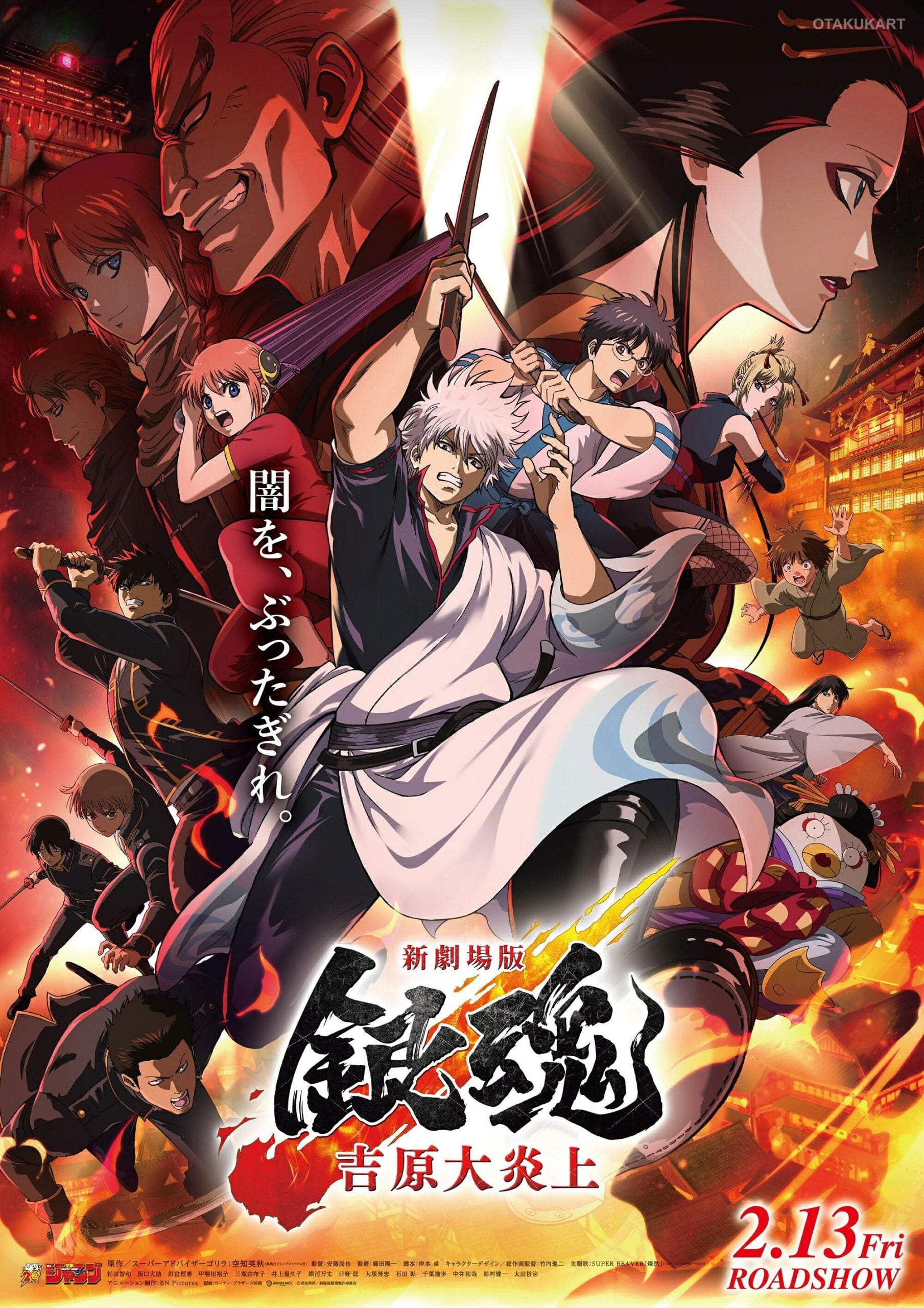
Showing Yoshiwara’s destruction is not the only way the production distinguishes the movie from its television counterpart. Andô said the team planned for numerous action sequences and wanted the visuals to take advantage of the wider theatrical screen.
The filmmakers chose the CinemaScope ultrawide aspect ratio and 3D animation to allow greater camera movement and more varied compositions. Andô explained that keeping the camera slightly farther from the characters also helped audiences appreciate the designs and surrounding environments instead of focusing exclusively on the action.
The director also pointed to the technological progress made during the five years between the completion of the television anime and the start of the movie’s production. The team wanted to use those advances, particularly in 3D animation, to explore new visual possibilities. The soundtrack received attention as well, with Andô confirming that the movie features a substantial amount of new music.
Gintama: Yoshiwara in Flames Retouched More Than 200 Shots
The movie also underwent additional visual improvements after its initial Japanese release in February. Andô explained that the first version had been completed in time to meet its release deadline, although the production team already knew certain shots could be improved.
The opportunity to revisit the movie came with its later DVD release. Rather than leave the original version untouched, the filmmakers returned to the animation and refined more than 200 shots. Andô said the team was proud of the February release but wanted to improve the work wherever possible.
The production also involved animation studios across several countries, including China, Indonesia, and Vietnam. Producer Nakamuray explained that the work was divided according to each team’s specialisation. Some groups handled character animation, while others focused on action sequences, with individual team leaders overseeing their contributions.
The Movie Also Preserves Gintama’s Signature Comedy
Although the theatrical adaptation places greater emphasis on action and large-scale visuals, the filmmakers also wanted to retain the franchise’s distinctive humour and meta-comedy.
Andô described comedy as particularly difficult to translate across cultures. To address that challenge, the production assigned one director to focus primarily on the humorous sequences. Instead of signalling to viewers when a joke was supposed to be funny, the team chose to let characters joke naturally among themselves, allowing audiences to enjoy the exchanges.
The movie was previewed at Lucca Comics and Games ahead of its Italian theatrical release. Andô said the team was pleased by the enthusiastic response from Italian fans, noting that the franchise’s earlier films had not previously been brought to European audiences.
With its expanded action sequences, revised animation, new music, and decision to finally show Yoshiwara burning, Gintama: Yoshiwara in Flames gives the familiar arc a distinct theatrical presentation without abandoning the humour that helped define the series.