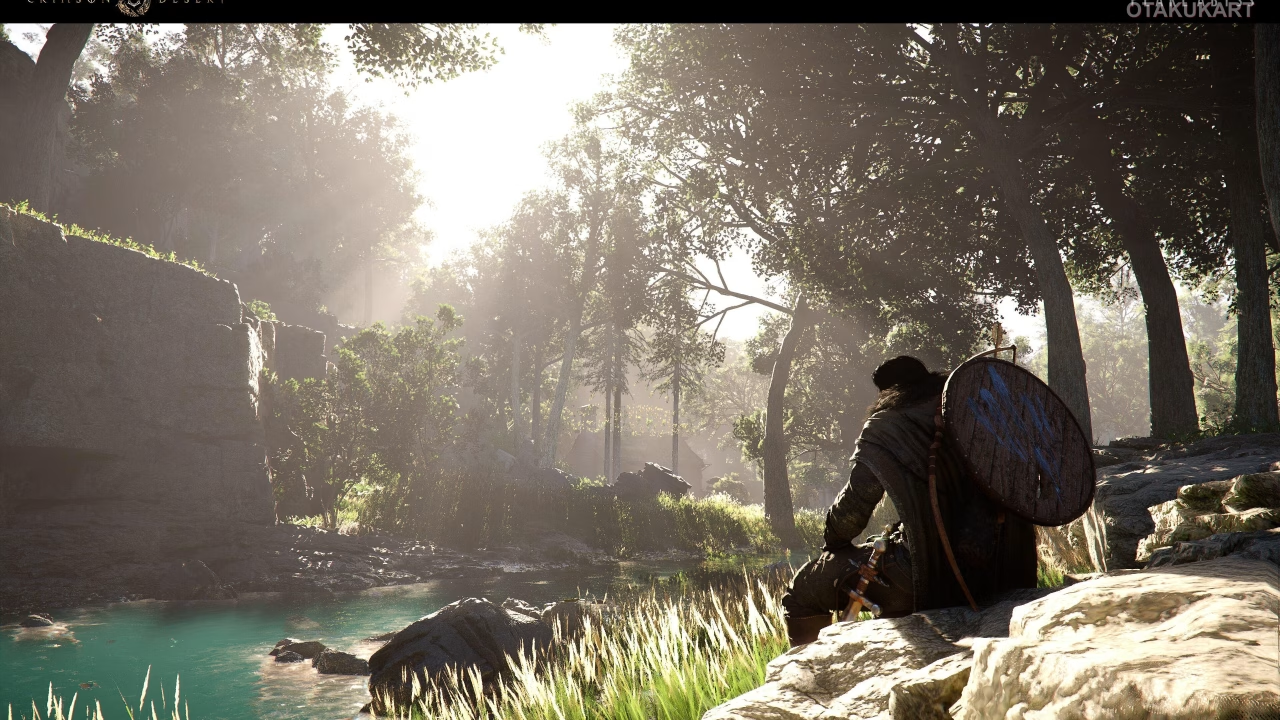
Crimson Desert uses procedural generation to help build its enormous open world, but Pearl Abyss says the technology does not replace manual environmental design. Developers revealed that level artists still determine important details such as vegetation zones and regional characteristics, allowing the procedurally generated world of Pywel to maintain a distinct identity rather than feeling repetitive.
The details were shared by Pearl Abyss developers during interviews with MeinMMO and at gamescom dev 2026. The developer conference specifically highlighted how BlackSpace Engine’s procedural terrain tools and biome-based placement systems allow the studio to scale open-world production while retaining artistic control.
Procedural Generation Reduces Work, But Artists Still Shape Pywel
According to the developers interviewed by MeinMMO, procedural generation is primarily used to reduce the amount of repetitive manual work required to populate such a large environment. However, the system does not simply generate everything automatically and leave the results untouched.
For example, vegetation can be procedurally positioned across different areas and orientations, but level artists manually determine how vegetation should appear in specific environments and establish the appropriate vegetation zones. The team also uses techniques such as detailed texturing and “breaking” to prevent elements such as leaves and other textures from looking artificially placed.
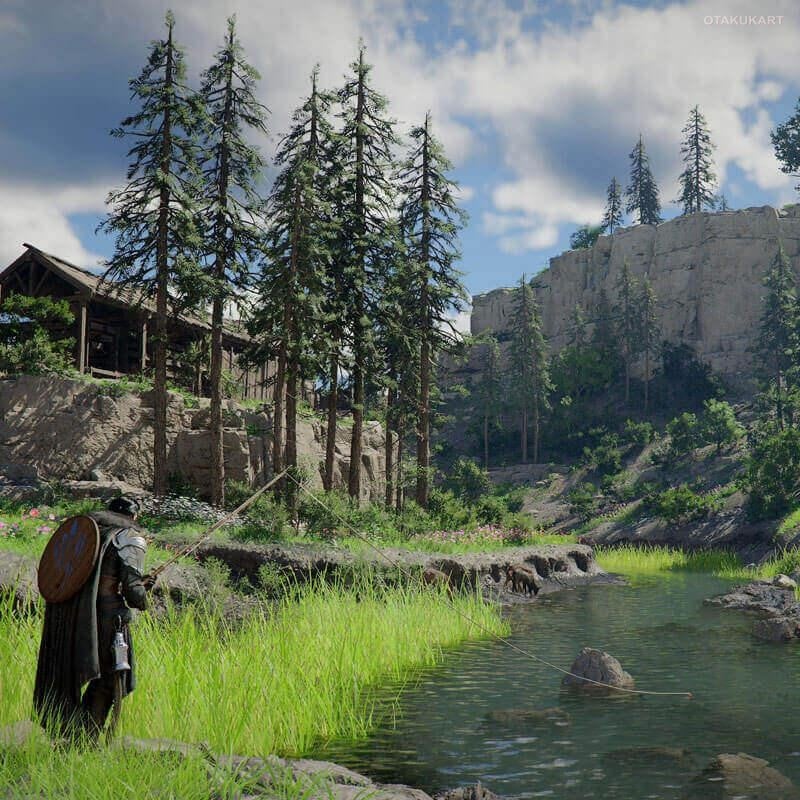
This approach is consistent with Pearl Abyss’s broader world-building philosophy. At gamescom dev, the studio explained that its procedural tools are designed to preserve manual control and regional identity, rather than replace the work of artists. The developers also emphasized building Pywel as a “playable world,” adjusting environmental density and layouts to encourage exploration instead of simply reproducing real-world landscapes.
BlackSpace Engine provides the technical foundation for this workflow, combining terrain systems, procedural generation and level-management tools to handle Pywel’s large scale. Pearl Abyss has also previously highlighted features including real-time lighting, atmospheric scattering, volumetric fog, water simulation and GPU-based hair and cloth simulation in the engine.
The result is a production process where procedural generation handles scale while artists retain control over the details that make different parts of Crimson Desert feel distinct.

| Platforms | PC, PlayStation 5, Xbox Series X/S |
|---|---|
| Developer | Pearl Abyss |