
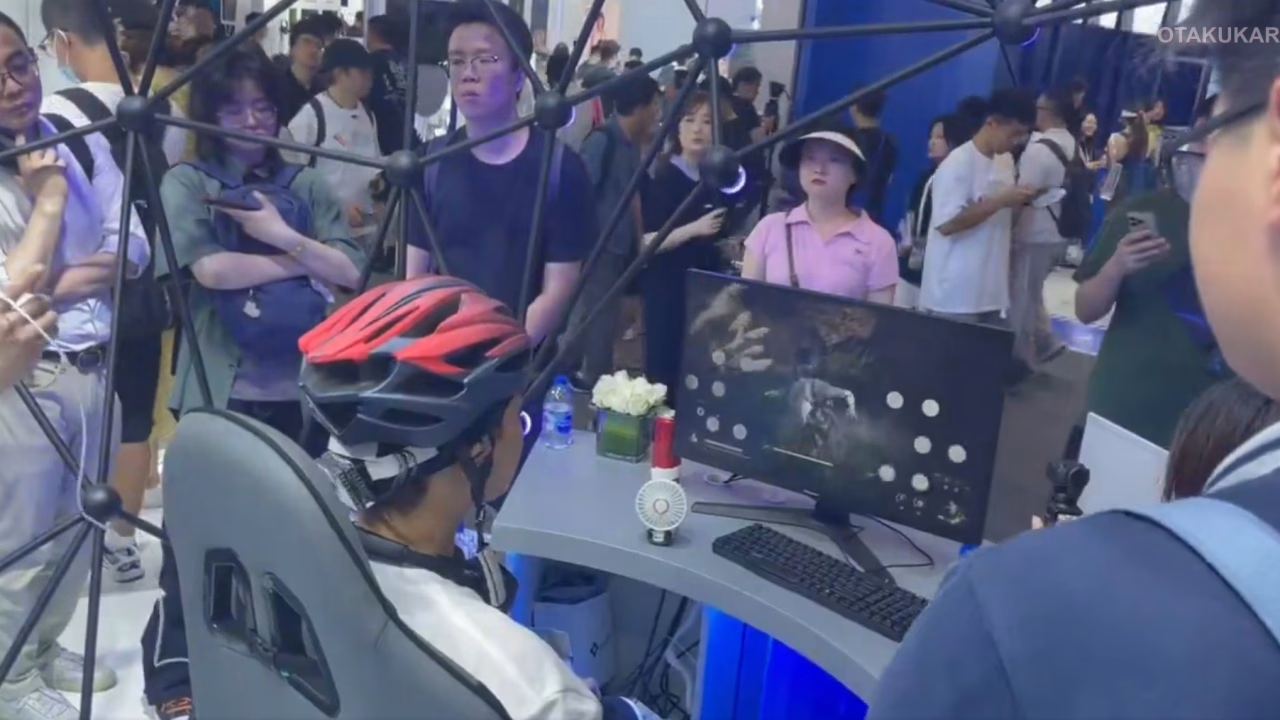
Brain-computer interface (BCI) technology took a major step into the gaming spotlight at the World Artificial Intelligence Conference (WAIC) 2026 in Shanghai, where attendees were able to play Black Myth: Wukong using only their brain activity.
The demonstration showcased a non-invasive EEG-based headset that translates neural signals into in-game commands, offering a glimpse at how future gaming experiences could move beyond traditional controllers and keyboards.
The demonstration, shared by AI enthusiast Huang Lu on X, attracted attention for showing players steering the action RPG without physically pressing buttons. According to staff at the exhibit, the headset requires only about five minutes of calibration before gameplay begins.
Brain signals replace traditional controls
According to the official WAIC 2026 press release, the system works by capturing and decoding neural activity before converting the user’s intentions into commands. The organizers explained,
“The non-invasive system captures and decodes neural signals, then converts the user’s intentions into device commands.”
They also noted that similar technology is already being explored for medical applications, including sleep monitoring, epilepsy warning systems, and anesthesia monitoring.
Unlike some existing consumer brain-computer interfaces that require users to imagine specific actions or objects, the WAIC system relies on Steady-State Visual Evoked Potentials (SSVEP). Huang Lu explained on X that
“Your brain generates unique EEG signals in response, which are detected by a headset and translated into in-game controls.”
The system presents multiple flashing visual targets on screen, with each flashing frequency corresponding to a different control input.

Accessibility remains one of the biggest opportunities
Although the technology is still in its early stages, demonstrations like this highlight its potential to make games more accessible for players with limited mobility or physical disabilities.
At the same time, experts continue to point out current limitations, including input latency and the possibility that flashing visual stimuli may not be suitable for people with photosensitive epilepsy.
Earlier demonstrations have already shown that games such as Black Myth: Wukong can be completed using brain-computer interfaces. Streamer PerriKaryal previously defeated one of the game’s early bosses using a combination of brain signals and voice commands, illustrating how rapidly the technology is evolving.
Beyond gaming, WAIC 2026 also featured BrainCo’s non-invasive BCI technology for controlling robotic arms and humanoid robots. According to the conference, AI algorithms decode EEG signals and convert them into robotic commands in under 200 milliseconds, demonstrating that brain-controlled interfaces are finding applications far beyond entertainment.
While traditional controllers remain the standard for competitive gaming, the WAIC demonstration suggests that brain-computer interfaces are steadily moving from science fiction toward practical real-world use, particularly in accessibility, healthcare, and advanced human-machine interaction.