
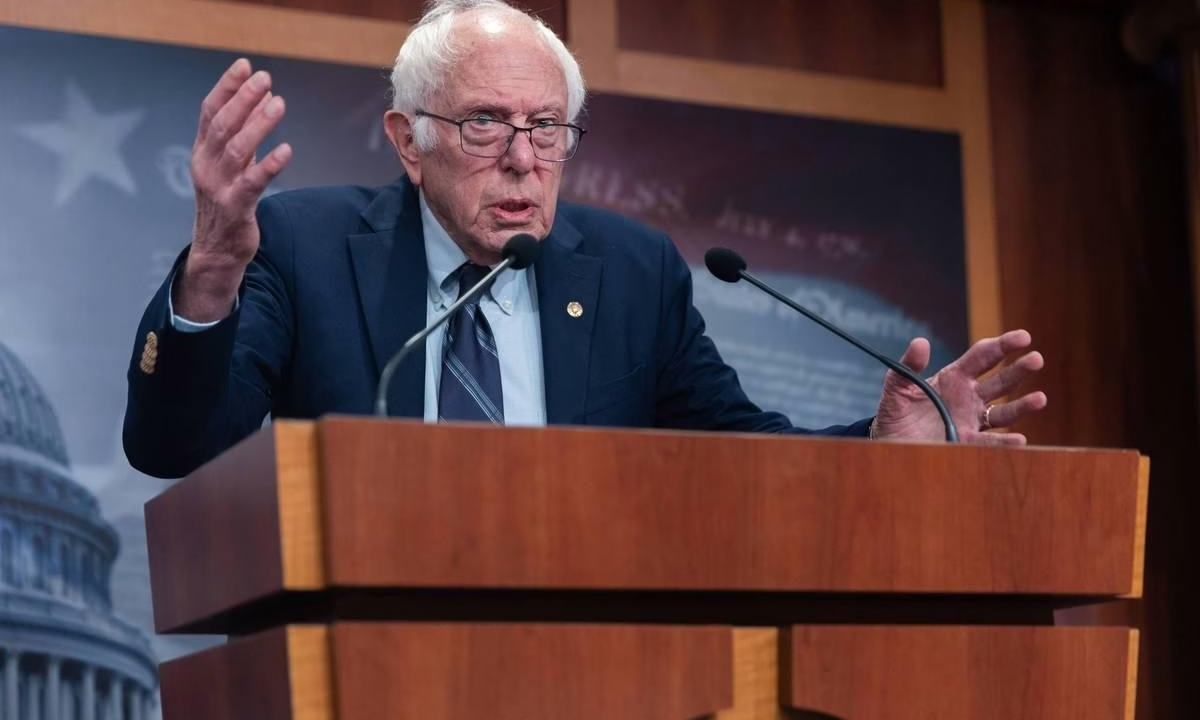
The ongoing restructuring at Microsoft’s Xbox division has drawn attention beyond the gaming industry after U.S. Senator Bernie Sanders publicly criticized the company’s decision to eliminate thousands of jobs. The remarks come as Microsoft continues one of the largest reorganizations in Xbox history, affecting employees across multiple first-party studios.
In a post shared on X, Sanders questioned the timing of the layoffs, pointing to Microsoft’s strong financial performance, executive compensation, and recent Xbox hardware price increases. His comments have sparked renewed debate over corporate spending and workforce reductions within the gaming industry.
Sanders criticizes Microsoft’s financial priorities
Responding to the Xbox layoffs, Sanders argued that Microsoft’s profitability makes the workforce reductions difficult to defend.
In his post on X, he wrote:
“Last year, Microsoft made $101 billion in profits, got a $12.5 billion tax break, and paid its CEO $96 million. This year, it’s raising the price of an Xbox by $150 and eliminating 3,200 jobs.”
Sanders concluded his statement by adding:
“Please don’t tell me corporate tax breaks create jobs. It never trickles down.”
The comments reflect the Vermont senator’s longstanding criticism of corporate tax policies and their impact on workers.
Xbox restructuring continues across Microsoft’s gaming division

Microsoft recently confirmed plans to eliminate approximately 3,200 positions across its gaming business during the current fiscal year. According to reports, around half of those layoffs have already taken place, with additional reductions expected in the coming months.
The restructuring has also led to significant changes within Xbox Game Studios. Multiple teams have been affected, while studios including Double Fine and Compulsion Games are reportedly becoming independent. Other developers, such as Ninja Theory and Undead Labs, are also seeing organizational changes as Microsoft reshapes its gaming portfolio.
The layoffs come shortly after Microsoft announced higher prices for several Xbox consoles beginning in August. The company has cited broader market conditions, including rising development and hardware costs, as factors affecting its gaming business. Similar pricing adjustments have been seen across the wider video game industry as manufacturers continue to deal with increased production expenses.
While Sanders’ remarks focus on Microsoft’s financial performance, the company has not publicly linked the layoffs to any single factor. The restructuring remains one of the most closely watched developments in the gaming industry this year.