

Netflix’s The Bombing of Pan Am 103 has renewed interest in one of the deadliest terrorist attacks in aviation history. The six-part drama recounts the destruction of Pan Am Flight 103 over Lockerbie, Scotland, and focuses on the massive international investigation that followed rather than telling the story solely through the victims’ families.
Based on historical records and extensive research, the series explores how investigators from Scotland, the United States, and other countries worked together to identify those responsible for the bombing. The drama closely follows the real investigation while dramatizing certain conversations and personal moments for television.
What happened to Pan Am Flight 103?
On December 21, 1988, Pan Am Flight 103 departed London Heathrow for New York. Around 38 minutes after takeoff, a bomb hidden inside a Toshiba radio cassette player exploded in the aircraft’s cargo hold while it was flying over southern Scotland.
The Boeing 747 broke apart mid-air, killing all 259 passengers and crew. Falling debris also struck the town of Lockerbie, killing 11 people on the ground. In total, 270 lives were lost, making it one of the deadliest terrorist attacks in aviation history.
The wreckage was scattered across more than 2,000 square kilometers, leading to one of Britain’s largest criminal investigations.
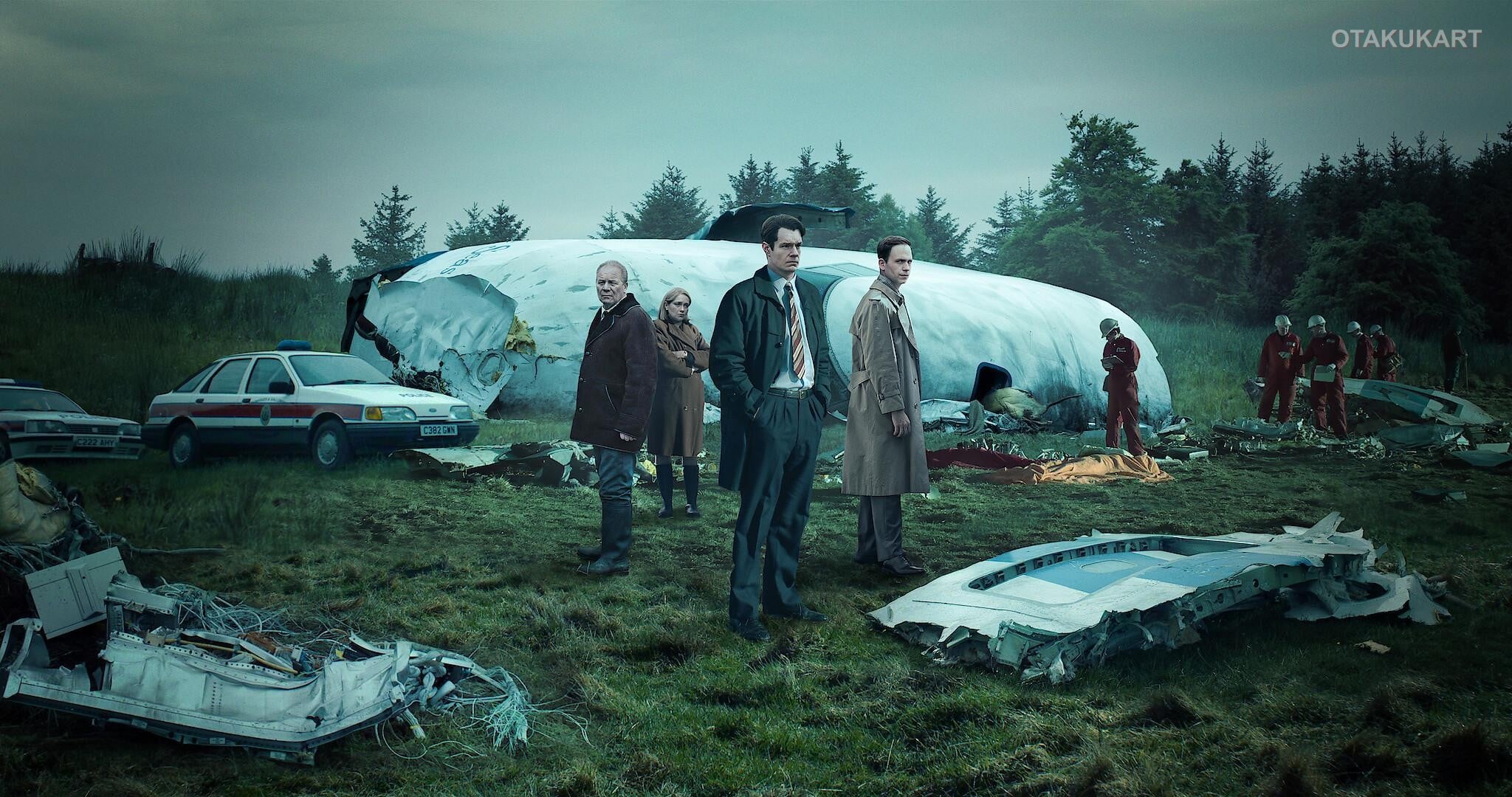
The investigation concluded that the bomb had traveled through Malta and Frankfurt before being loaded onto the flight in London. Libyan intelligence officers Abdelbaset al-Megrahi and Lamin Khalifah Fhimah were charged.
Following a Scottish trial held in the Netherlands, al-Megrahi was convicted in 2001, while Fhimah was acquitted. Libya later accepted responsibility for the actions of its officials in 2003 and agreed to compensate victims’ families, though questions surrounding the case have continued for decades.
Today, the investigation remains active. Former Libyan intelligence officer Abu Agila Mohammad Masud has pleaded not guilty to allegations that he built the bomb used in the attack, with legal proceedings continuing in the United States.
The Lockerbie bombing transformed aviation security around the world. The disaster accelerated the introduction of stricter baggage screening, positive passenger bag matching, improved explosive detection systems, and closer intelligence sharing between countries.
Many of the airport security measures passengers experience today were introduced or strengthened following lessons learned from the Lockerbie investigation, making the tragedy a defining moment in modern aviation history.