
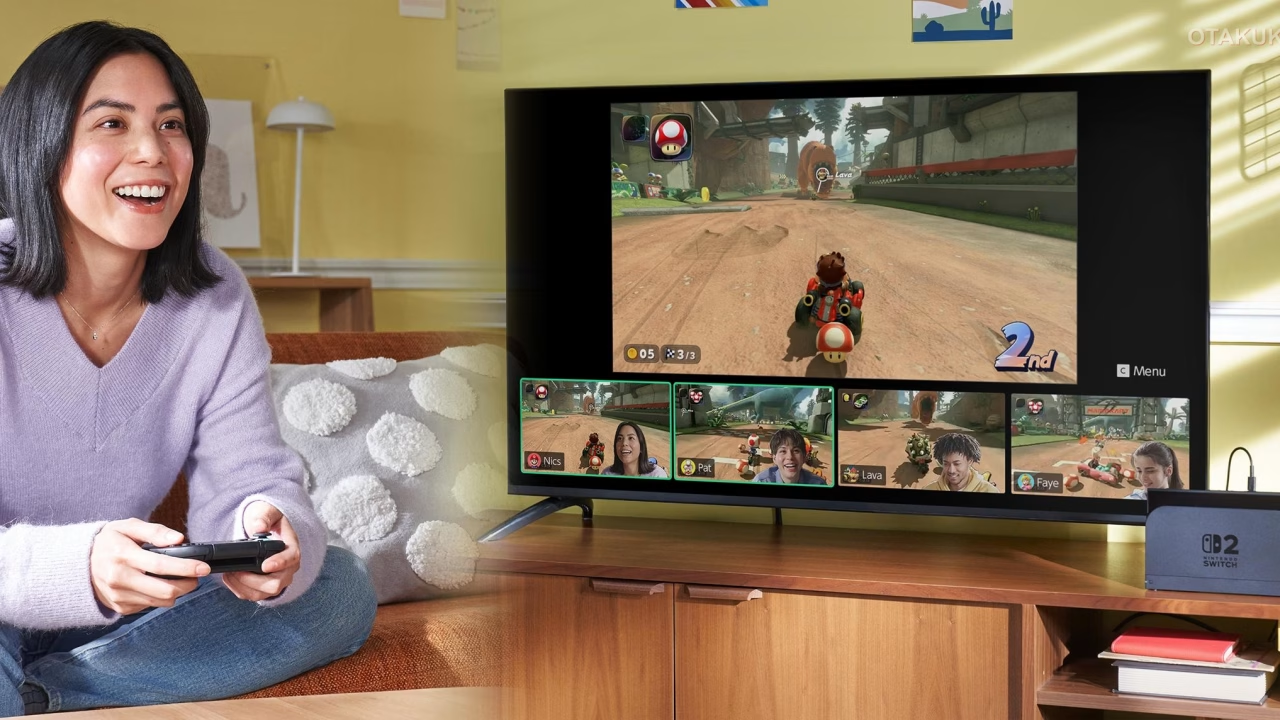
Nintendo designed GameChat for the Switch 2 to recreate the experience of playing games with friends in the same room, but early tests revealed that too many features could make the system intimidating. In a developer interview published on October 10, 2026, the company explained how it refined the feature by observing how people used it and reducing the number of prominent controls to three.
The development team initially expected players to use both game screen sharing and video chat alongside voice calls. However, first-time users relied almost exclusively on voice chat because the interface seemed too complicated. Nintendo responded by simplifying the layout, prioritizing the functions that best supported conversations and shared gaming experiences.
The development story was shared through Nintendo’s official recruitment website in a feature about the people and decisions behind its products.
NINTENDO FOUND GAMECHAT NEEDED MORE THAN VOICE CALLS
Nintendo’s development team discovered that voice chat alone did not recreate the atmosphere of playing alongside friends. As the company explained, “no one comments on the game being played, and the game itself gets left behind.” Players could talk to one another, but they were not necessarily reacting to the same moments on screen.
That realization pushed Nintendo to experiment with video calls and game screen sharing. The team spent time playing games together while testing different combinations of communication features, looking for ways to make online sessions feel more like gathering at a friend’s house.
The developers eventually identified three essential parts of the experience: talking to friends, seeing the same gameplay, and understanding other players’ reactions. These ideas became the foundation for GameChat’s voice communication, screen-sharing, and video-chat functions.
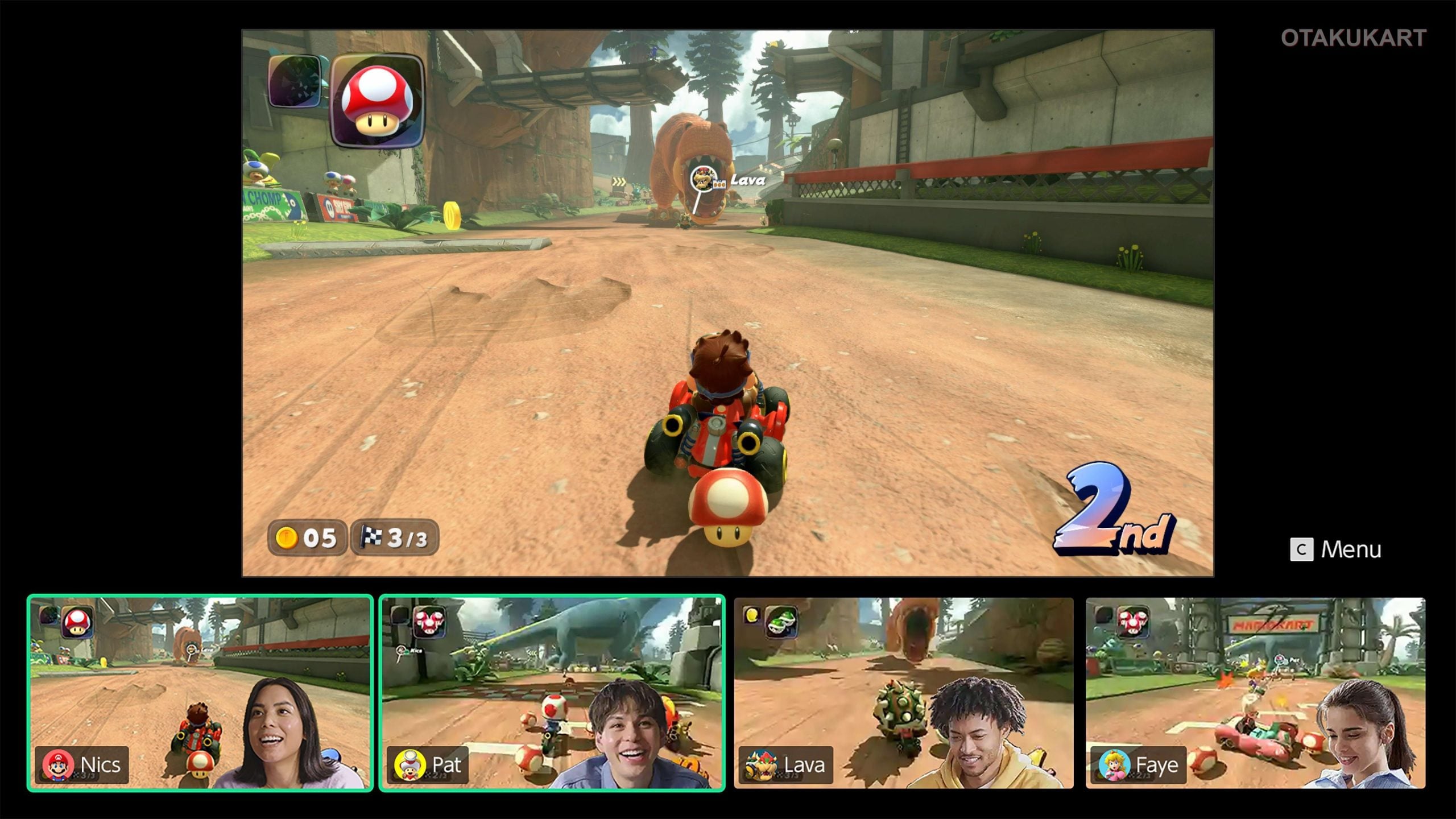
According to Nintendo’s official GameChat development feature, these experiments helped the team understand how shared gameplay could encourage players to celebrate victories, react to unexpected defeats, and exchange strategies naturally.
THREE BUTTONS BECAME THE CORE OF THE INTERFACE
Finding the right features was only part of the challenge. Nintendo also needed to make GameChat accessible to people who rarely used communication tools or found complicated interfaces difficult to navigate.
During early testing, first-time users avoided screen sharing and video calls, choosing voice chat instead. When the team asked why, the testers explained that the number of available features made the interface appear complicated.
Nintendo then repeatedly simplified the layout and tested the changes with new users. The final approach centered on three main controls: the microphone, game screen sharing, and camera. Other functions remained available, but the team gave the essential features greater prominence.
The microphone received particular attention because players might need to mute themselves quickly if someone nearby started speaking. Nintendo positioned it for easy access when the GameChat menu opens, with the screen-sharing and camera controls placed on either side.
The simplified interface eventually produced the response the developers wanted. Some first-time users said the feature was easy to operate and reminded them of playing games at a friend’s house. Nintendo’s development account described that feedback as a sign that the team had made the experience more approachable.
GAMECHAT SUPPORTS GROUPS OF UP TO 12 PLAYERS
GameChat is one of the Nintendo Switch 2’s built-in communication features. It supports voice conversations with up to 12 people, while up to four participants can share their game screens in a session. Video chat is also supported with a compatible USB camera.
Nintendo’s official GameChat guide explains the feature’s capabilities and requirements. The company designed it to let friends talk, watch each other’s gameplay, and spend time together even when they are playing from different locations.
The development process highlights Nintendo’s focus on making GameChat feel like a natural part of playing rather than a separate communication app. By reducing the number of prominent controls and emphasizing shared gameplay, the company aimed to make the feature approachable even for people who do not regularly use voice or video chat.