
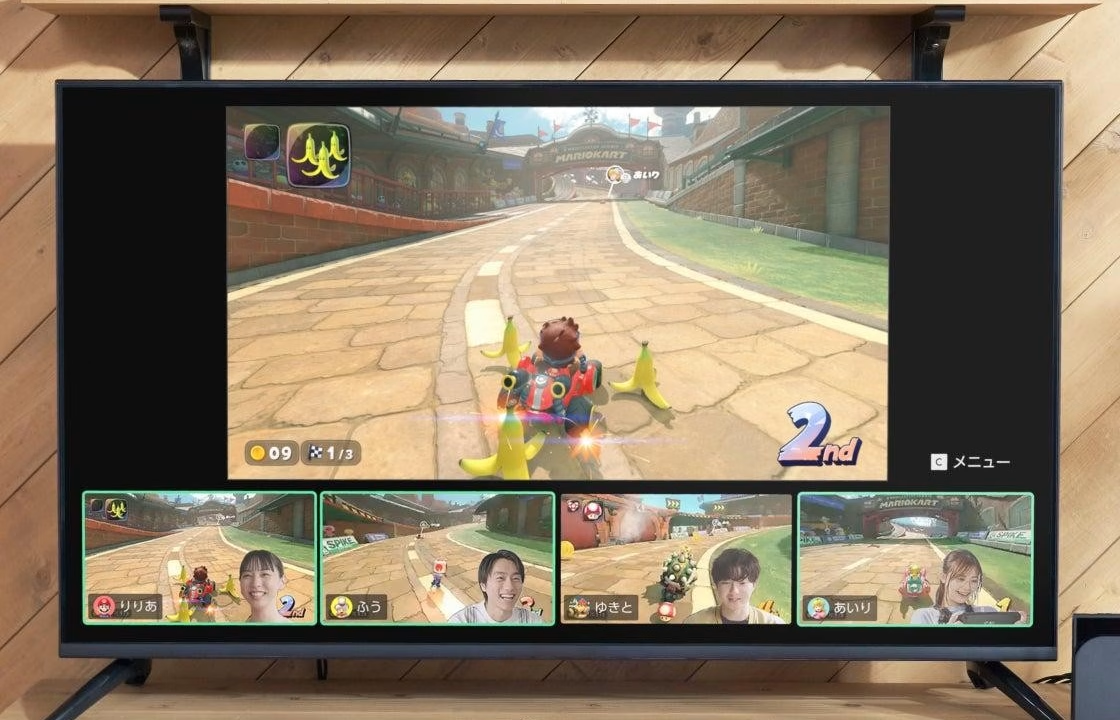
Nintendo has revealed new details about the development of GameChat, the communication feature introduced with Nintendo Switch 2. According to a new developer feature published by Nintendo, work on features for Nintendo Switch 2 began around 2020, years before the console was released in 2025.
The revelation is particularly interesting because Nintendo did not initially develop GameChat directly on Switch 2 hardware. The company first experimented with the concept on PC before creating a special prototype based on the original Nintendo Switch. That prototype allowed Nintendo’s engineers to determine whether players could communicate while continuing to play without the chat experience interfering with gameplay.
Nintendo Started Developing Switch 2 Features Around 2020
Nintendo’s developer feature explains that the company was already considering new communication features around 2020, even though the final form of its next dedicated gaming console had not yet been established.
The engineer responsible for the project explained that one of Nintendo’s major goals was to integrate communication directly into the console and make it work alongside games. The idea eventually became GameChat, which is now one of the defining system features of Nintendo Switch 2.
Nintendo’s official Ask the Developer series also previously confirmed that GameChat development began around 2020 while the team was considering what could be achieved with the next generation of hardware.
The first experiments were conducted on PC. Nintendo tested voice chat and video chat while games were running, eventually discovering that sharing the game screen was an important part of the experience.
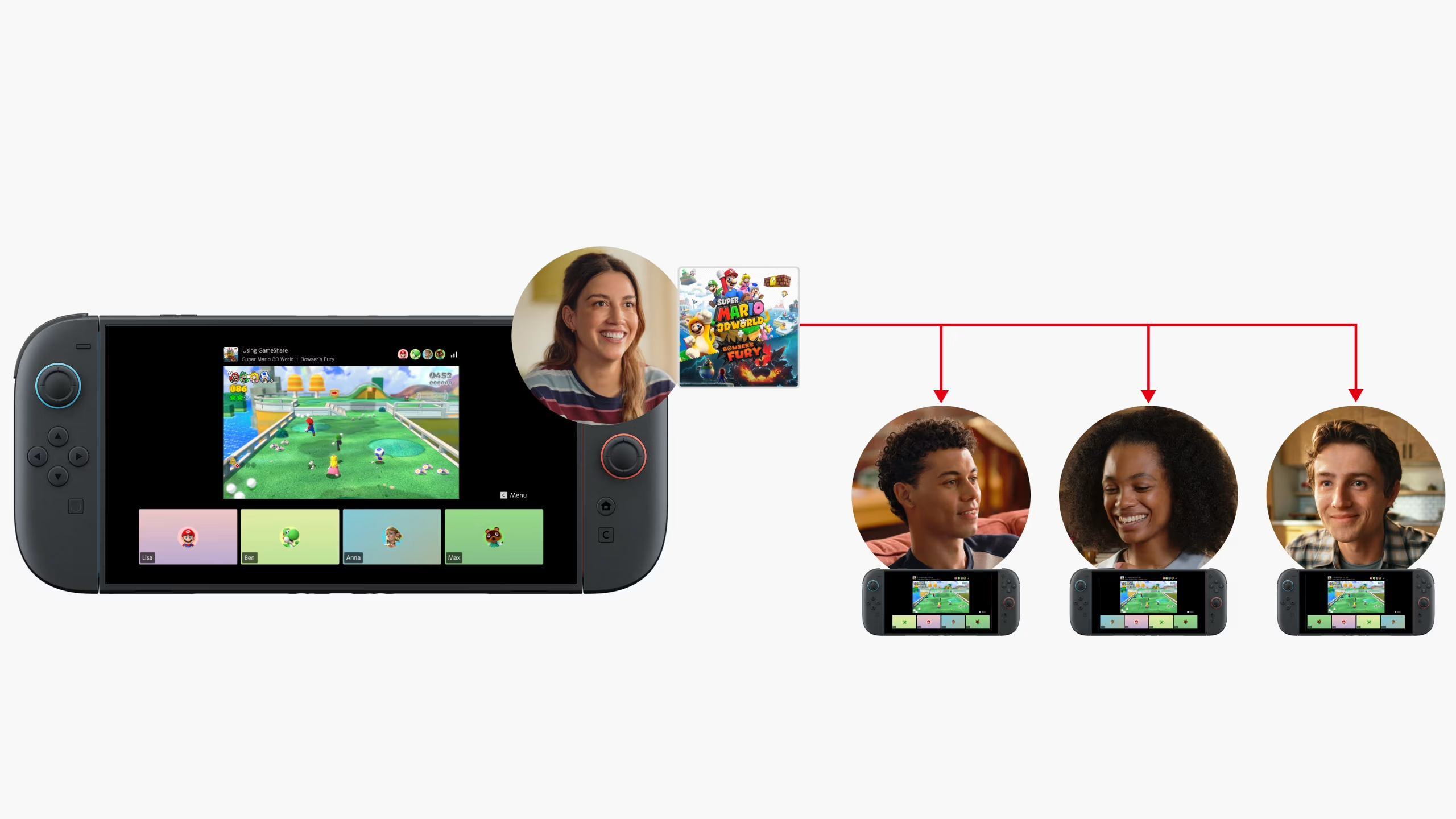
However, PC testing could only go so far. Nintendo needed to know whether the same concept could work on a dedicated gaming console where system resources were more limited and players needed to switch between gameplay and communication without disrupting their session.
Nintendo Built a Special Switch 1 Prototype
To answer that question, Nintendo integrated GameChat functionality into a development kit based on the original Nintendo Switch. The hardware was not configured like a normal retail Switch, as engineers had to rearrange system resources to make the experiment possible.
The original Switch was not designed to simultaneously handle gameplay alongside voice chat, video chat, and game screen sharing. Nintendo therefore worked with teams responsible for firmware, servers, cameras, and other parts of the system to find a way to test the concept.
One important discovery involved the console’s Quick Settings menu. Because the feature could already be accessed while a game was running, Nintendo realized it could provide a foundation for a chat interface that remained available without forcing players to leave their games.
The biggest obstacle was system performance. Nintendo explained that the Switch’s memory, CPU, and GPU limitations meant the complete GameChat experience could not normally run alongside a game.
Engineers therefore used resources available on development equipment and created a configuration that would not have been suitable for a consumer product. This allowed them to finally run GameChat on the modified Switch prototype.
The test confirmed that the concept could work on dedicated gaming hardware. Nintendo found that players could move between gameplay and chat without interrupting the experience, while game screen sharing remained an important part of the interaction.
GameChat Was Designed to Feel Like a Shared Space
Nintendo’s experiments eventually shaped the philosophy behind the finished feature. Rather than treating communication as something separate from gaming, the company wanted GameChat to make playing and socializing feel like one connected activity.
The developer described the goal as creating a “clubroom-like space”, where people could naturally gather, play their own games, talk, watch what others are doing, or simply spend time together.
That idea is reflected in the final Nintendo Switch 2 version of GameChat. Nintendo says the feature supports voice chat for up to 12 people, while up to four participants can simultaneously share their screens or use video chat with compatible cameras.
Players can also share their screens while playing different games, making GameChat more than a traditional multiplayer communication system. Nintendo’s official documentation says users can even join a GameChat session without playing a game themselves and watch another participant’s shared gameplay.
The development process also highlights how Nintendo can begin experimenting with features for future hardware before the final hardware itself is ready. In GameChat’s case, a heavily modified Switch 1 prototype helped Nintendo determine that its vision for integrated communication was worth carrying into the next generation.