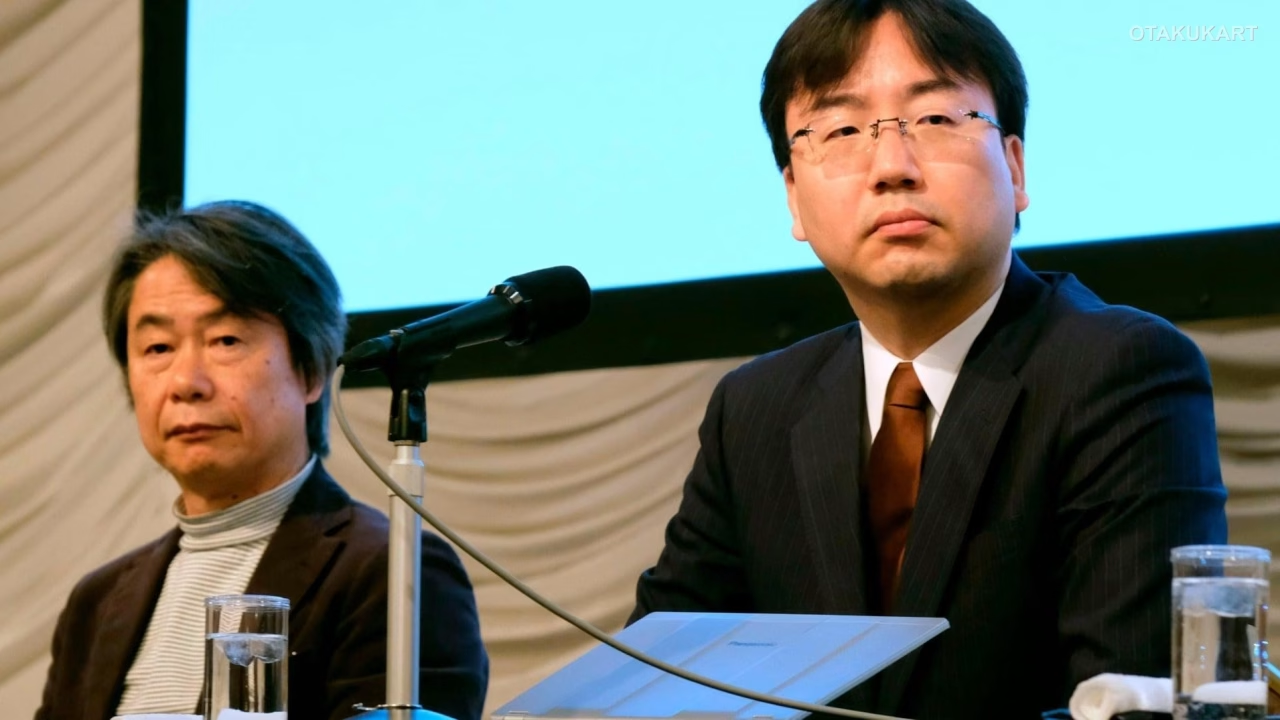
As generative AI becomes increasingly common across the gaming industry, Nintendo has once again clarified where it stands on the technology. During the company’s latest shareholder Q&A session, Nintendo president Shuntaro Furukawa addressed questions about AI, emphasizing that while the company recognizes its creative potential, it remains committed to protecting its intellectual property against any form of infringement.
The comments arrive at a time when game developers and publishers are exploring AI-assisted tools for content creation, programming, and asset generation. At the same time, concerns over copyright, data usage, and ownership have sparked legal and ethical debates worldwide. Nintendo’s latest remarks suggest the company is taking a cautious approach by monitoring technological developments while ensuring its iconic franchises remain protected.
Nintendo says AI laws will shape its approach
During the shareholder Q&A, Furukawa explained that governments around the world are introducing new rules for AI technologies, and Nintendo intends to follow those regulations while safeguarding its intellectual property.
“We are aware that with the rapid evolution of AI technology, countries and regions are moving forward with the establishment of laws and regulations related to AI. Nintendo will comply with these laws and regulations, and we intend to appropriately protect our intellectual property in accordance with the law,”
Furukawa said during the meeting.
His statement makes it clear that Nintendo’s position is tied to existing and future legal frameworks rather than adopting a blanket stance for or against generative AI.
Furukawa also pointed out that AI-related technology has been part of game development for years. He noted that systems controlling enemy behavior and character movement have long relied on AI-like technologies, making AI nothing new for the industry.
However, he distinguished traditional game development tools from modern generative AI, which can create images, text, and other creative assets. According to Furukawa, these newer systems introduce challenges beyond development efficiency, including intellectual property rights and increased power consumption.
The Nintendo president stressed that the company’s enforcement policy remains unchanged regardless of the technology being used.
“Regardless of whether generative AI is used, if Nintendo determines that something infringes on Nintendo IP, our policy is to respond appropriately, and we have no plans to change this policy,” he said.
Nintendo remains focused on original gameplay
Although Furukawa discussed AI’s growing role in development, he stopped short of confirming whether Nintendo plans to use generative AI in future game production. Instead, he emphasized that Nintendo’s greatest strength lies in creating distinctive gameplay experiences rather than relying solely on recognizable characters.
He explained that Nintendo’s intellectual property was built alongside the company’s unique gameplay ideas, adding that the company intends to preserve that philosophy going forward.
The comments come as several gaming companies continue experimenting with generative AI for development workflows, while others face criticism over copyright concerns and the use of AI-generated content. Nintendo has previously demonstrated an aggressive approach toward protecting franchises such as Mario, The Legend of Zelda, and Pokémon, and Furukawa’s latest remarks indicate that the company has no intention of softening that position in the AI era.
For now, Nintendo has not announced any plans to integrate generative AI into its future games. Instead, its latest message focuses on balancing technological innovation with legal compliance and the continued protection of one of the gaming industry’s most valuable portfolios of intellectual property.