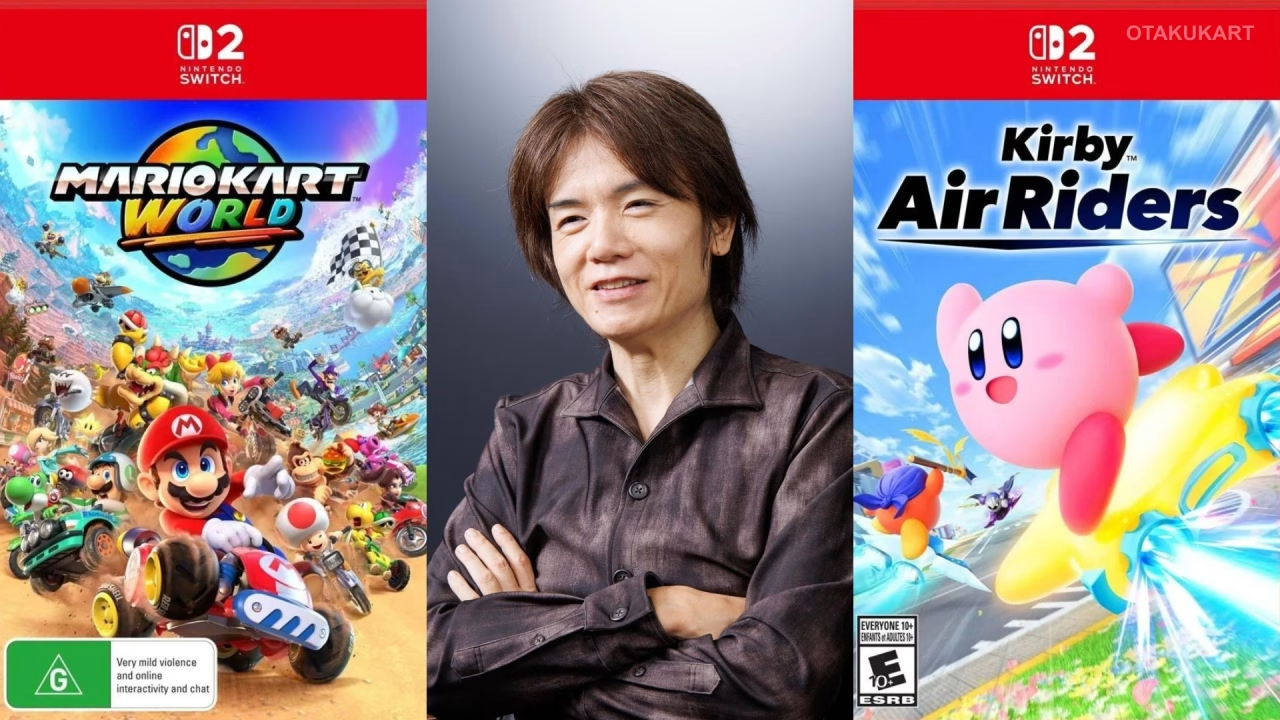
Masahiro Sakurai has addressed an unusual criticism surrounding Kirby Air Riders, revealing that some players consider the Nintendo Switch 2 racing game a “fake Mario Kart.” The game director believes these comparisons stem from players approaching the title with expectations shaped by Nintendo’s established racing franchise rather than understanding its different gameplay mechanics.
Sakurai discussed the issue during a wide-ranging interview with Japanese gaming publication Denfaminicogamer, where originality in game development was one of the central topics.
Sakurai Explains Why Kirby Air Riders Gets Compared to Mario Kart
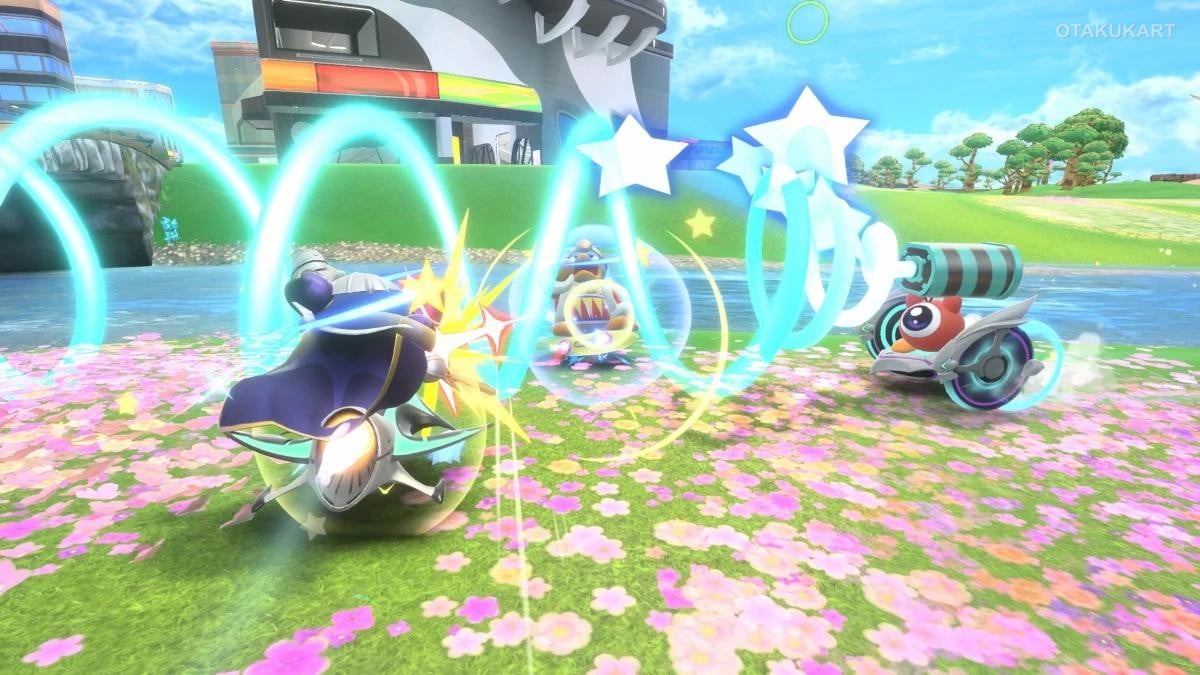
According to Sakurai, Kirby Air Riders can initially feel unfamiliar to players who expect traditional racing mechanics. Unlike conventional racing games, its machines accelerate automatically, while players use a button to brake, drift around corners, and charge a boost.
Sakurai explained that players might question why they need to press a button to stop in a racing game. However, he believes understanding this mechanic is essential to appreciating the experience.
He explained:
“People who understand the game know that the aim here is the ‘push’ action, and from there things like drifting, etc.”
The problem, according to Sakurai, is that some players become uncomfortable with unfamiliar controls before discovering how the mechanics work together.
He acknowledged that some people view Kirby Air Riders as a “fake Mario Kart,” adding that expecting it to play like Mario Kart will lead to disappointment because the two games offer completely different experiences.
Sakurai Calls Originality a Difficult Challenge for Game Developers
Beyond the Mario Kart comparisons, Sakurai discussed why creating original gameplay experiences has become increasingly difficult.
He compared originality to overcoming a “giant ice wall,” explaining that developers must carefully identify what makes a game enjoyable before introducing unfamiliar mechanics.
Sakurai also questioned whether established control conventions in modern games should always remain unchanged. Rather than introducing unusual mechanics simply for novelty, he believes developers should find meaningful ways to change how players experience games.
His comments also connect to his earlier experiences with Super Smash Bros., which initially faced criticism from players who expected traditional fighting mechanics similar to Street Fighter 2 and Virtua Fighter.
For Sakurai, both examples demonstrate the challenge of introducing original gameplay ideas when audiences already have established expectations.