
The global memory market may have entered a new era of permanently higher prices, according to Lenovo. During a presentation at ISC 2026 in Germany, the company warned that DRAM and NAND costs are unlikely to return to the low levels seen in 2025, even after major manufacturing expansions begin later this decade.
The comments come as consumers continue to see higher prices for gaming consoles, PCs, SSDs, and enterprise hardware. With AI infrastructure fueling unprecedented demand for high-performance memory, industry leaders increasingly believe that rising component costs will remain a defining challenge for years to come.
Lenovo predicts a long-term shift in memory pricing
Speaking during ISC 2026, Lenovo outlined its outlook for the memory industry, explaining that current pricing trends are not a short-term fluctuation but part of a broader market transition. The presentation was first reported by ComputerBase
One Lenovo representative remarked that memory prices will “never” return to last year’s levels. Although the statement was made with a laugh and intended as an exaggeration, the company clarified that the market could remain significantly more expensive for at least the next five years.
According to Lenovo, even when new manufacturing facilities begin increasing global production around 2028, the industry is expected to settle into a “new normal” where DRAM and NAND prices remain well above those seen in 2024 and 2025.
The company’s outlook suggests that buyers should no longer expect the dramatic cyclical price drops that have historically characterized the memory industry.
AI data centers are driving unprecedented demand
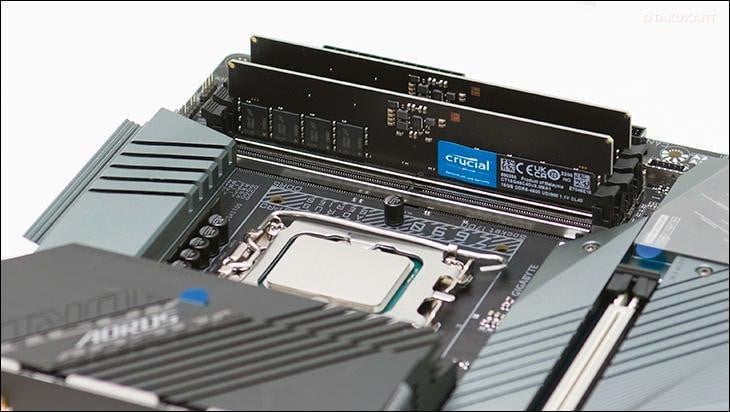
The biggest reason behind the sustained price increases is the rapid expansion of artificial intelligence infrastructure.
Hyperscale cloud providers and AI companies are purchasing enormous quantities of DRAM and high-bandwidth memory years in advance, giving them priority access over traditional PC and consumer electronics manufacturers.
Because these large customers secure long-term supply agreements, memory manufacturers have little incentive to reduce prices while demand continues to outpace production.
This trend has also encouraged companies such as SK Hynix to significantly expand manufacturing capacity through the next decade, reflecting confidence that demand for AI hardware will remain exceptionally strong.
Servers are changing to adapt to expensive memory
Lenovo also noted that businesses purchasing servers now need to rethink how they allocate memory.
Modern enterprise systems increasingly feature processors supporting 16-channel memory configurations. However, filling every memory slot has become prohibitively expensive, making maximum RAM configurations difficult to justify for many organizations.
Instead, Lenovo suggested that GPU-accelerated computing may offer a more cost-effective solution for some workloads. Systems based on Nvidia’s GB200 NVL4 platform, which combine CPU memory with large pools of HBM3e graphics memory, demonstrate how AI-focused architectures are shifting the balance away from traditional CPU-heavy server designs.
The company also pointed to Nvidia’s upcoming Vera processors, where lower default memory configurations could help reduce deployment costs for enterprise customers.
Higher memory costs are affecting consumer electronics
The impact of expensive DRAM extends far beyond enterprise computing. Microsoft recently increased Xbox Series X|S prices once again, while Sony has raised PlayStation 5 prices in several markets since launch. Nintendo has also announced price increases for the Switch 2 in multiple regions.
Although manufacturers often shield consumers through long-term supply contracts, those agreements eventually expire. When replacement components cost substantially more, hardware companies have little choice but to raise retail prices.
Valve recently echoed similar concerns while discussing pricing for its Steam Machine, noting that memory suppliers offered limited flexibility during negotiations.
With the next console generation expected before memory prices stabilize, analysts have already begun warning that future hardware—including Sony’s rumored PlayStation 6—could launch at significantly higher prices than previous generations.
For consumers, Lenovo’s forecast suggests that rising RAM and SSD prices may not simply be a temporary consequence of the AI boom. Instead, they could represent the beginning of a fundamentally more expensive era for PCs, servers, gaming consoles, and other memory-intensive devices.