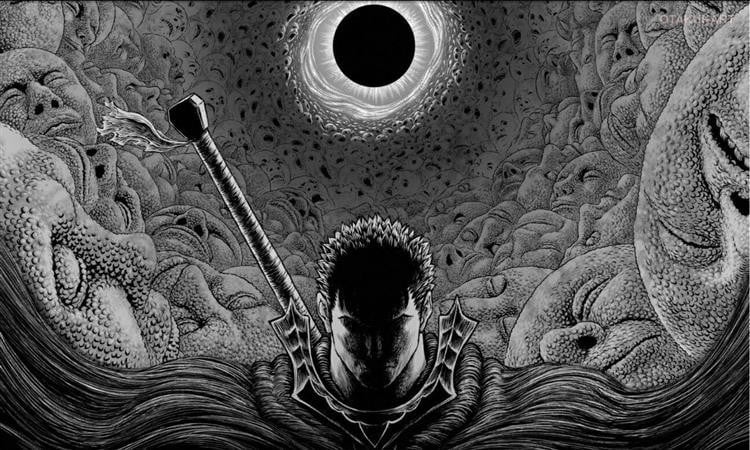
Kentaro Miura’s Berserk is renowned for its extraordinarily detailed artwork, from Guts’ armor and weapons to the monsters and environments filling each panel. In a 2019 interview, however, Miura described his obsession with that level of detail in surprisingly blunt terms.
“The level of detail I put into my drawings is an illness,”
Miura said.
“There’s no other way to describe it.”
The comments were made during a 2019 interview with the Japanese publication Comic Natalie, later highlighted by Popverse.
Why Every Part of Berserk Had to Feel Real
Miura explained that his approach was strongly influenced by the manga he loved while growing up, particularly the highly detailed artwork of Akira and Fist of the North Star. He believed the individual panels should feel like openings into a completely developed world rather than simple drawings that communicate a scene.
“Because they’re windows that peer into another world, there must be something beyond that,”
Miura explained.
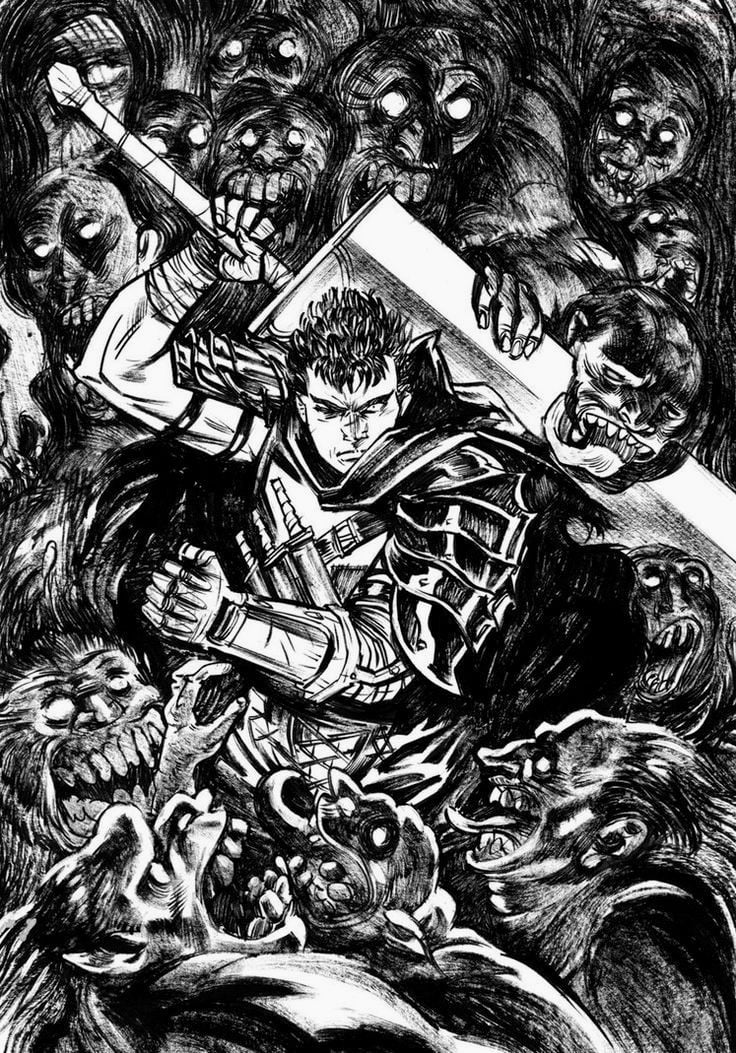
“I want readers to feel as much as possible, even the layers of air.”
That philosophy helps explain why Berserk frequently gives attention to details that many artists might leave in the background. Miura said he wanted the physical qualities of objects to be visible, pointing out that clothing itself has fabric, thread, and different surface textures.
His approach became particularly demanding when scenes contained large numbers of characters. In another discussion about the manga’s artwork, Miura explained that he wanted even background figures to have individual reactions because, in his words,
“They have souls, after all.”
That commitment helped make Berserk one of manga’s most visually influential works. Its detailed medieval fantasy imagery has also been widely associated with later games and artists, while Dark Horse has described the series as an internationally influential action-fantasy epic.
Miura died in 2021, but his explanation of the creative philosophy behind Berserk offers a revealing look at why its artwork remains so distinctive. His goal was not simply to make the pages look detailed. He wanted readers to feel as though there was an entire physical world existing beyond the boundaries of each panel.