

KATSEYE’s Lara has become the center of a heated online discussion following her appearances at Paris Fashion Week, where she incorporated several elements connected to her Indian heritage into her looks.
While many fans praised the singer for representing her culture on an international fashion stage, others questioned whether certain religious symbols were being used primarily as fashion statements.
Lara attended the Loewe Spring/Summer 2027 show in Paris on October 2 alongside fellow KATSEYE member Megan Skiendiel.
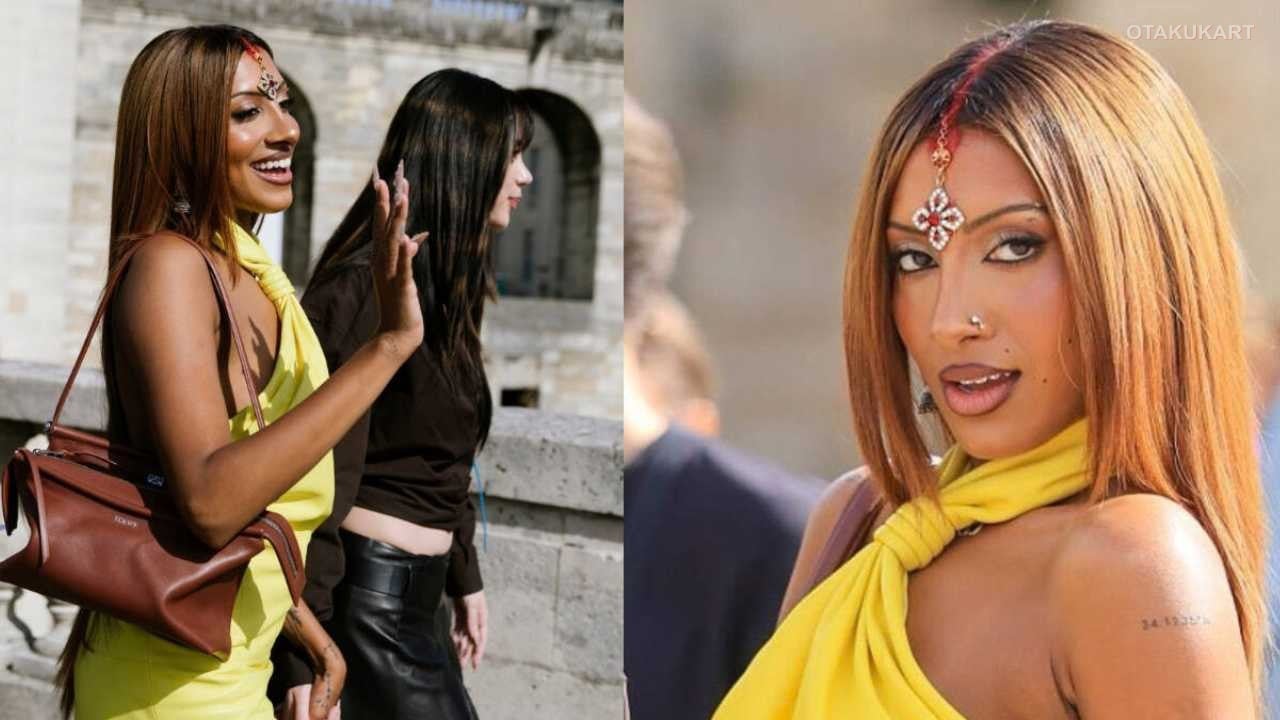
She wore a bright yellow dress styled with Indian-inspired accessories, including a maang tikka and a red mark along the parting of her hair.
The styling quickly sparked debate because the red mark was initially interpreted by many viewers as sindoor, a vermilion traditionally associated with married Hindu women in many communities.
Some social media users criticized the decision, arguing that the symbol has religious and cultural significance that should not be reduced to an aesthetic accessory.
However, Lara later explained that the mark was kumkum and said her styling was inspired by legendary Indian actress Rekha.
She described the choice as connected to her cultural background rather than an attempt to imitate a tradition without understanding its significance.
Lara’s Cultural Inspiration Sparks Debate
Lara’s explanation has led to an even broader conversation about cultural identity and how traditional Indian symbols are interpreted when they appear in international fashion.
According to reports, Lara said during an interview at the Loewe show that she was wearing red kumkum inspired by Rekha.
The actress is particularly known for incorporating Indian beauty traditions into her public image, including her use of vermilion.
Lara’s connection to Indian culture is also not new. The KATSEYE member has previously spoken about her heritage and has regularly incorporated elements such as bindis and Indian jewelry into her personal style.
In a 2025 Teen Vogue interview, she discussed her relationship with the bindi and explained how wearing it became part of expressing her cultural identity.
Despite this background, some social media users remained critical.
They argued that traditional symbols such as sindoor carry meanings that should be considered before they are incorporated into high-fashion styling.
Others took the opposite view, saying Lara should be able to engage with traditions from her own heritage in ways that reflect her personal identity.
Some supporters also argued that her use of kumkum should not automatically be interpreted as a claim that she was wearing a marital symbol.
Fans Defend Lara Amid Cultural Appropriation Claims
The controversy became more complicated when some users accused Lara of “appropriating” her own culture, while others criticized the styling on religious and feminist grounds.
Some commenters argued that using sindoor or kumkum purely as a fashion element could overlook the cultural significance attached to it.
Others suggested that Lara’s decision represented a more personal interpretation of Indian traditions, particularly because she has spoken openly about her heritage before.
The discussion also expanded beyond the Loewe appearance. Lara had recently attracted attention for another Paris Fashion Week look featuring an archival Roberto Cavalli top with an image of Goddess Lakshmi.
Supporters connected the choice to her Indian heritage and her formal name, Vijayalakshmi, while critics questioned the use of religious imagery within fashion.
More recently, Lara addressed the kumkum controversy herself, explaining that the red mark has been part of her life since childhood.
She described it as a sacred blessing she grew up receiving from her family during puja and aarti and connected it to ideas of intuition, strength, and feminine energy.
With KATSEYE continuing to gain international attention, Lara’s Paris Fashion Week appearances have highlighted the complicated conversation surrounding cultural representation in global fashion.
While reactions remain divided, Lara has made clear that her styling choices were connected to her own cultural background and personal inspirations.