Manga is increasingly moving beyond bookstores, comic shops, and fan conventions and into major museum spaces. For Nicole Coolidge Rousmaniere, the curator behind Art of Manga, that transition is not surprising. After seeing visitors become emotional while viewing original manga drawings at San Francisco’s de Young Museum, she became even more convinced that the medium deserves recognition as fine art.
The exhibition is now making its East Coast debut at the Brooklyn Museum, where Art of Manga runs from October 3, 2026, through January 31, 2027. The exhibition features more than 600 original drawings from influential manga creators, including Eiichiro Oda, Rumiko Takahashi, Hirohiko Araki, Jiro Taniguchi, Fumi Yoshinaga, Gengoroh Tagame, Mari Yamazaki, Kazumi Yamashita, Tetsuya Chiba, and Fujio Akatsuka.
WHY NICOLE ROUSMANIERE BELIEVES MANGA BELONGS IN MUSEUMS
In an interview with Crunchyroll News, Rousmaniere discussed the long-standing debate over whether manga should be treated as museum-worthy art. Rather than questioning the medium’s place in galleries, she said she has largely ignored those who argue against it.
Her strongest realization came while working on the earlier Art of Manga exhibition at the de Young. Rousmaniere recalled seeing visitors cry while looking at original manga drawings.
“When I saw visitors cry in front of manga drawings at the de Young, I knew that it belonged on these walls,”
Rousmaniere said.
She also pointed to what she considers an unusual cultural bias toward written storytelling over drawn imagery. In her view, manga should not be dismissed simply because its storytelling combines sequential images and text.
“There is a wide range of manga expressions, some of it basic and some of it exquisite,”
she explained.
“But it is the pulse of visual storytelling in Japan and increasingly around the globe and deserves a seat at all museums.”
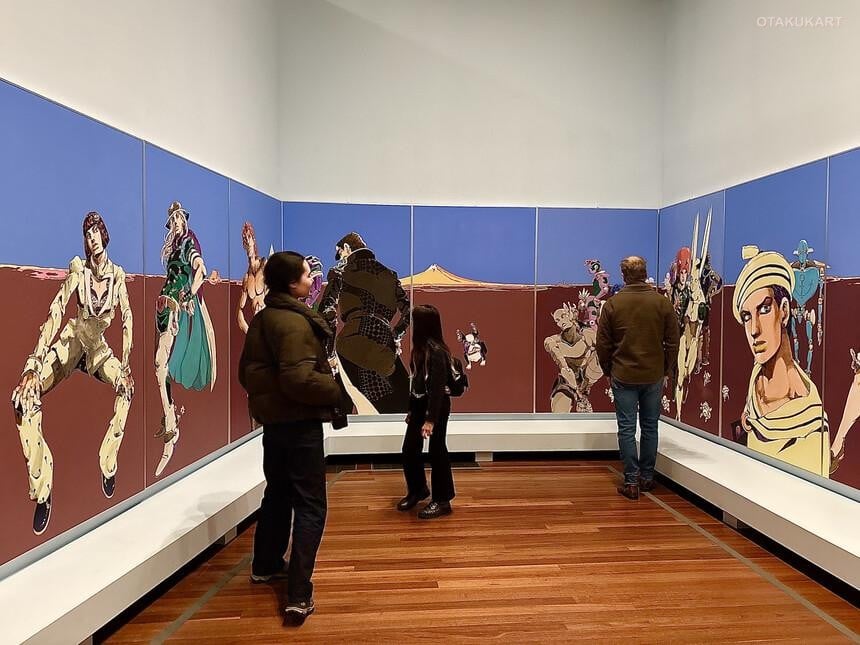
ART OF MANGA PUTS ORIGINAL DRAWINGS AT THE CENTER
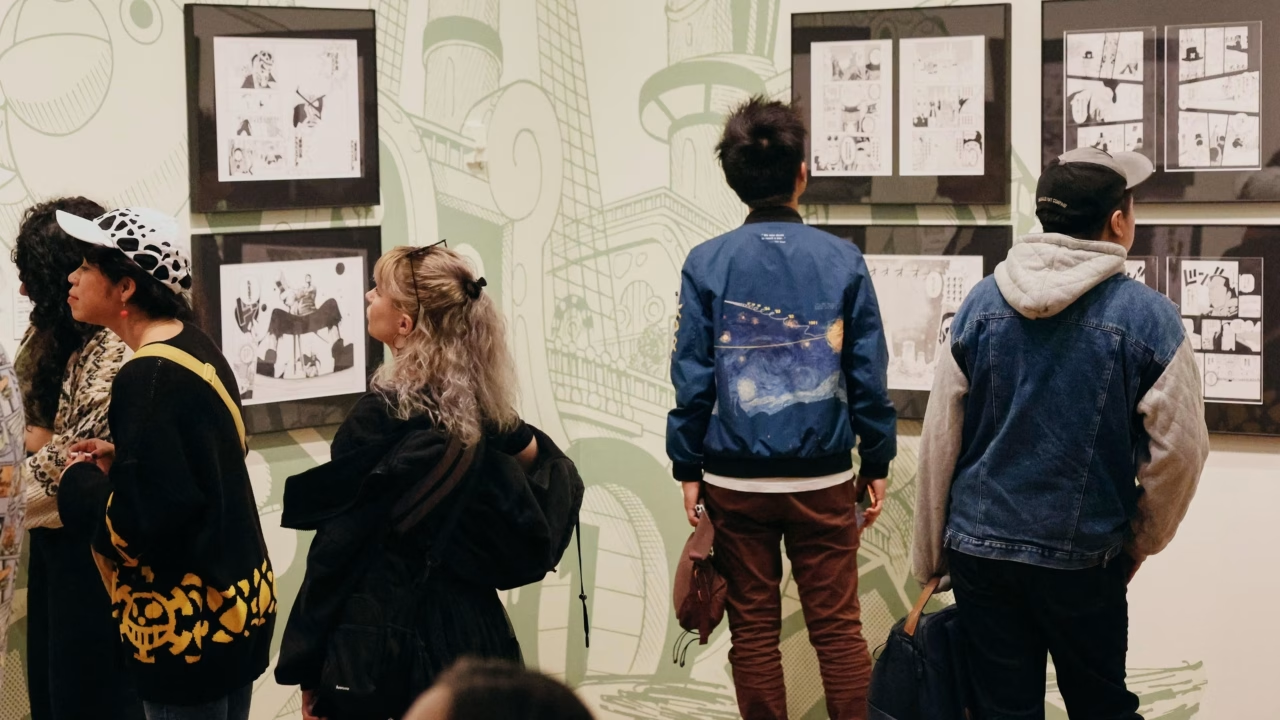
A major distinction of Art of Manga is its focus on original artwork, rather than simply displaying printed manga volumes. The exhibition gives visitors an opportunity to examine the physical drawings that eventually become the pages readers encounter in published books.
Joan Cummins, Curatorial Chair and Selz Senior Curator of Asian Art at the Brooklyn Museum, said the original drawings have a quality that can disappear in reproduction. She compared experiencing the originals with hearing music performed live rather than listening to a recording.
The Brooklyn Museum exhibition contains more than 600 drawings and includes original works connected to major series such as ONE PIECE, Inuyasha, JoJo’s Bizarre Adventure, and Ōoku: The Inner Chambers. The museum describes the exhibition as the first major exhibition in the Americas to explore manga specifically as an art form.
The exhibition also follows manga’s development through different artists, genres, and approaches to visual storytelling. Visitors can examine how line, composition, movement, emotion, and perspective are used to construct entire worlds on paper.
FROM THE BRITISH MUSEUM TO BROOKLYN
Rousmaniere’s work on Art of Manga has developed over many years. Her involvement began with smaller manga projects during her time at the British Museum before she curated the museum’s large-scale Manga exhibition in 2019.
That exhibition attracted a particularly young audience and became one of the British Museum’s successful exhibitions at the time, but Rousmaniere felt there was more that could be done to highlight the artists themselves.
The subsequent Art of Manga exhibition at San Francisco’s de Young allowed her to concentrate more heavily on original drawings and individual creators. The San Francisco exhibition featured the work of 10 major manga artists and ran from September 2025 into early 2026.
The Brooklyn presentation now gives a new audience the opportunity to experience that approach. It also places contemporary manga alongside the museum’s broader engagement with Japanese art, including Manga Before Manga: Japanese Art from the Collection, which examines historical Japanese visual storytelling traditions that helped shape the medium.
For Rousmaniere, the growing presence of manga in museums reflects the medium’s increasingly global cultural influence. The emotional response from visitors, however, may be the simplest evidence of why she believes manga belongs there: the drawings are capable of communicating ideas, characters, movement, and emotion far beyond the printed page.