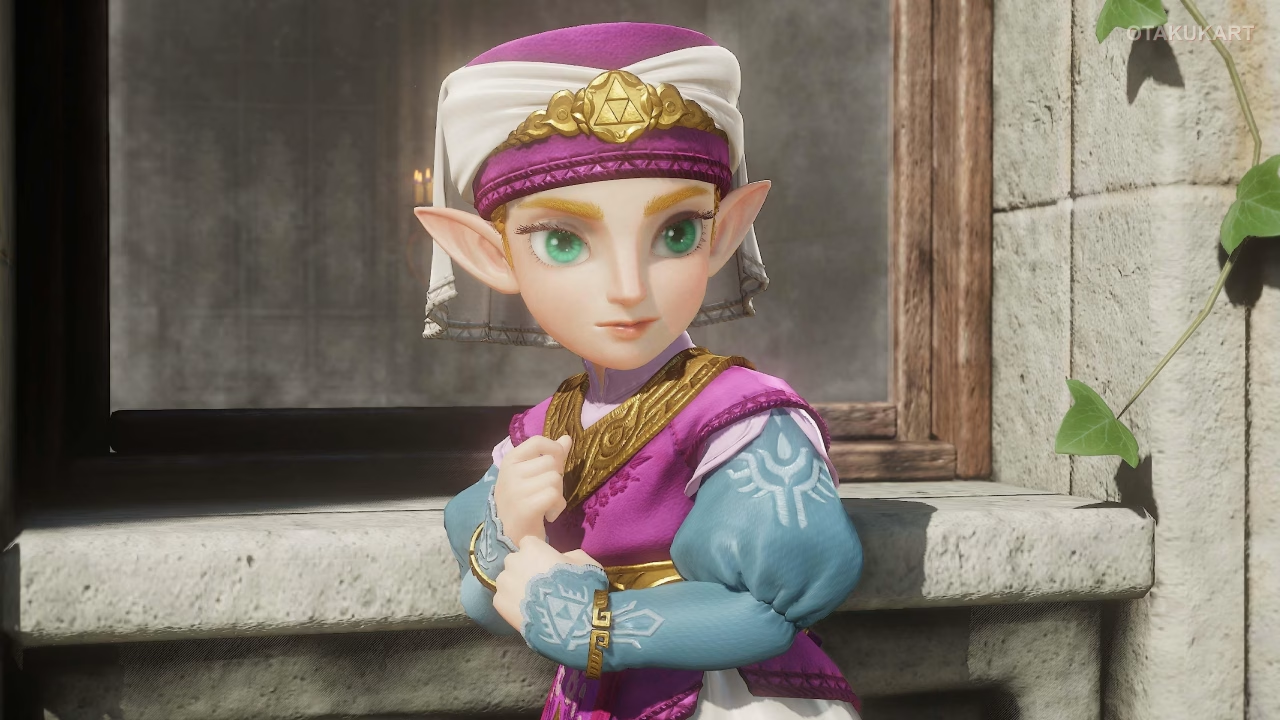
Nintendo faced an unusual artistic challenge while developing its The Legend of Zelda: Ocarina of Time remake for Nintendo Switch 2. Although modern hardware allows developers to recreate the Nintendo 64 classic’s characters with considerably greater detail, simply reproducing their original designs was not an option. Producer Hidemaro Fujibayashi explained that some of the visual exaggerations used in the 1998 game could produce an unintended result when recreated with contemporary technology.
Speaking in Nintendo’s official developer interview, Fujibayashi discussed the difficulties of adapting the original characters while retaining their distinctive personalities. The conversation also featured series producer Eiji Aonuma, art director Aya Shida, director HokWai Ng, and program director Hiroki Taguchi, who shared details about the remake’s visual direction and development process.
Nintendo Had to Rethink Ocarina of Time’s Exaggerated N64 Character Designs
Fujibayashi explained that the original Ocarina of Time was developed around the technical limitations of the Nintendo 64. Developers exaggerated certain character features and movements to make their personalities recognizable despite the hardware’s restrictions.
However, recreating those same artistic decisions with modern graphics could produce an entirely different impression. Fujibayashi addressed this challenge during the interview, saying:
“With those limitations in mind, the developers chose to exaggerate the characters’ movements and defining features so that their distinctive qualities would come through. But if we recreated all of that precisely with today’s technology, it might look a little creepy.”
He added that finding the right balance while preserving each character’s individuality was a considerable challenge for the development team.
This meant Nintendo couldn’t simply increase the resolution, improve the textures, and reproduce every original character model with greater detail. Instead, the designers had to reconsider how Link, Zelda, and the other inhabitants of Hyrule should look in the remake.
Shida explained that the team wanted players to recognize the characters immediately, including their familiar appearance from a distance. Although the new designs look noticeably different when compared directly with their Nintendo 64 counterparts, preserving their recognizable qualities remained a priority.
Once the team established that direction, it allowed designers to explore new interpretations rather than restricting them to more realistic versions of the original models.
Puppet Shows and Practical Effects Inspired the Remake’s Visual Direction
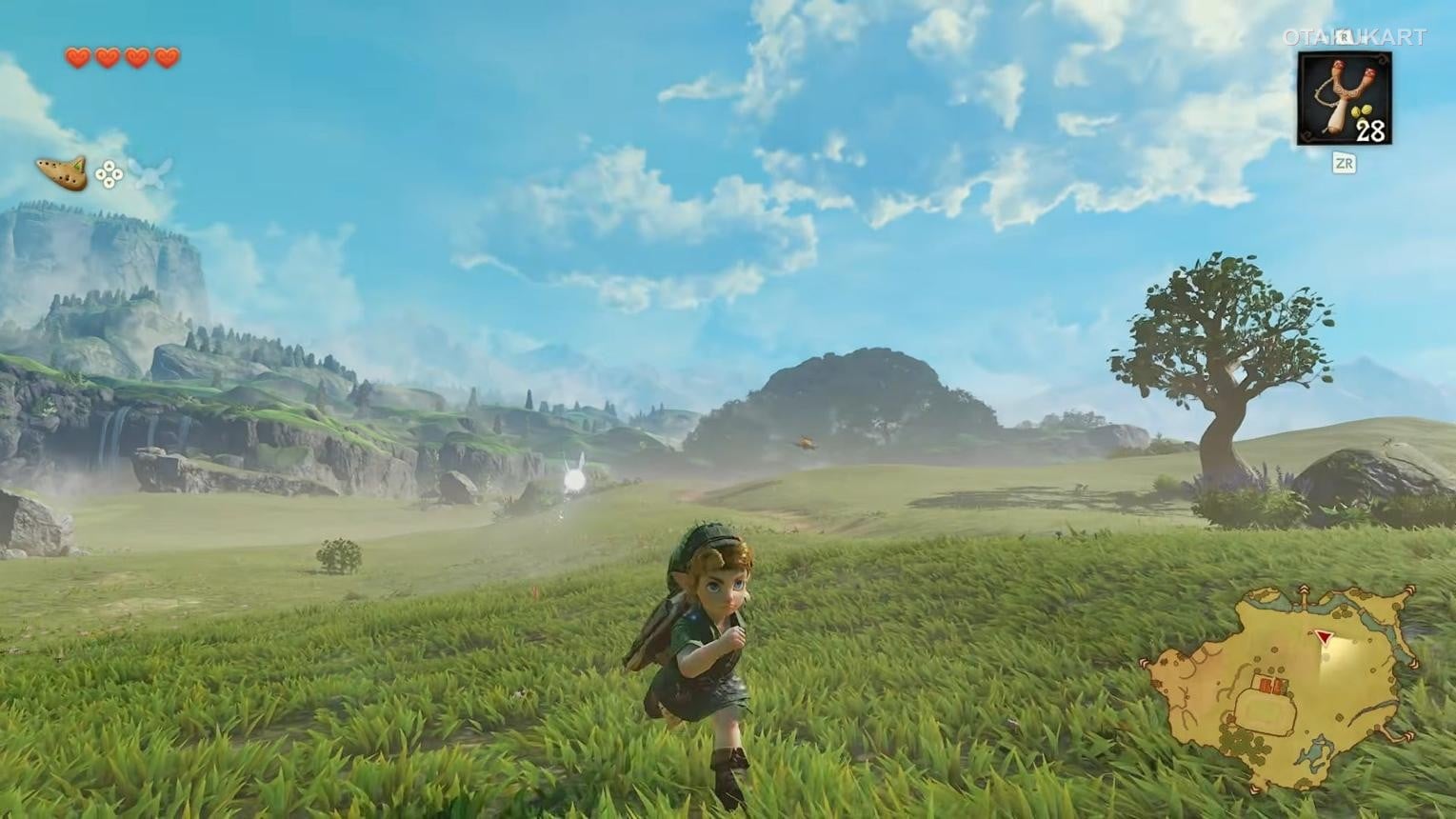
Nintendo’s approach extended beyond updating individual character models. Shida revealed that the team wanted Hyrule to feel like a detailed, believable world without losing the mysterious atmosphere of the original game.
The developers used two distinctive concepts to guide the art direction: a “puppet-show feel” and the “analog feel of practical effects films.” Both approaches create convincing fantasy environments without attempting to reproduce reality perfectly.
The team initially explored this direction through character sketches of Link, Zelda, and other familiar faces. Developers also created a detailed 3D model of the Great Deku Tree, carefully adjusting its textures and lighting to demonstrate how the characters would fit into the redesigned world.
Aonuma found the approach particularly interesting because the original developers had never intended Ocarina of Time to feel nostalgic. When the Nintendo 64 version was being created, they were attempting to produce something technologically cutting-edge. However, the current team viewed those original artistic decisions through a nostalgic perspective, which eventually influenced the remake’s puppet-show aesthetic.
Developers Studied Real Materials to Make Hyrule Feel Believable
The attention to detail also extended to the characters’ clothing. Shida revealed that the team researched how Young Link’s clothes might realistically be made by children living in Kokiri Forest.
Rather than giving his outfit an overly polished appearance, the designers wanted its fabric to reflect the environment and circumstances of its fictional creators.
Shida explained that the team visited museums to examine different materials and even experimented with making fabric using thread. Developers discussed the story behind individual objects to ensure that their appearance made sense within the world.
Program director Hiroki Taguchi also highlighted the amount of work involved in implementing these details. The team wanted to recreate the sense that characters genuinely belonged in Hyrule, extending that philosophy to their movements and even the way grass responds in the overworld.
Director HokWai Ng added that developers examined every character individually, considering their personalities, locations, and behaviour rather than relying on more efficient production methods.
Ocarina of Time Remake Will Preserve the Original’s World Design
The developers also wanted to retain the original game’s approach to exploration rather than redesigning Hyrule as one seamless environment.
Ng confirmed that the remake continues to use separate maps for locations such as Kokiri Forest and Hyrule Field. The team believed these transitions were an important part of the original adventure because entering a new area created anticipation about what players would discover next.
The artists also adjusted the visual scale of Hyrule Field. Shida explained that inaccessible locations received less environmental detail, while important landmarks such as Hyrule Castle and the windmill were deliberately enlarged. This helped players distinguish explorable locations from distant scenery without changing the original world’s layout.
Nintendo also brought back the illustrator responsible for the Nintendo 64 version’s maps to create a new map for the remake.
The project launches on November 5, 2026, exclusively for Nintendo Switch 2. Nintendo’s official game page confirms that the remake features overhauled visuals, voiced cutscenes, expanded dialogue, orchestral music, and modernised controls.
The development team’s comments suggest that Nintendo’s goal was never simply to make Ocarina of Time look more realistic. Instead, it wanted to preserve the qualities that made its characters and world memorable while using modern hardware to give them a new visual identity.
| Release Date | November 21, 1998 |
|---|---|
| Platforms | Nintendo 64, Nintendo GameCube, iQue Player, Nintendo 3DS +1 more |
| Developer | Nintendo EAD |
| Director | Eiji Aonuma Yoshiaki Koizumi |
| Writer / Narrative | Nintendo EAD Toru Osawa |