

Darkroom is bringing the acclaimed Japanese comedy-drama Hula Girls to its streaming catalog, giving audiences another opportunity to discover Sang-il Lee’s award-winning film. Originally released in Japan in 2006, the movie is inspired by the real-life transformation of a declining coal-mining community in Iwaki, Fukushima, where residents turned to tourism in an effort to save their town.
The story centers on a group of young women who agree to learn hula dancing for a new Hawaiian-themed tourist attraction. What begins as an unfamiliar and controversial idea gradually becomes a symbol of hope for the community. The film combines comedy and drama with a coming-of-age story while exploring the economic and social changes affecting Japan as the country moved away from coal.
According to Darkroom, Hula Girls joins its growing selection of independent, foreign, arthouse and cult films. The streaming platform offers memberships starting at $2.99 per month.
Hula Girls Tells the True Story Behind a Japanese Tourist Destination
Set in 1965, Hula Girls follows a mining town facing an uncertain future as the Japanese energy industry increasingly shifts from coal toward oil. Local leaders develop an ambitious plan to build a Hawaiian-style resort around the area’s hot springs, eventually leading to the creation of the Joban Hawaiian Center, now known as Spa Resort Hawaiians.
The biggest challenge is finding people capable of performing the hula. The company brings Madoka Hirayama, played by Yasuko Matsuyuki, from Tokyo to train a group of inexperienced local girls. Among them are Sanae, played by Eri Tokunaga, and her best friend Kimiko, portrayed by Yū Aoi. Shizuyo Yamazaki and Shoko Ikezu also appear as Sayuri and Hatsuko.
The initial training is anything but smooth. The girls face skepticism from their families and neighbors, while Madoka herself struggles to adjust to the community. Their first performances are far from successful, but the dancers gradually become a unified group and eventually prove that the unusual tourism project can work.
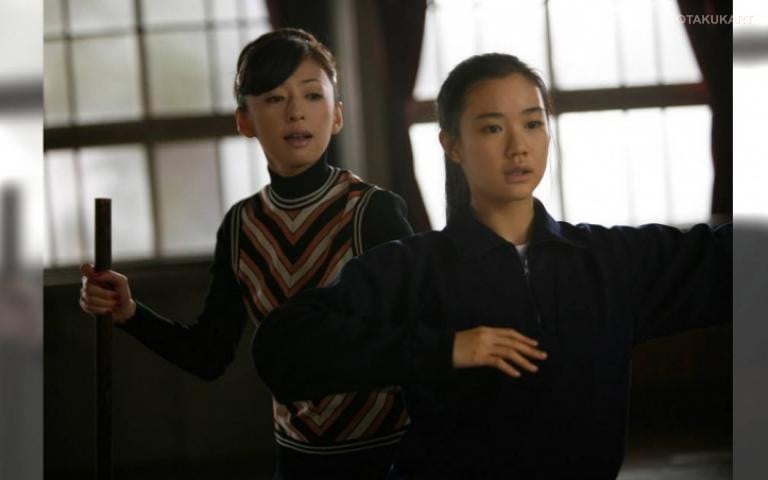
The real-life story behind the movie gives its central conflict added significance. Japan’s official film database, JFDB, confirms that the film is based on the people involved in creating the Joban Hawaiian Center and identifies Lee as both director and screenwriter alongside Daisuke Habara. The resort that inspired the movie continues to operate as Spa Resort Hawaiians.
Why Hula Girls Remains One of Japan’s Acclaimed Films
Hula Girls received substantial recognition following its Japanese release. The film earned 12 nominations at the 2007 Japan Academy Awards and won five major prizes, including Best Picture, Best Director, Best Screenplay, Best Supporting Actress for Yū Aoi and Most Popular Film.
It also received major recognition from the Kinema Junpo Awards, including Best Film and Best Supporting Actress for Aoi. The Japan Foundation Touring Film Programme has also described the movie as a heartwarming story about coal miners’ daughters who help transform their struggling community.
For Darkroom, adding Hula Girls expands its Japanese live-action selection while bringing an internationally recognized film to a new streaming audience. The movie is particularly notable for combining its historical setting with an accessible story about friendship, perseverance and community transformation.