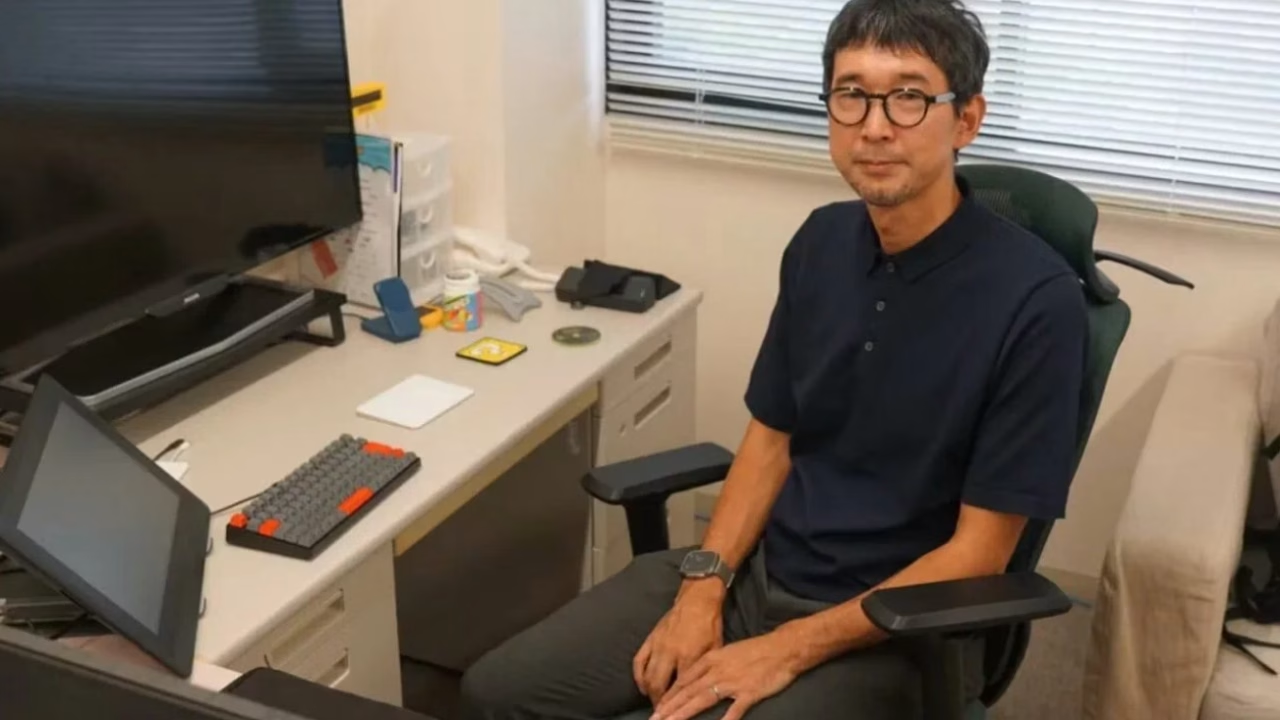
Former WarioWare series director Goro Abe says leaving Nintendo and becoming a university professor has given him a different perspective on game development. After more than 25 years at Nintendo, Abe now teaches game design at Osaka Electro-Communication University while researching new forms of interactive experiences.
Speaking to VGC, Abe explained that his decision to leave Nintendo came partly from thinking about how much time remained in his career. He turned 50 and realized that traditional game development could limit the number of projects he would be able to work on.
“Making games takes a lot of time, and I knew that based on my age and career that I could not make that many more games in the future,”
Abe told VGC.
“And I wanted to challenge myself to do other stuff.”
Abe subsequently joined Osaka Electro-Communication University, where he teaches students about game design and how games can potentially address social issues. He is also involved with the university’s Experimental Game Design Laboratory, allowing him to continue exploring new ideas rather than leaving game development behind.
Leaving Nintendo Exposed Abe to Different Development Perspectives
One of the biggest changes for Abe has been his closer interaction with younger players and aspiring developers. After spending decades inside Nintendo, working outside the company has allowed him to observe how other developers and students approach games.
“It’s very interesting for me to be closer to the players,”
Abe said.
He also explained that leaving Nintendo helped him understand perspectives he would not necessarily encounter while working inside the company.
“Going away from Nintendo also kind of made me understand different perspectives, like how other companies and developers are thinking, and also understanding the indie scene a little bit more,”
he said.
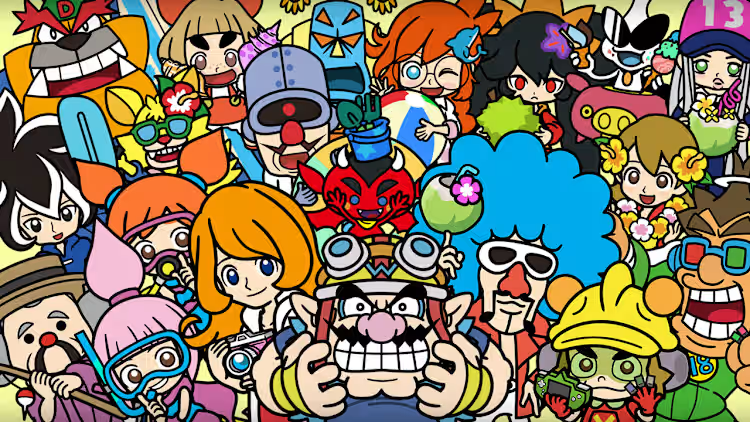
That experience is particularly relevant to Abe’s teaching role. His extensive work on WarioWare, where games are built around extremely short and focused interactions, has given him an unusual perspective on designing around limitations.
“Making very short games like this has a lot of constraints,”
Abe explained.
“It helps me a lot to teach students who are trying to make games because of the constraints that come with making those types of games.”
The WarioWare Veteran Wants to Make More Unconventional Games
Although Abe left Nintendo, he has no plans to stop creating games. His university responsibilities currently limit the amount of time he can dedicate to development, but he is already considering projects with developers and industry contacts he knows.
A major difference is that Abe now has more freedom to experiment without having to prioritize the commercial requirements that come with working at a major publisher.
“I no longer need to think about profitability, making sure you can sell a lot, or making sure you understand the dedicated controllers or specialized devices,”
Abe said.
He stressed that commercial limitations were not necessarily negative during his Nintendo career. In fact, he enjoyed finding creative solutions within those restrictions. His current position simply allows him to explore another side of game design.
“I feel I want to make things that are a bit more outside of the box and that can simply move people through the experience,”
Abe said.
Abe Wants to Make Games for People Who Do Not Usually Play Games
Abe’s ambitions also extend beyond traditional video game audiences. His current research explores how game design principles can be used to create experiences for people who may not consider themselves gamers.
“My approach is really about trying not necessarily to make games for gamers, but games for other people who don’t necessarily play games,”
he told VGC.
This approach could eventually include gamification, experimental interactive experiences and collaborations between universities and the games industry. Abe has also expressed interest in using controllers as the foundation for experiences unlike the conventional games he worked on during his Nintendo career.
Abe’s Nintendo career began in 1999, when he worked on projects including Wario Land 4. He subsequently became one of the central figures behind WarioWare, working across numerous entries before directing the most recent mainline release, WarioWare: Move It! in 2023. He left Nintendo at the end of February 2026 and began his university role in April.
His next projects may therefore look very different from WarioWare, but Abe’s latest comments suggest that leaving Nintendo has not ended his creative career. Instead, it has given him the opportunity to experiment with game design beyond the commercial constraints that shaped much of his previous work.