


Every long-running fic hits the same wall. Your cold, proud rival spends ten chapters refusing help, and then a draft tool has him thank the hero with a warm smile. Your power system says every technique has a cost, and a side character ignores it. Your isekai guild has strict ranks, and a new adventurer jumps from bronze to gold in one scene. Readers notice these breaks fast.
That is the real test for an AI writing aid. You still plan the arcs, write the key scenes, and decide who your characters are. The tool’s job is smaller: remember the facts you give it and stay inside them. We checked seven platforms that claim real memory to see which ones keep your canon straight across a long arc.
How We Picked the Best AI Story Writers for Anime Fan Fiction
Our first filter was simple: does the tool remember your canon? To check, we compared official documentation, live pricing pages, and public user complaints, and we ignored gated betas and hand-picked demo prompts.
This matters most for serialized fics posted one chapter at a time. Chainsaw Man creator Tatsuki Fujimoto has said that a weekly schedule left no time to plan, so he had to trust the characters. A tool that forgets who a character is makes that trust impossible.
Each candidate earned a weighted score across seven factors:
- Lore memory and context architecture (25%)
- Fantasy and fan-fiction adaptability (15%)
- Steering and creative control (15%)
- World-building utilities (15%)
- Prose and dialogue quality (12%)
- Ease of use (10%)
- Price and portability (8%)
Memory counts three times more than price, because a cheap tool that forgets your canon still costs too much.
Here is the scoring shorthand. The deep dives follow.
| Tool | Lore system | Best use | Main catch |
| DreamGen | Scenario Codex | Ensemble role-play & prose | No mobile app |
| Novelcrafter | Codex + Progressions | Series bibles & timelines | API setup |
| Sudowrite | Story Bible | Guided drafting | Credit budgeting |
| NovelAI | Lorebook + Memory | Power users | Steep learning curve |
| AI Dungeon | Memory Bank + Cards | Branching adventures | Turn-based prose |
| Claude | Project knowledge | Large canon analysis | No fiction editor |
| Squibler | Elements | Fast structured drafts | Unknown context limit |
1. DreamGen: Best for Ensemble Casts and Plot Steering
DreamGen treats lore as live data. The Scenario Codex stores characters, locations, items, and style notes, then inserts only the relevant slice into each reply. Your rival’s cold manner and your power system’s rules sit in one place and travel into every scene. Two workspaces share that canon:
- Role-Play Mode adds a narrator and NPC slots, so ensemble scenes unfold in one chat.
- Story Writing Mode opens a clean editor where inline commands adjust tone, pacing, or point of view on demand.
Setup is quick. A Scenario Wizard turns an outline into Codex entries, and a Role-Play Assistant suggests prompts that respect existing canon. Hosted models (headed by GLM 4.7) offer 5,000- to 30,000-token windows, which lets a long arc survive into its third act. You can edit any message after generation to stop errors before they echo forward. If you are weighing DreamGen against Sudowrite, DreamGen’s Sudowrite AI review sets out Sudowrite’s pricing, features and writing quality side by side, so you can compare the two before you commit.

Best Fit
DreamGen helps writers who juggle ensemble casts: a guild with rival parties, a school club with five strong personalities, or a team where one member hides a secret identity. The Scenario Codex keeps every alias and injury aligned, while inline edits let you redirect a scene mid-draft without breaking continuity.
Price
DreamGen starts with an entry tier that comes with monthly credits, and the Starter, Advanced and Pro plans raise the context window from 5,000 tokens up to 30,000 tokens on Pro. Each plan shows its limits before you click Generate, so cost never creeps.
Trade-Offs
There is no native mobile app (only a responsive web view), a smaller public scenario library than some rivals, and no built-in text-to-speech. For writers who care most about continuity, those comforts can wait.
2. Novelcrafter: Best for Series Bibles and Timeline Changes
Novelcrafter treats continuity like a living series bible. The Codex records every new character, alias, realm, or relic the moment it appears, while Progressions track what changes, such as loyalties, ages, or broken pacts, so chapter one never contradicts chapter forty. Writers add custom fields for technique costs, bloodlines, or political factions, then choose exactly which snippets enter each prompt.
Because you connect an OpenRouter key or local model, the engine forwards only relevant facts, which trims token cost without losing recall. That mix of database structure and selective retrieval makes Novelcrafter the runner-up: strong for timeline-heavy fics when you want the AI to obey existing canon and stay under your command.

Best Fit
Novelcrafter excels when your fic covers a time skip or a war arc; the Codex and Progressions untangle shifting alliances while you write.
Price
Scribe costs $4/month for note-taking. At $8/month, Hobbyist unlocks AI generation; higher tiers add collaboration, but you still supply the model key, so usage fees scale with words, not arbitrary credits.
Trade-Offs
Expect a short setup, typically 30 to 60 minutes to link an API, tune temperature, and test prompts. Token limits depend on the model you choose, so long-form writers must verify capacity.
3. Sudowrite: Best for Fiction-First Prose and Guided Drafting
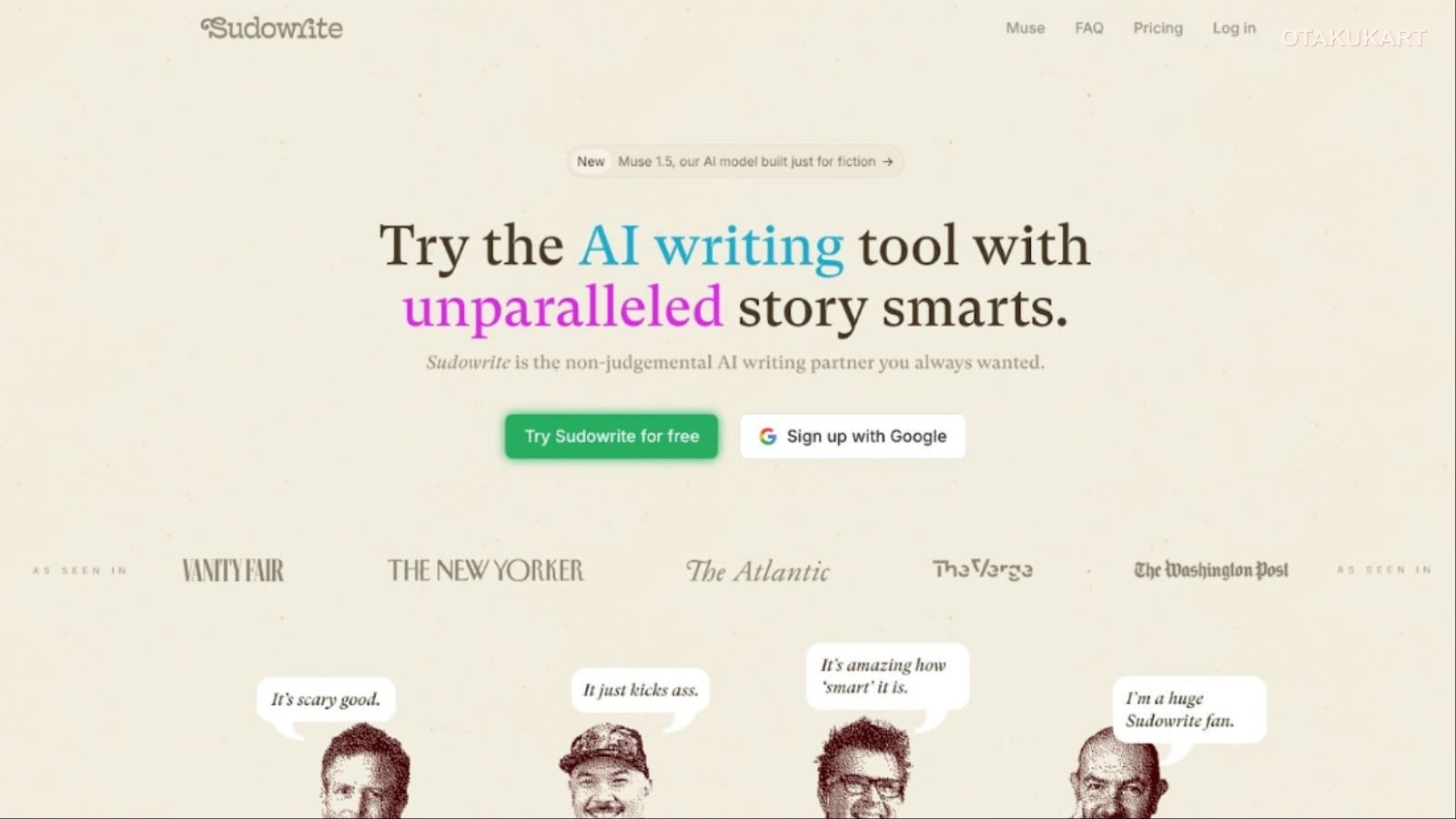
Sudowrite puts prose first. Muse sparks plot ideas, then Write expands each beat into full sentences that carry rhythm and foreshadowing. Behind the scenes, Story Bible cards store characters, settings, and style notes, while Chapter Continuity can read up to 25 documents (about 20,000 words) of your manuscript before it adds a line, so each new scene follows what you already wrote. Series Folders push the same lore across multiple books, which keeps a multi-part fic coherent without re-entering data.
Best Fit
Sudowrite suits writers who want a guided path from outline to polished prose without hand-coding prompts, such as a slice-of-life fic where mood matters more than battle math.
Price
Annual plans start at $10/month; higher tiers at $22 and $44 raise the credit pool and queue speed. Credits are spent only on AI writing, so manual edits and outlining stay free.
Trade-Offs
Track usage; the 120,000-word binge draft cited by users can double your monthly spend. Lore lives on cards, not in a relational timeline, and the memory look-back tops out at about 20,000 words (around 4,000 tokens). Choose Sudowrite if voice matters more than spreadsheet-level canon math.
4. NovelAI: Best for Lorebook Power Users
NovelAI is built for tinkerers. In the Lorebook, you tag each character or magic system with activation keys; when a key appears, only the matching snippet joins the prompt, so no context is wasted. A persistent Memory panel holds evergreen facts, while an optional Author’s Note enforces genre voice every time you hit Generate.
On the top Opus tier, the Xialong model offers 28,672 tokens of live context plus an 8,192-token rollover, which gives you room for long side arcs without trimming lore. Because you can tune repetition penalties, bias phrases, and temperature per scene, NovelAI rewards writers who treat prompt setup as part of the craft.

Best Fit
NovelAI suits writers who enjoy wiring their own prompts, tagging lore, adjusting sampling, and watching scenes pivot as soon as an activation key appears.
Price
Tablet is $10/month, Scroll $15, and Opus $25. Opus unlocks the Xialong model with 28,672 tokens of live context plus an 8,192-token rollover.
Trade-Offs
Expect a learning curve: you will manage keys, bias settings, and runaway branches yourself. There is no automatic timeline or spreadsheet canon, so housekeeping stays manual. Choose NovelAI if granular control outweighs convenience.
5. AI Dungeon: Best for Branching Adventures
AI Dungeon is built for choice-driven stories, which suits isekai-style fics. Each turn, the engine 1) creates a running summary of prior events, 2) pulls only the matching entries from its Memory Bank, and 3) layers fixed Story Cards (maps, monster stats, campaign rules) into the prompt.
As a result, facts revealed an hour ago still govern the finale, and your guild ranks or dungeon floors stay the way you set them. Plot Essentials and a persistent Author’s Note keep genre tone consistent, while multiplayer mode lets friends control their own heroes in the same thread. Premium tiers lift the context ceiling to 32,000 tokens, so long campaigns with flashbacks and detours stay coherent without manual pruning.

Best Fit
Choose AI Dungeon when you prefer branching choices over polished chapters and want to replay alternate routes.
Price
Wanderer is free with a 4,000-token window. Paid plans include Journey ($14.99/month), Legend ($29.99), and Mythic ($49.99), which raise context limits to 8K, 16K, and 32K tokens and add faster models. Each tier lists its ceiling up front, so mid-quest surprises are rare.
Trade-Offs
Output arrives in game turns, so you will edit later for chapter format. Higher tiers cost more than straight drafting tools, and juggling Memory Bank, Story Cards, and Author’s Note takes practice. Pick AI Dungeon if collaborative improv matters more than line-level polish.
6. Claude: Best for Large Canon Files and Story Analysis
Claude is the only general-purpose assistant on this list, but Projects turns it into a reliable lore librarian. Upload your own notes or a long-running fic and chat against that knowledge. Paid plans start with a 200K-token window; according to Anthropic’s support documentation, when a project nears that limit, Claude applies Retrieval-Augmented Generation that can lift usable capacity by roughly 10 times, enough for side stories and extras without trimming pages.
Ask Claude to flag contradictions, build a timeline of a long arc, or check a character’s reaction against earlier chapters, and it surfaces the right facts quickly. There is no built-in manuscript editor, but if you already draft in Google Docs or Scrivener, Claude works as a fast, context-aware continuity checker.

Best Fit
Claude Projects works when your canon already lives in documents and you need contradiction checks more than a scene editor.
Price
The Pro plan costs $20/month and unlocks Projects plus a 200K-token context window; Max, Team, and Enterprise raise usage caps. According to Anthropic’s pricing page, Pro users average about 45 chat messages every 5 hours before soft limits reset.
Trade-Offs
Claude offers no timeline UI or card-style character view, so you will still store chapters in Docs or Scrivener.
7. Squibler: Best for Fast Structured Drafts
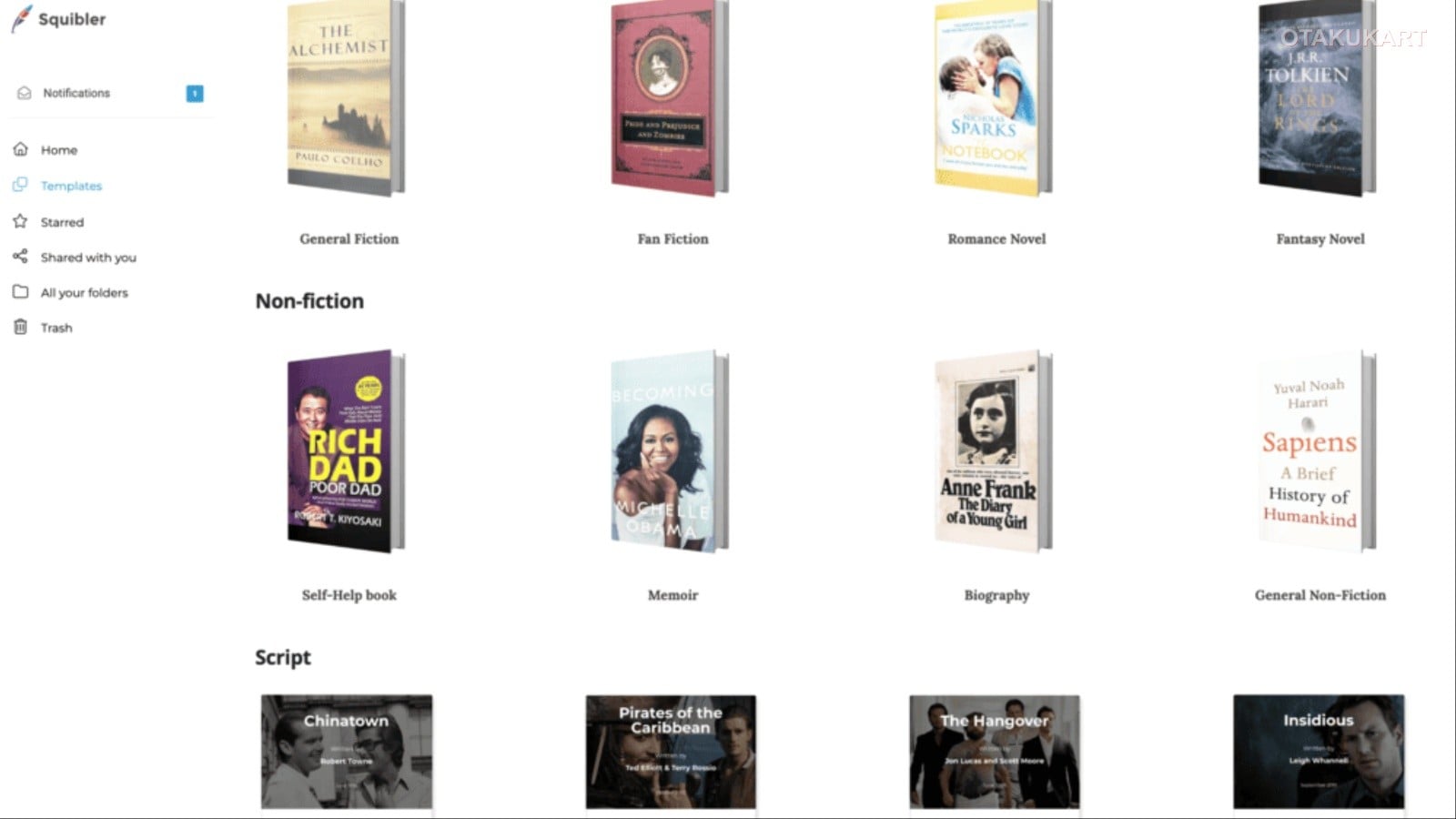
Squibler is built for draft sprints. At project launch, Elements asks for characters, settings, and key facts, then feeds that data into every generation. An Outline Wizard can turn a one-sentence premise into a three-act roadmap in under a minute, and Smart Writer expands each beat into chapter prose or screenplay dialogue. A Kanban-style board lets you drag chapters or subplots into a new order, and one-click export produces DOCX or PDF for beta readers. No other tool here moves from idea to structured manuscript this quickly, which helps with fic exchange deadlines.
Best Fit
Pick Squibler when you need a fast outline and first draft more than deep lore controls.
Price
Squibler has a free Limited Tier to start. Plus is listed at $29/month, or $16/month on annual billing, and Pro at $89/month, according to Squibler’s pricing page.
Trade-Offs
Squibler publishes no token or memory ceiling, so you discover limits by testing long drafts. It also lacks the trigger keys and timeline tracking found in specialist lore tools. Choose it for speed and clean exports; skip it if continuity is your top concern.
Which Tool Should Carry Your Canon?
Match the platform to the kind of fic you write:
- DreamGen: choose it for ensemble casts, such as rival parties or a team with a hidden traitor.
- Novelcrafter: best when time skips and changing loyalties would wreck a spreadsheet.
- Sudowrite: ideal if polished prose and mood matter more than database precision.
- NovelAI: suits writers who enjoy tweaking every dial.
- AI Dungeon: good for branching isekai-style “what if” runs with friends.
- Claude Projects: strongest for contradiction checks across a large archive of your own notes.
- Squibler: fastest route from premise to formatted draft.
Before you subscribe, write a one-page character and world brief (about 300 words) and run a three-scene test (about 600 words in total). Put your coldest character under pressure, because that is where tools slip first, and note which tool softens his voice or forgets a technique’s cost.
Whatever you pick, keep the creative work yours. The ideas, arcs, and scenes that make readers leave comments come from you. The right AI story writer is a notebook with a good memory: it holds your rules steady while you write the parts only you can write.
Frequently Asked Questions
What Should Go Into an Anime Fan-Fiction Lore File?
Capture seven essentials:
- Names, titles, and aliases for every character, including honorifics and nicknames.
- Relationships: family ties, rivalries, teams, and who owes whom.
- Personality anchors: how each character speaks, what they will never do, and what makes them lose their temper.
- Timeline anchors such as tournaments, time skips, or major battles.
- Power system rules: costs, limits, ranks, and forbidden techniques.
- Key items and who holds them.
- Fixed facts: anything that, if changed, would break the story’s logic.
Lock these items in place so the AI cannot quietly retcon your world.
How Often Should You Update Your Canon Notes?
Update them after every plot-changing event and in a weekly review:
- Immediate edits: a death, a betrayal, a new alliance, a rank promotion, a new technique, or a rule change.
- Weekly sweep: scan the last chapter for smaller continuity details, such as injuries, outfit changes, or who now carries which item.
Keep AU branches in clearly labeled sections, and overwrite outdated facts instead of stacking new versions.


