Character design plays a huge role in the success of long-running shonen anime and manga. A memorable villain is not defined by strength alone. Their appearance is often the first thing fans remember, helping them stand out long after a series ends. The best designs become instantly recognizable through their unique silhouettes, clothing, masks, weapons, and expressions. They also inspire fan art, cosplay, collectibles, and discussions that continue for years.
The Big Three anime, Naruto, One Piece, and Bleach, have introduced some of the most iconic villains in shonen history. Each series features antagonists with distinct visual styles that perfectly reflect their personalities, powers, and roles in the story. Whether it is a terrifying final boss or a fan-favorite rival, these characters prove that great design can make a lasting impression across generations of anime fans.
This list highlights 18 of the best villain designs from the Big Three. Some are legendary characters recognized by nearly every anime fan, while others are underrated designs that deserve more attention.
1. Madara Uchiha Has One of the Most Intimidating Villain Designs in Naruto
Madara Uchiha is widely considered one of the best-designed villains in Naruto because every part of his appearance reflects his legendary status. Unlike many final villains who rely on flashy armor or exaggerated details, Madara’s design is surprisingly simple. His long black hair, stern expression, and traditional red battle armor immediately separate him from the rest of the cast. Even before he displays his incredible powers, his presence alone makes it clear that he is a warrior from another era.
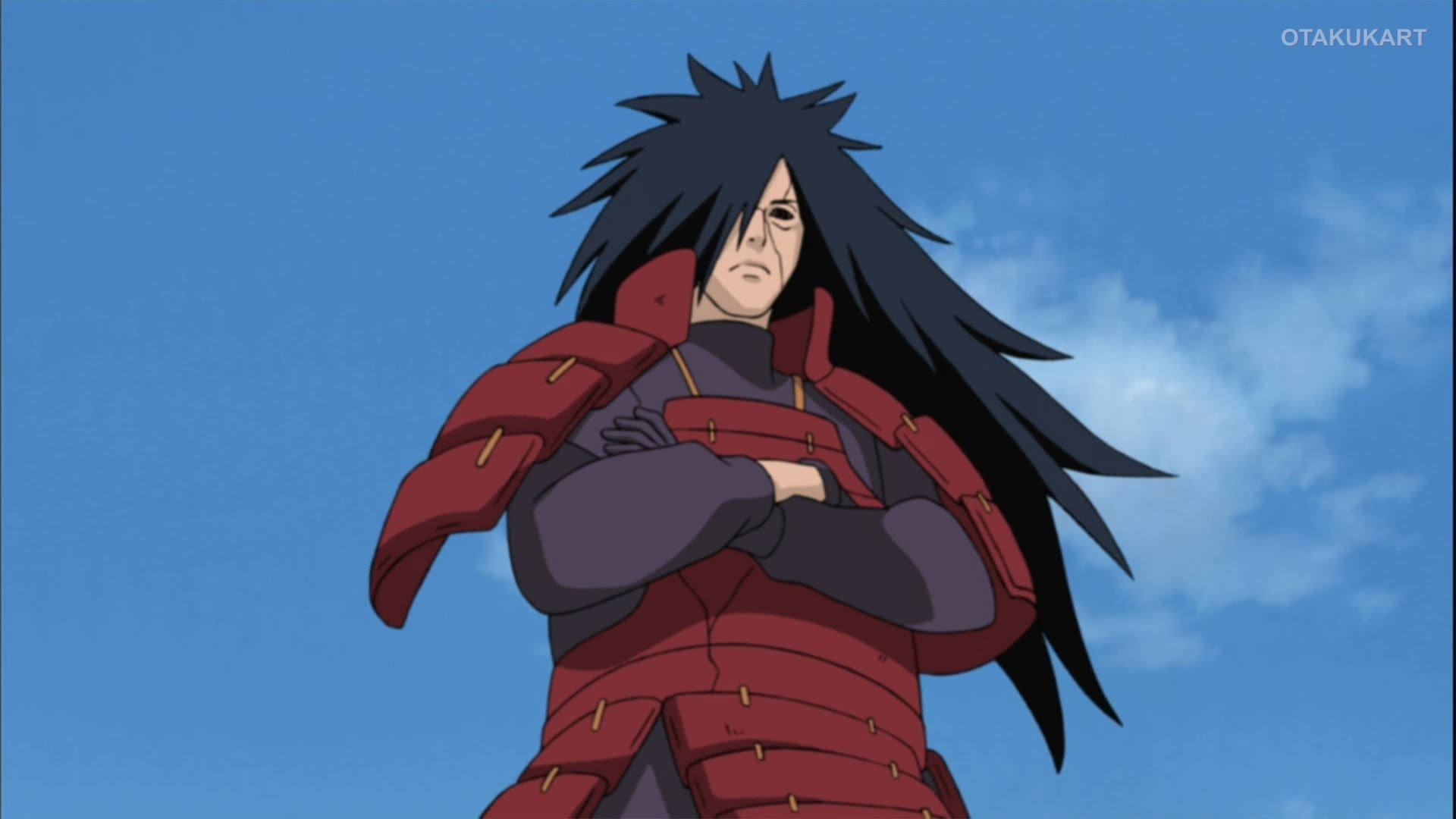
His design also perfectly matches his personality. Madara rarely wastes movement or emotion, and his calm confidence makes him even more intimidating. During the Fourth Great Ninja War, he overwhelms entire armies without appearing rushed or desperate. That quiet confidence is reflected in his clean, balanced character design, proving that simplicity can often be more powerful than excessive visual detail.
As the story progresses, Madara’s appearance evolves alongside his growing strength. The awakening of the Rinnegan, his Perfect Susanoo, and eventually his Ten-Tails Jinchuriki transformation all add new visual elements without losing the identity of the original design. Each transformation feels like a natural evolution rather than an unnecessary redesign, allowing fans to recognize him at every stage.
Another reason Madara’s design remains so memorable is how it represents Naruto’s history. His armor, hairstyle, and appearance reflect the Warring States Period, reminding viewers that he is one of the founders of the Hidden Leaf Village. He looks like a living piece of the ninja world’s past returning to reshape its future.
Years after Naruto ended, Madara continues to appear in discussions about the greatest anime villains ever created. His combination of elegant simplicity, historical influence, and intimidating screen presence makes him one of the strongest examples of outstanding character design in the Big Three.
2. Obito Uchiha’s Mask Created One of Anime’s Greatest Villain Mysteries
Obito Uchiha’s masked appearance is one of the most recognizable villain designs in anime. Before fans even learned his true identity, the mysterious orange spiral mask had already become an unforgettable symbol of Naruto. Its simple design stood out because it revealed almost nothing about the person underneath, creating curiosity every time the character appeared on screen.
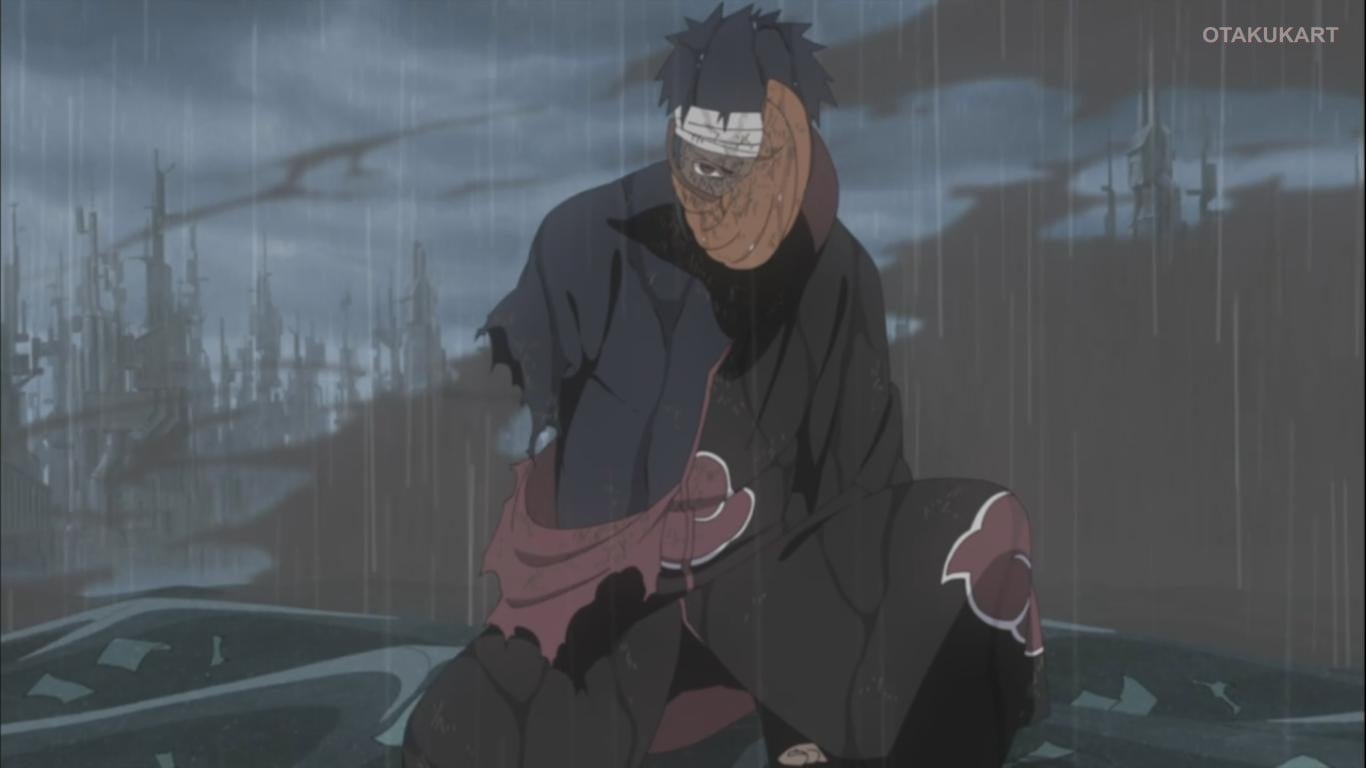
The mask itself plays a major role in building suspense. With only a single eye visible, viewers could focus on Obito’s Sharingan while he was trying to uncover his true identity. His calm voice and mysterious behavior made the design even more effective, turning him into one of the series’ most intriguing antagonists. Instead of relying on complicated armor or oversized weapons, Naruto used mystery as the character’s greatest visual strength.
Once Obito’s identity is revealed, the design gains even greater meaning. His damaged body, artificial limbs, and facial scars reflect the tragic events that completely changed his life. The mask becomes more than a disguise because it symbolizes the loss of the hopeful young ninja he once was. It hides both his physical injuries and the emotional pain that pushed him toward becoming a villain.
As Obito gains new powers throughout the Fourth Great Ninja War, his appearance continues evolving while preserving the core elements that made the original design memorable. His Ten-Tails transformation and Six Paths form add greater scale without abandoning his recognizable identity.
3. Pain’s Six Paths Delivered One of Naruto’s Most Creative Villain Designs
Pain introduced a completely different approach to villain design by transforming a single antagonist into six unique characters working together. Instead of creating one powerful enemy, Naruto presented the Six Paths of Pain, each with a distinct appearance, fighting style, and ability. This creative concept made every battle more exciting while giving each body its own memorable visual identity.
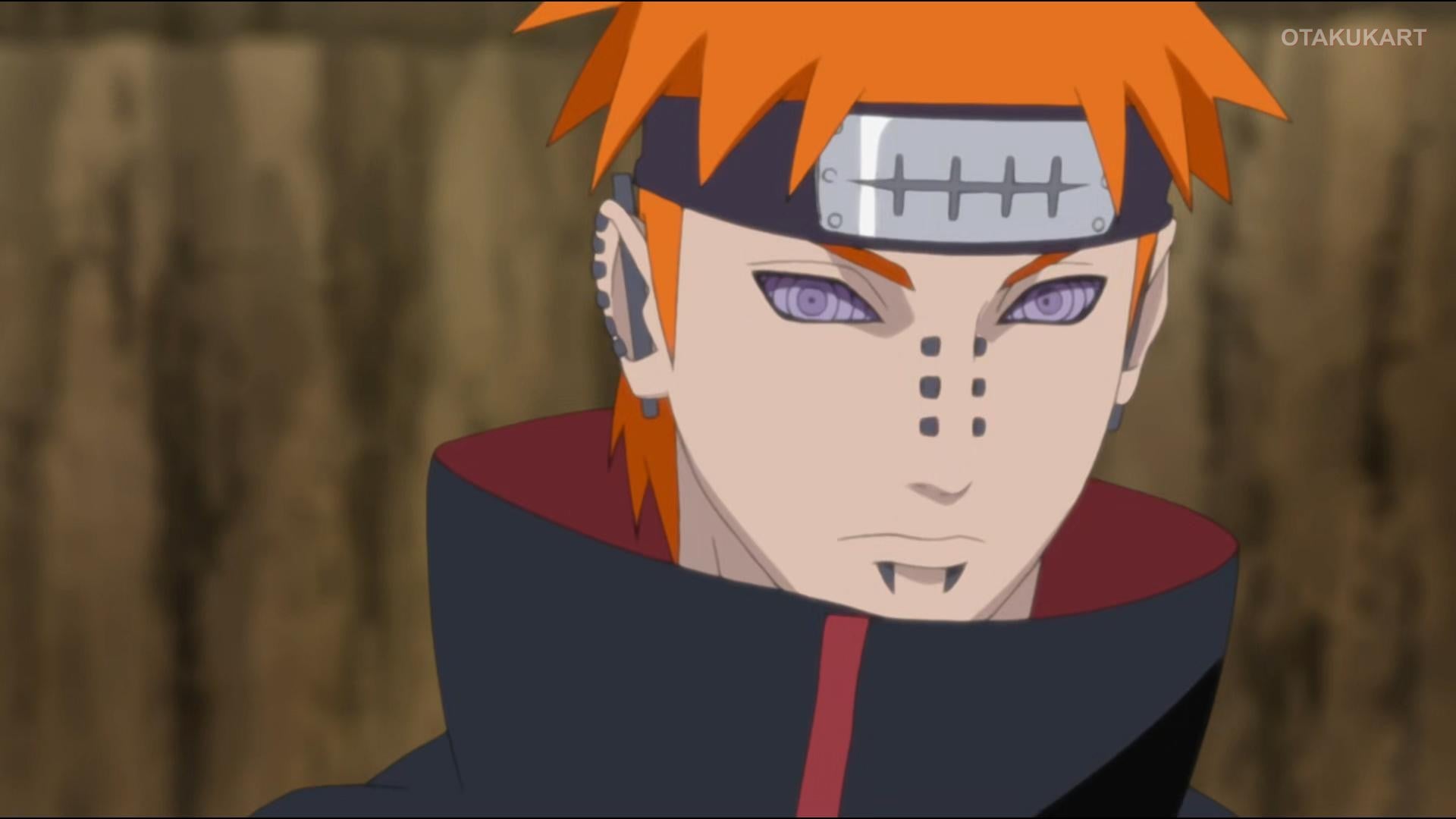
Although all six bodies share the same Rinnegan eyes and Akatsuki cloak, each Path is immediately recognizable because of its hairstyle, facial piercings, body shape, and combat role. These small differences make it easy for viewers to identify which Path is using a specific ability during fast-paced battles. The careful attention to visual detail allows large action scenes to remain clear without becoming confusing.
The Deva Path stands out as the most iconic of the group. His bright orange hair, emotionless expression, numerous facial piercings, and black Akatsuki cloak create one of the most recognizable looks in Naruto. His calm personality perfectly matches his godlike abilities, making every appearance feel powerful before he even attacks. The famous assault on the Hidden Leaf Village remains one of the franchise’s greatest moments, partly because of how unforgettable Pain’s design is.
The design also supports the series’ deeper themes. Rather than representing one individual, the Six Paths symbolize Nagato’s belief that true peace can only be achieved through overwhelming suffering. Everybody acts as a different extension of his will, making the concept feel both unique and meaningful.
4. Orochimaru’s Snake-Inspired Design Perfectly Matches His Twisted Nature
Orochimaru has one of the most unsettling character designs in Naruto because every detail reflects his obsession with forbidden experiments and immortality. From his pale skin and golden snake-like eyes to his unusually long tongue and calm smile, his appearance immediately creates a sense of discomfort. Unlike many villains who rely on intimidating armor or powerful weapons, Orochimaru’s own body becomes the source of his frightening presence.
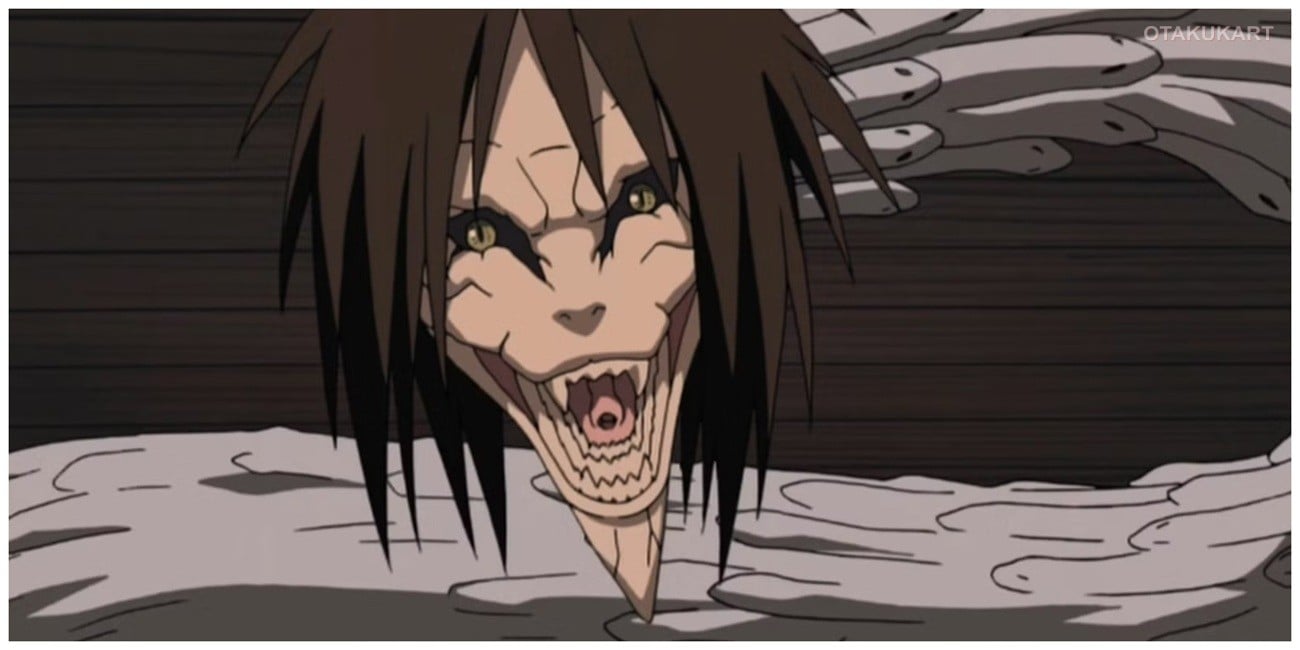
His snake-inspired design is far more than a visual theme. Throughout the series, Orochimaru repeatedly sheds his body, transfers his soul into new hosts, and performs disturbing scientific experiments. These actions perfectly match his unnatural appearance, making his design feel like a direct extension of his personality rather than a simple artistic choice.
His clothing also helps distinguish him from other Naruto villains. The loose robes, purple rope belt, and traditional Japanese influences give him the appearance of a mysterious scholar instead of a typical warrior. This elegant style contrasts with the horrifying techniques he uses in battle, creating a memorable combination of sophistication and terror.
One of Orochimaru’s greatest strengths as a character is the consistency of his design. Even as his role changes from major antagonist to a more morally complex ally later in the story, his appearance remains largely unchanged. The design continues to communicate his intelligence, ambition, and unpredictable nature without needing major visual updates.
Orochimaru remains one of the most recognizable anime villains because his appearance instantly tells what kind of person he is. Every visual element supports his role as a scientist willing to sacrifice humanity in pursuit of knowledge and eternal life.
5. Kaguya Otsutsuki Looks Like a True Goddess From Another World
Kaguya Otsutsuki has one of the most unique villain designs in Naruto because she looks completely different from every antagonist who came before her. As the first wielder of chakra and the ancestor of the ninja world, her appearance immediately gives the impression that she does not belong to the same world as ordinary shinobi. Her long white hair, pale skin, flowing robes, horn-like features, and the Rinne Sharingan on her forehead create an unforgettable image that reflects her godlike status.
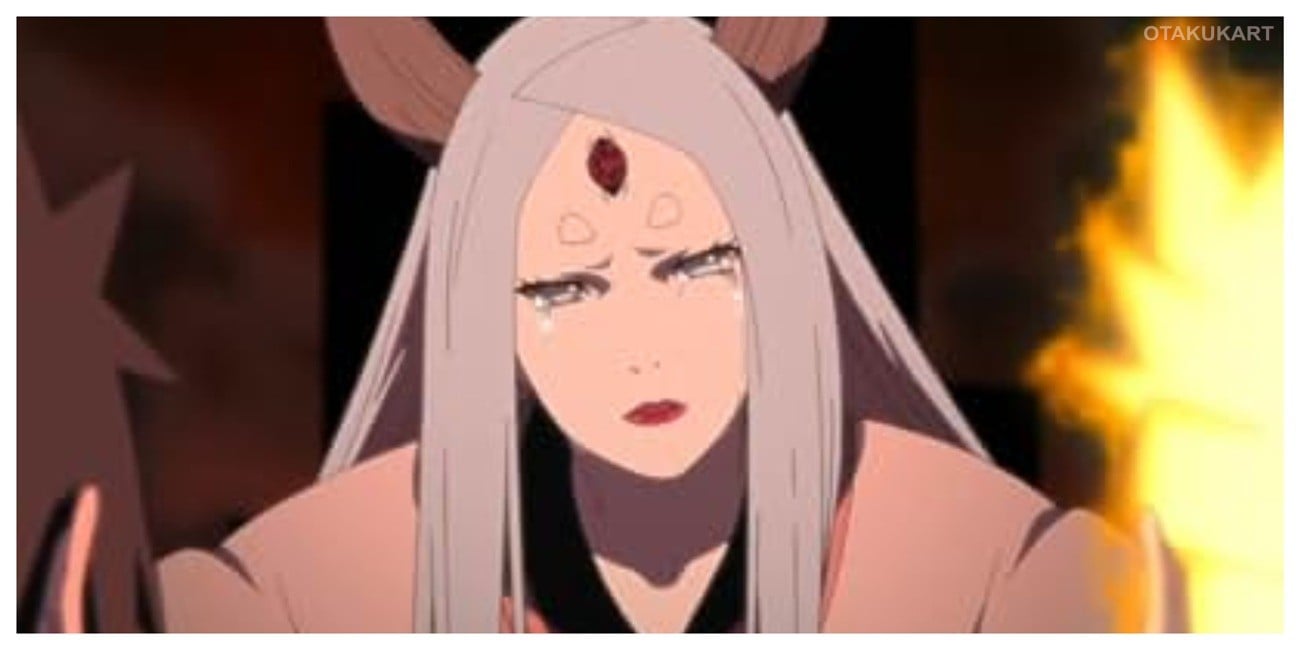
Unlike villains who wear armor or carry weapons, Kaguya’s design relies on elegance and supernatural beauty. Every visual detail emphasizes her mysterious origins and overwhelming power. Even before she uses her abilities, her calm expression and otherworldly appearance make it clear that she is unlike any enemy Naruto and Sasuke have faced.
Although fans continue to debate her role in the story, many agree that her visual design successfully communicates the idea of an ancient being responsible for the origin of chakra. Her transformations and dimensional abilities further strengthen that impression by making her feel more like a force of nature than a traditional villain.
Kaguya’s design also introduced many visual elements that later became associated with the Otsutsuki Clan throughout the Naruto and Boruto series. Her appearance helped establish the distinctive style used for one of the franchise’s most important families.
6. Itachi Uchiha’s Design Quietly Hints at His Tragic Story
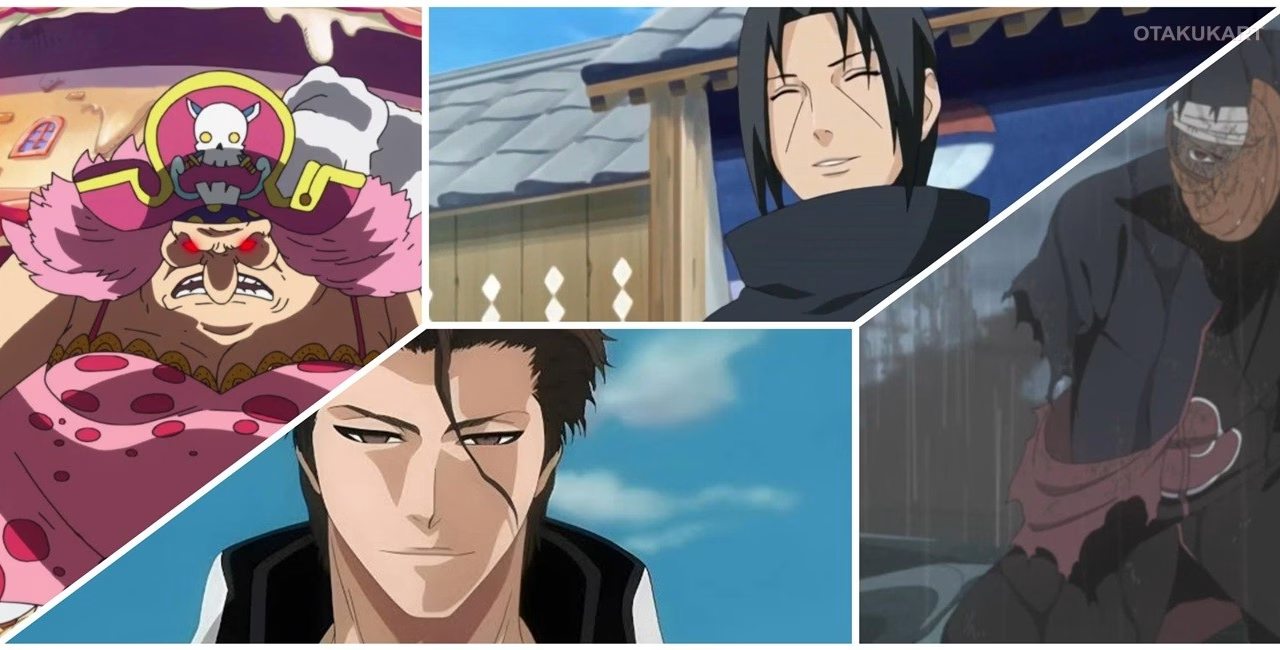
Itachi Uchiha is one of the most iconic characters in Naruto, and his design plays a major role in making him unforgettable. When he first appears, he looks like a cold and ruthless criminal responsible for one of the series’ greatest tragedies. However, every part of his appearance quietly hints that there is much more to his story than viewers initially realize.
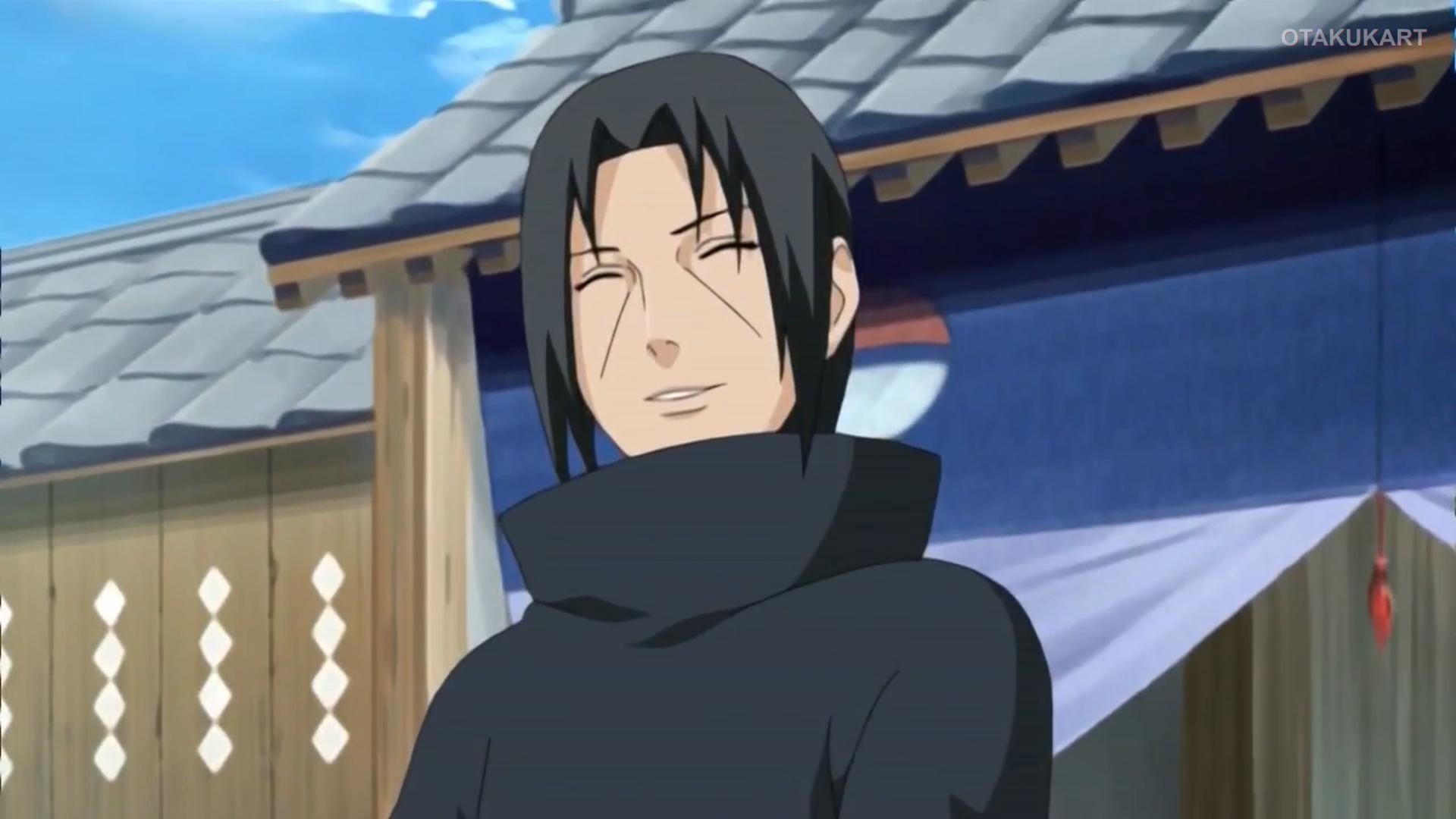
His calm expression, tired eyes, and emotionless posture create a sense of sadness that separates him from other Akatsuki members. The dark Akatsuki cloak, high collar, and forehead protector marked with a slash immediately establish him as a dangerous rogue ninja, yet his appearance never feels overly aggressive. Instead, he carries himself with quiet dignity, making him one of the most mysterious villains in the series.
After the truth about the Uchiha Clan massacre is revealed, fans often revisit Itachi’s earliest scenes and notice how many clues were hidden in his design from the beginning. His exhausted appearance reflects the emotional burden he carried for years, while his crow imagery connects perfectly with his powerful genjutsu techniques and symbolic role throughout the story.
7. Kaido’s Massive Design Perfectly Matches His Reputation
Kaido stands among the most intimidating villains in One Piece because his design instantly communicates overwhelming strength. Before he even enters battle, his enormous size, muscular build, large horns, and countless battle scars make him look nearly unstoppable. Every detail reinforces his title as the World’s Strongest Creature, creating an appearance that perfectly matches his legendary reputation.
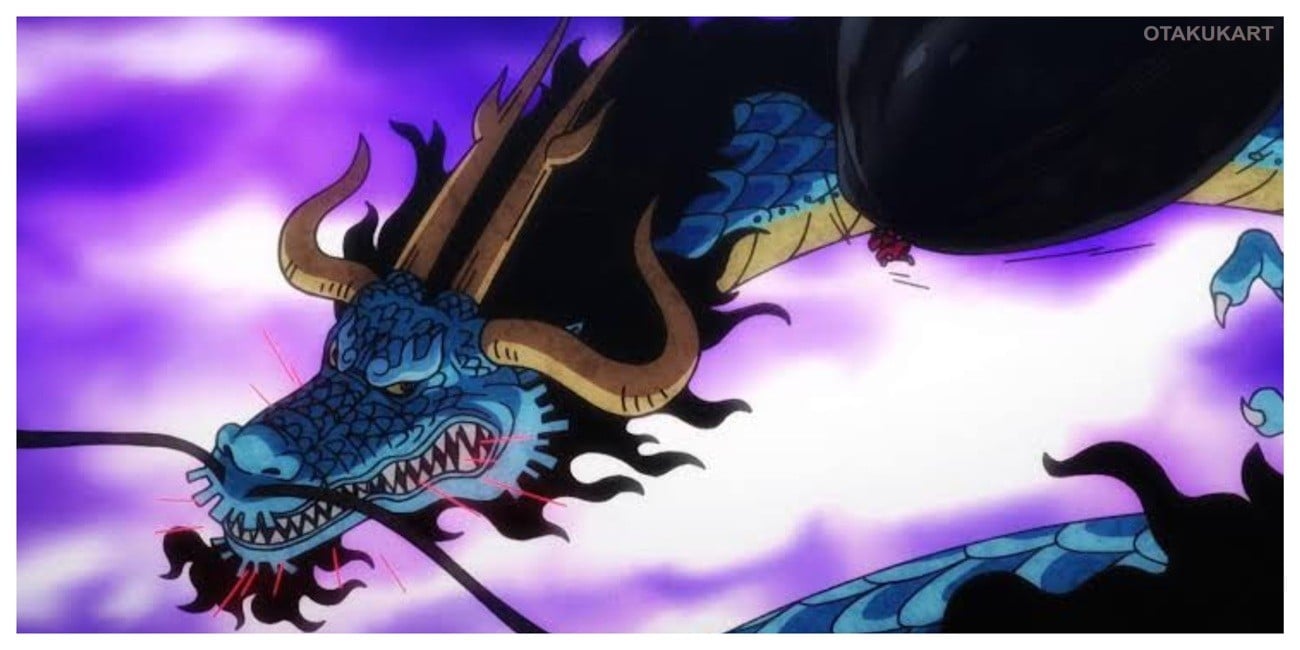
His design draws inspiration from traditional Japanese oni while fitting naturally into the Wano Country arc. The combination of his wild hair, thick beard, dragon tattoo, and heavy club gives him the appearance of an ancient warrior capable of destroying entire armies alone. Even while standing still, Kaido dominates every scene through his incredible physical presence.
One of the strongest aspects of Kaido’s design is how naturally it evolves during combat. His Mythical Zoan Devil Fruit allows him to transform into a massive blue dragon, making him even more visually impressive without abandoning his core identity. Both his human and dragon forms feel equally recognizable, giving him one of the most successful transformation designs in One Piece.
Despite his overwhelming power, Kaido’s facial expressions often reveal boredom, frustration, and emotional exhaustion. These subtle details add depth to his appearance, showing that even the strongest pirate carries personal struggles beneath his fearsome exterior.
8. Donquixote Doflamingo Combines Style and Danger Perfectly
Donquixote Doflamingo has one of the most recognizable villain designs in One Piece because of his bold fashion choices and unforgettable personality. His oversized pink feather coat, bright clothing, confident smile, and signature sunglasses immediately make him stand out among the series’ many colorful characters. While his appearance seems flashy at first, every detail reflects his arrogance, wealth, and desire to dominate others.
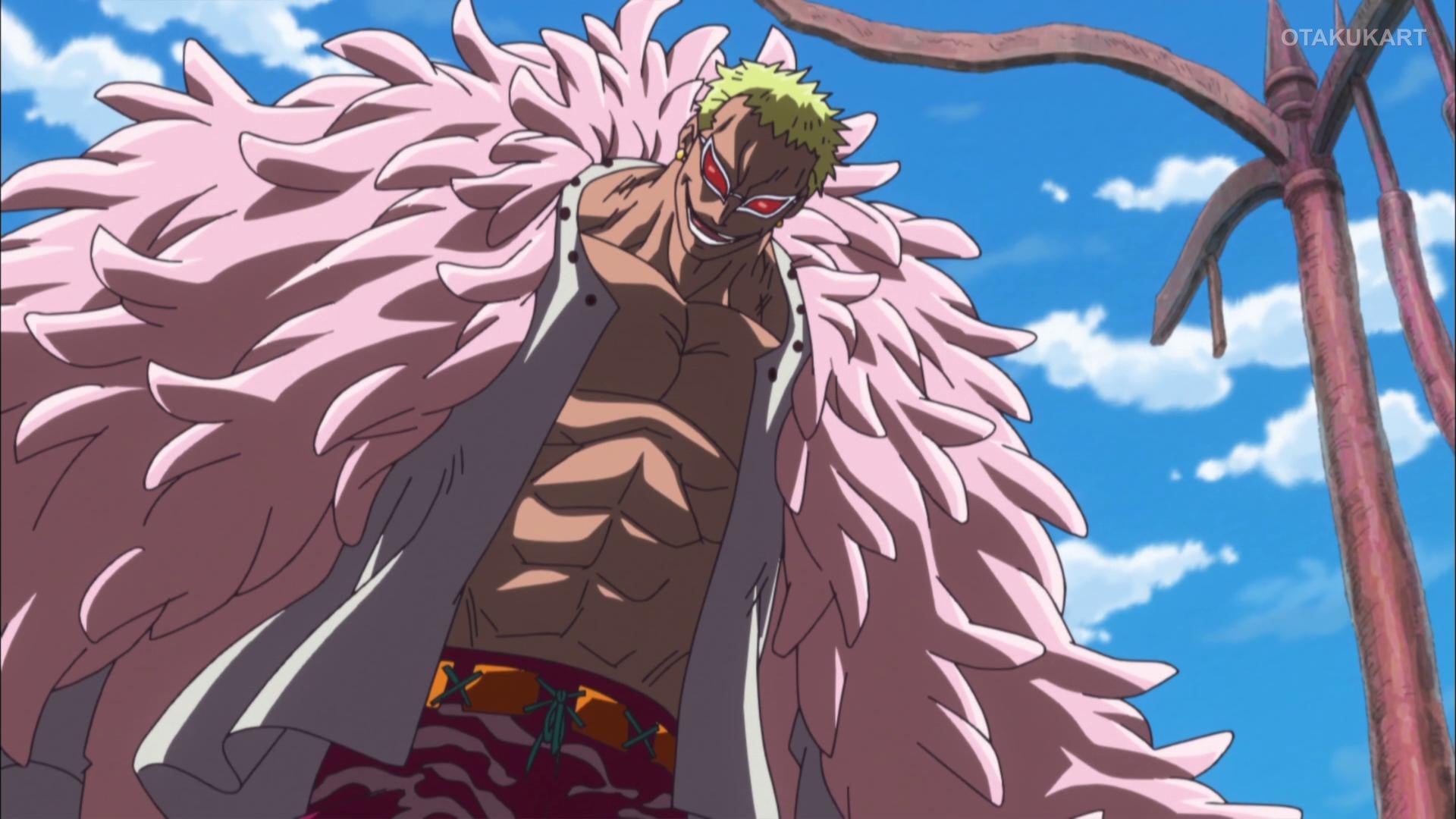
The contrast between Doflamingo’s stylish appearance and his cruel actions makes his design even more effective. He carries himself like a king, smiling confidently even during moments of extreme violence. That calm confidence turns his bright outfit into something surprisingly intimidating, proving that a villain does not need dark colors to appear threatening.
His String String Fruit abilities also complement his visual design. The flowing feather coat creates constant movement during battles, making his attacks feel elegant yet dangerous. His ability to manipulate people like puppets also reinforces the image of someone who enjoys controlling everyone around him.
Another reason Doflamingo’s design remains so popular is its originality. Unlike many anime villains who rely on traditional armor or monstrous appearances, he embraces luxury and theatrical fashion without losing his intimidating presence. His silhouette is instantly recognizable, making him one of the easiest One Piece characters to identify.
9. Charlotte Katakuri’s Design Reveals Strength and Vulnerability
Charlotte Katakuri has one of the most thoughtful character designs in One Piece because it balances incredible strength with emotional depth. At first glance, he appears to be the perfect warrior. His towering height, muscular build, leather clothing, and massive scarf create the image of an unstoppable fighter who never loses control. However, the series gradually reveals that his appearance hides a deeply personal insecurity.
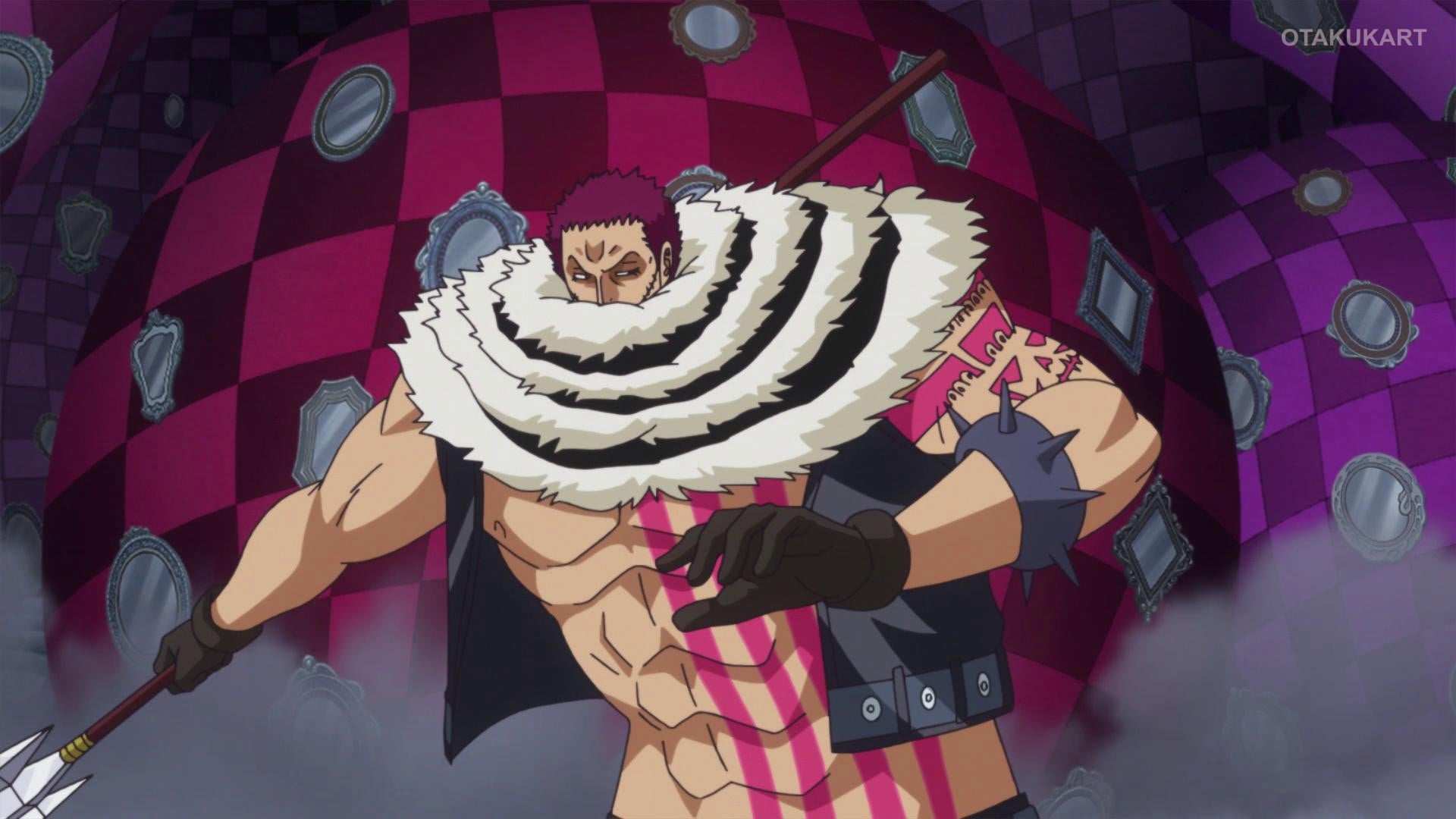
For much of the Whole Cake Island arc, Katakuri keeps his mouth covered with a large scarf. This mysterious detail encourages viewers to wonder what he is hiding. When the truth is finally revealed, his unusually large mouth becomes an important part of his character rather than a simple visual surprise. His embarrassment over this feature explains many of his actions and makes him feel more human despite his incredible strength.
Katakuri’s design also works perfectly with his Mochi Mochi Fruit abilities. His calm movements, powerful physique, and flexible fighting style make every battle visually exciting while maintaining a consistent identity. Even during intense combat, his appearance remains clean and recognizable.
Katakuri remains one of One Piece’s most popular antagonists because his appearance tells a meaningful story. His design proves that physical imperfections can become some of the strongest elements of a character, adding emotional depth to an already unforgettable villain.
10. Big Mom’s Design Becomes Even Better With Her Living Weapons
Big Mom has one of the most creative villain designs in One Piece because her appearance extends far beyond her own body. Her enormous size, wild pink hair, expressive face, and colorful clothing immediately make her one of the most recognizable Yonko in the series. However, what truly separates her from other villains is the way her Soul Soul Fruit transforms everyday objects into living companions.
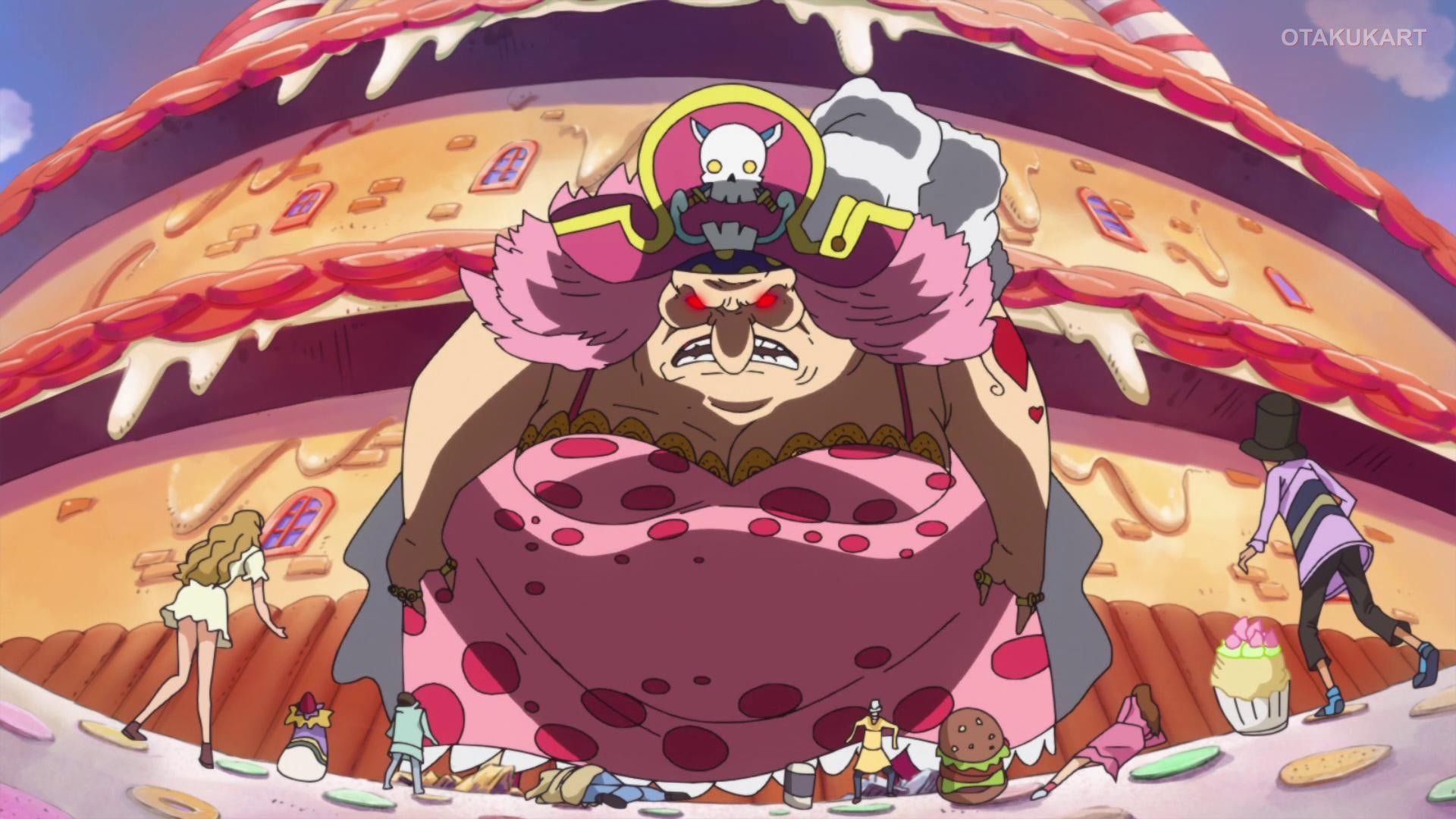
Prometheus, Zeus, Napoleon, and her other Homies are not simply weapons. They each have their own personalities, expressions, and roles during battle. Together, they create a constantly changing visual presence that surrounds Big Mom wherever she goes. This makes every scene involving her feel energetic and unpredictable.
Big Mom herself can shift from cheerful kindness to terrifying rage within seconds. Her expressive facial features play an important role in making those emotional changes believable. One moment she appears like a loving grandmother, and the next she becomes one of the most frightening pirates in the New World. That contrast makes her design far more memorable than a traditional giant villain.
Her appearance also reflects the strange fantasy style that defines One Piece. Instead of relying only on physical strength, her design embraces creativity, humor, and horror all at once. This unique combination helps her stand out even among the series’ large cast of unforgettable characters.
11. Enel’s Divine Appearance Perfectly Matches His God Complex
Enel has one of the most distinctive villain designs in One Piece because every part of his appearance supports his belief that he is a god. Introduced during the Skypiea arc, Enel immediately stands out with his long earlobes, golden drums attached to his back, white clothing, and calm expression. His design is simple but unforgettable, creating an image that feels completely different from most pirates in the series.
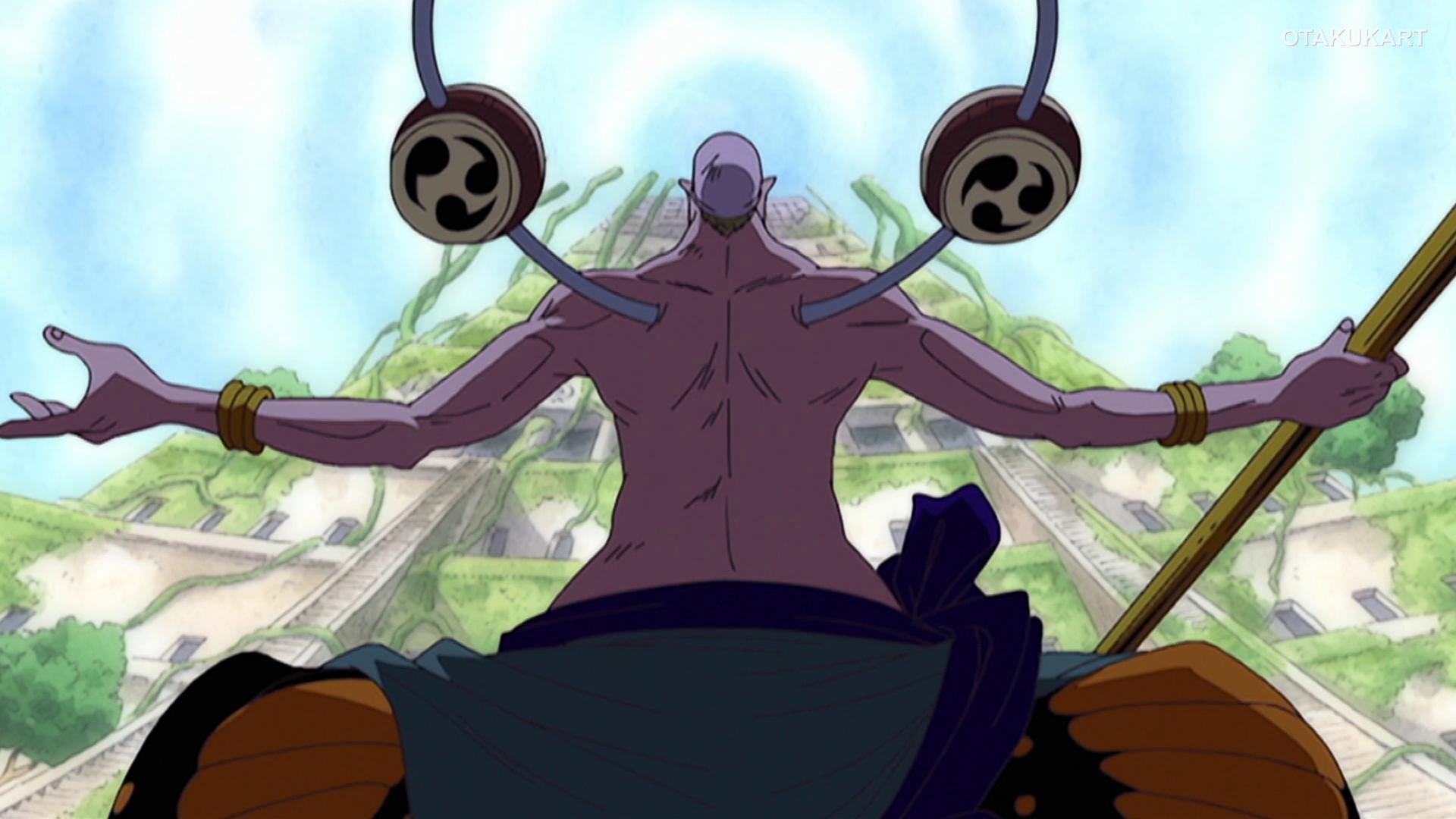
His Goro Goro no Mi, which grants him the power of lightning, perfectly complements his divine appearance. Combined with his confident attitude, the ability makes Enel seem almost unstoppable during his first appearance. His calm smile rarely changes, even while defeating powerful opponents, reinforcing the idea that he views everyone else as beneath him.
Another strength of Enel’s design is its originality. Rather than looking like a traditional pirate, he resembles a mythical ruler inspired by Japanese mythology and religious imagery. The large drums on his back create one of the most recognizable silhouettes in One Piece, making him easy to identify even without seeing his face.
Although the Skypiea arc is sometimes overlooked compared to later storylines, Enel continues to receive praise for his unique visual style. His appearance remains fresh because it avoids unnecessary complexity while still communicating power, confidence, and authority.
Enel proves that an effective villain design does not require excessive detail. His combination of elegant simplicity, supernatural inspiration, and overwhelming confidence makes him one of the most memorable antagonists in One Piece and one of the franchise’s strongest character designs.
12. Crocodile’s Classic Design Never Goes Out of Style
Crocodile remains one of the most iconic villains in One Piece because his design relies on timeless style instead of exaggerated features. His slicked-back black hair, large fur-lined coat, facial scar, golden hook, and ever-present cigar create the appearance of a confident crime boss who controls every situation. Even before revealing his powers, Crocodile looks like someone capable of leading a powerful criminal organization.
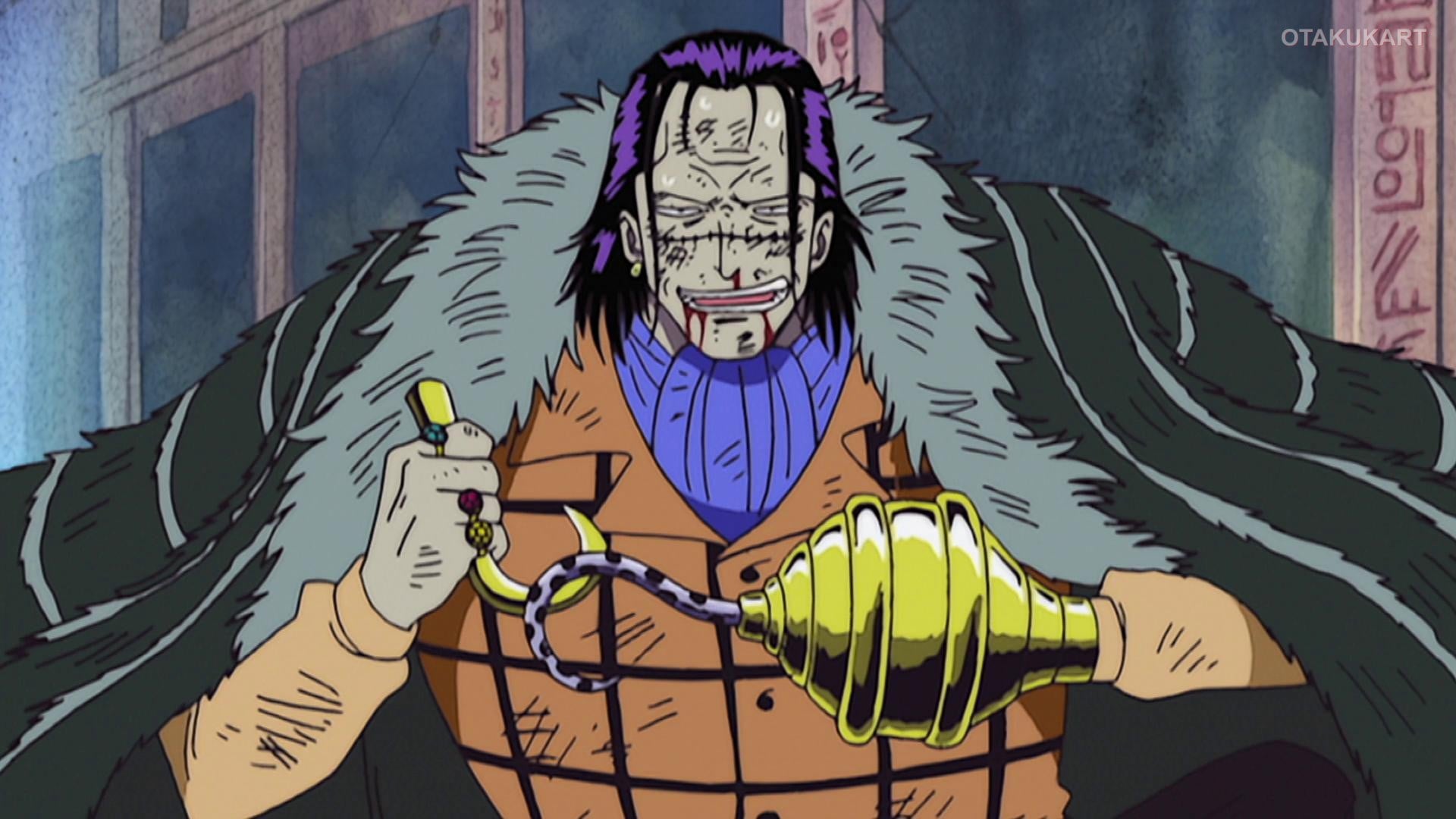
His design perfectly matches his personality. Unlike loud or unpredictable villains, Crocodile stays calm and composed during nearly every encounter. His relaxed posture and confident expressions make him feel dangerous because he rarely appears worried, even when facing powerful enemies. This quiet confidence separates him from many other One Piece antagonists.
The Sand Sand Fruit also fits naturally with his appearance. His desert-themed abilities support his role as the secret ruler behind Alabasta’s crisis without making his design feel overly dependent on supernatural powers. Every visual detail serves a purpose, creating a character whose appearance reflects both intelligence and strength.
Crocodile’s design has also remained consistent across multiple story arcs. Whether appearing as the leader of Baroque Works or returning during later events, his recognizable appearance never loses its impact. This consistency has helped him remain one of the franchise’s most popular villains.
13. Sosuke Aizen’s Design Evolves Alongside His True Identity
Sosuke Aizen has one of the smartest character designs in Bleach because his appearance changes as the audience learns who he really is. At first, he looks like a kind and dependable Soul Reaper captain. His glasses, neatly styled brown hair, and gentle smile create the image of a trustworthy leader, making his betrayal one of the biggest surprises in the series.
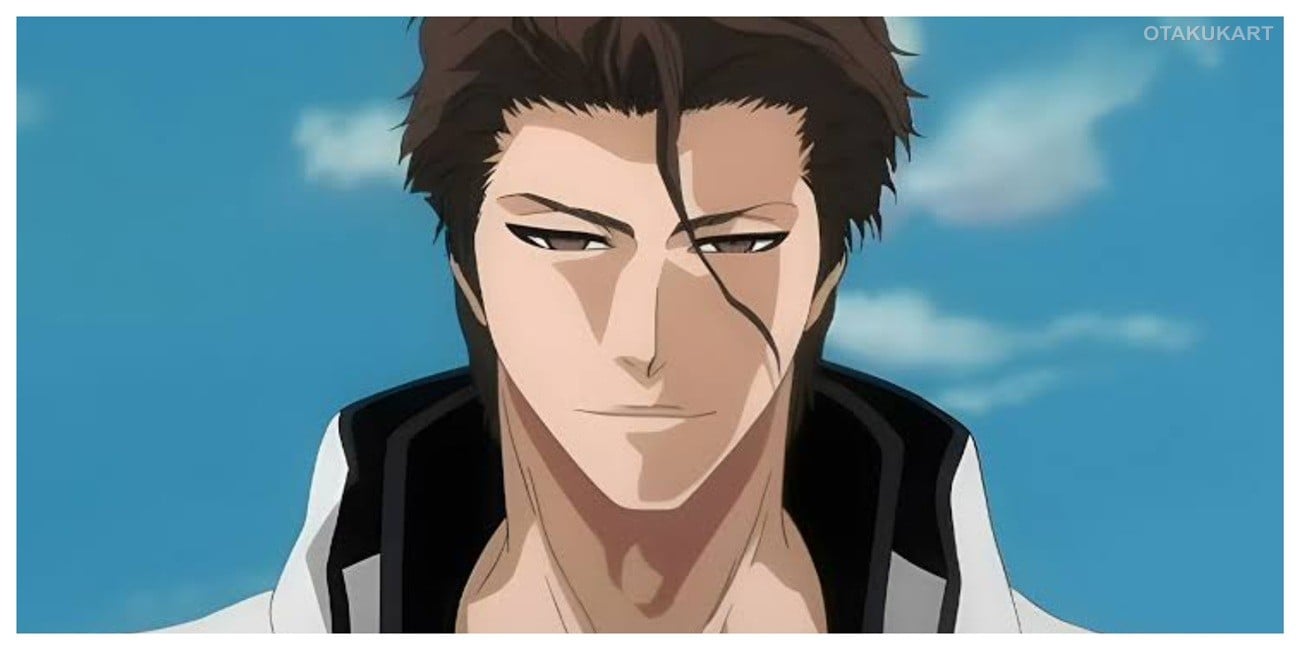
After revealing his true intentions, Aizen removes his glasses and slicks back his hair, creating an entirely different appearance without dramatically changing his design. This small adjustment completely transforms how viewers see him. He immediately appears colder, more confident, and far more intimidating, showing how powerful subtle visual storytelling can be.
As the Arrancar arc continues, Aizen undergoes several transformations through the Hogyoku. Each new form gradually becomes more alien while preserving recognizable features from its original design. Rather than replacing the character with something completely different, every transformation reflects his growing ambition to surpass the limits of Soul Reapers and Hollows.
Aizen’s appearance also mirrors his personality. His calm expressions and elegant posture rarely change, even during intense battles. This confidence reinforces his reputation as one of Bleach’s most intelligent and dangerous villains.
14. Ulquiorra Cifer’s Final Form Is One of Bleach’s Most Haunting Designs
Ulquiorra Cifer stands out among the Espada because of his calm personality and haunting visual design. His pale skin, green eyes, black tear-like markings, and emotionless expression immediately create a mysterious atmosphere. Unlike louder or more aggressive villains, Ulquiorra appears completely detached from the world around him, making his quiet presence even more intimidating.
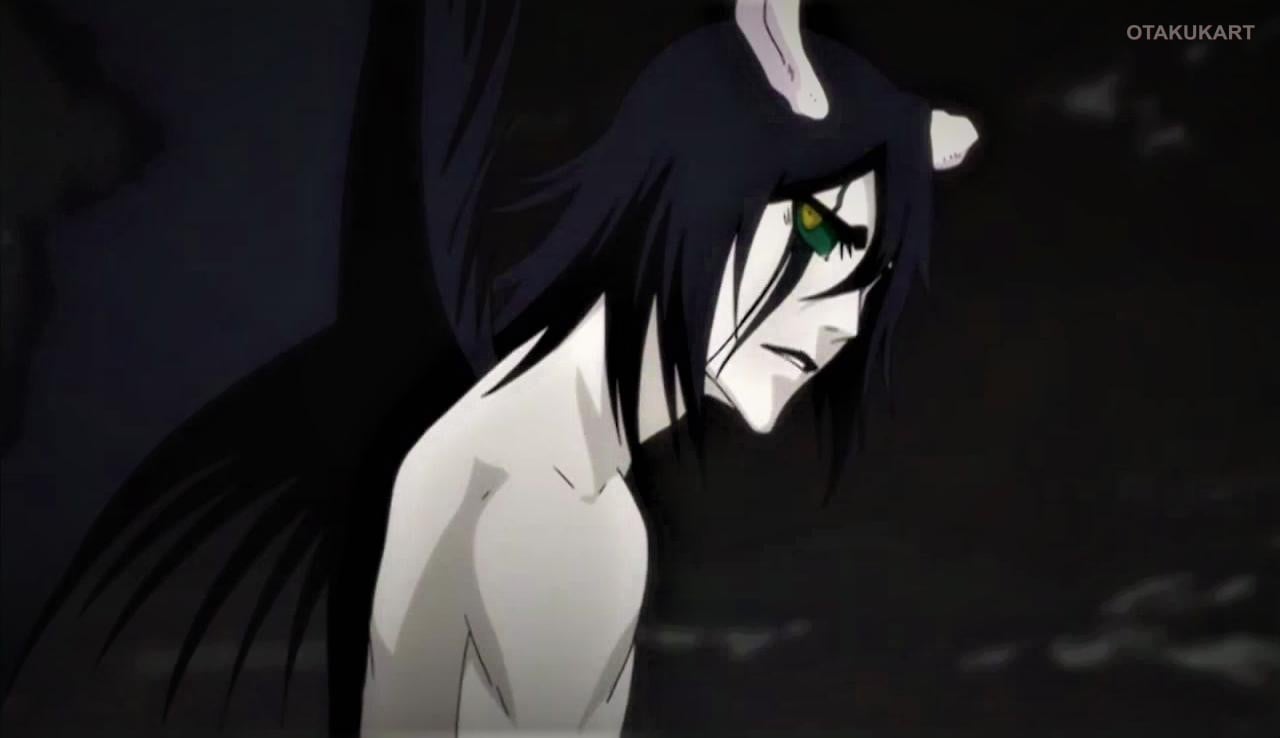
His appearance reflects his belief that emotions and the human heart have little value. Every detail, from his empty gaze to his clean white Espada uniform, reinforces that cold worldview. This simple yet effective design allows him to stand apart from the other Arrancar without relying on flashy clothing or dramatic accessories.
Ulquiorra’s Segunda Etapa transformation elevates his design even further. The addition of black wings, horns, a skeletal body, and a hollow hole surrounded by exposed bone creates one of the darkest transformations in Bleach. Instead of simply making him stronger, the new appearance symbolizes his complete rejection of humanity and emotion.
15. Rukia Kuchiki’s Bankai Gives Bleach One of Its Most Beautiful Character Designs
Rukia Kuchiki spends much of Bleach fighting with skill and determination despite never reaching the full potential of her Zanpakuto. That is why the reveal of her Bankai, Hakka no Togame, feels like one of the most rewarding moments in the series. Instead of relying on flashy armor or oversized weapons, her transformation completely changes her appearance with a design that reflects elegance, discipline, and absolute control over her ice powers.
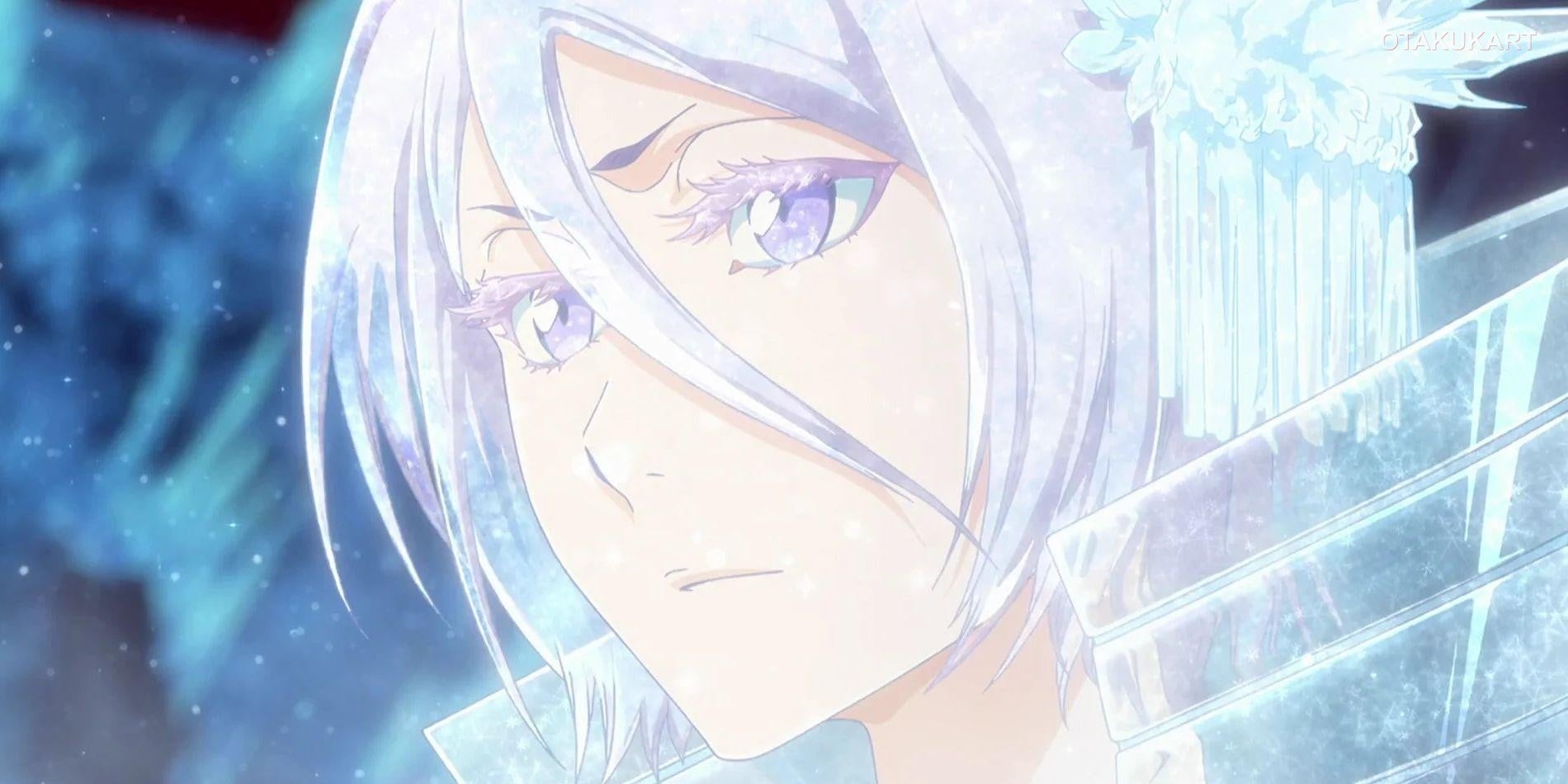
Her traditional black Soul Reaper robes disappear, replaced by a flowing white kimono-inspired outfit with subtle icy blue details. The clean color palette immediately separates her from the darker designs seen throughout the Thousand-Year Blood War arc. Frost spreads across her clothing, while her Zanpakuto transforms into a refined white blade that appears almost frozen solid. Every detail reinforces the idea that her power has reached a level where even the surrounding air freezes in her presence.
The design also reflects Rukia’s personal journey. She spends years struggling to master Sode no Shirayuki and often doubts her own abilities while fighting beside stronger allies. Her Bankai symbolizes the confidence and experience she gains through countless battles and guidance from those around her. Rather than making her look larger or more intimidating, the transformation highlights precision, balance, and inner strength.
16. Kenpachi Zaraki’s Bankai Creates One of Bleach’s Most Brutal Transformations
Kenpachi Zaraki has always been one of Bleach’s most feared fighters because he enjoys battle more than victory itself. Throughout the series, he defeats powerful opponents while holding back much of his true strength, making fans wonder what would happen if he ever unleashed everything. When his Bankai finally appears during the Thousand-Year Blood War, it delivers one of the most explosive character transformations in the franchise.
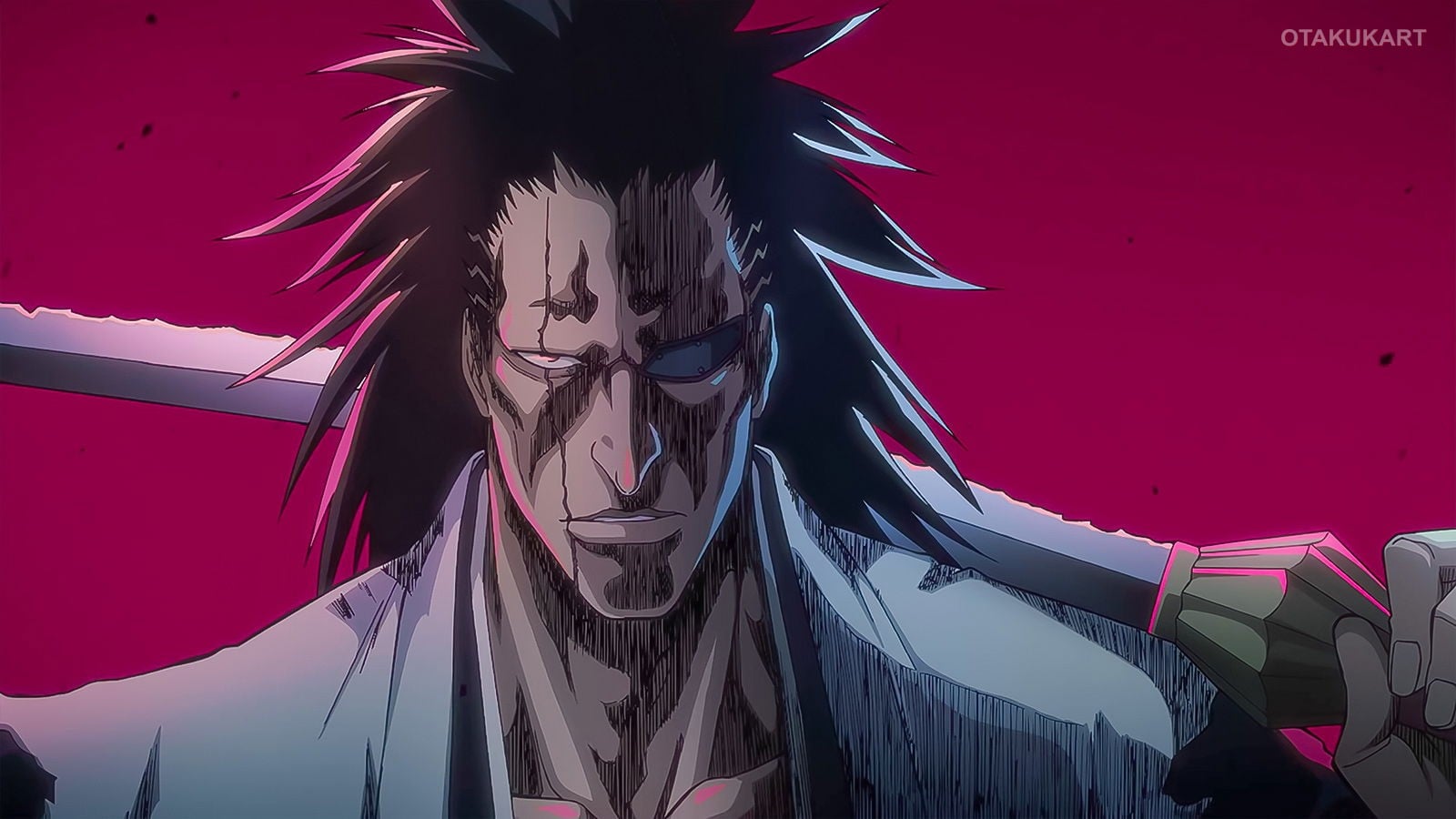
After activating his Bankai, Kenpachi undergoes a dramatic physical change. His body takes on a demonic appearance with red skin, sharp horns, glowing eyes, and a savage expression that makes him look more like a monster than a Soul Reaper. His Zanpakuto transforms into an enormous, battered blade built for destruction instead of precision. The weapon looks heavy, unrefined, and capable of cutting through almost anything, reinforcing the overwhelming force behind every attack.
Unlike many Bankai that showcase balance and technical mastery, Kenpachi’s transformation highlights uncontrolled power. Every part of the design reflects his lifelong obsession with finding stronger opponents and pushing himself beyond his limits. Even after gaining incredible strength, he continues to charge directly into combat with the same fearless attitude that has always defined him. His appearance becomes more intimidating, but his love for battle never changes.