Original mecha anime Vertex Force has dropped its October 2026 broadcast premiere alongside crucial production details, including the main creative staff, teaser trailer, and protagonist introduction. Animation studio SMDE announced the project earlier in March 2026, but today’s reveal provides the first substantial look at the series’ visual direction and creative vision. Director Kazuhiro Takamura leads the production while also handling character designs and sharing series composition duties with Masashi Suzuki.
The teaser trailer showcases the anime’s distinctive aesthetic, combining traditional character animation with CG-rendered mechanical designs, a hybrid approach overseen by CG director Hiroyuki Tadokoro. While specific plot details remain undisclosed, the revealed materials establish Vertex Force as a character-driven mecha story centered on Okinawa-based protagonist Haruka Todo, whose ordinary athletic lifestyle becomes entangled with mysterious humanoid machines called Engines and an enigmatic silver-haired woman featured prominently in promotional artwork.
Meet Haruka Todo: The Okinawan Protagonist at the Center of Vertex Force
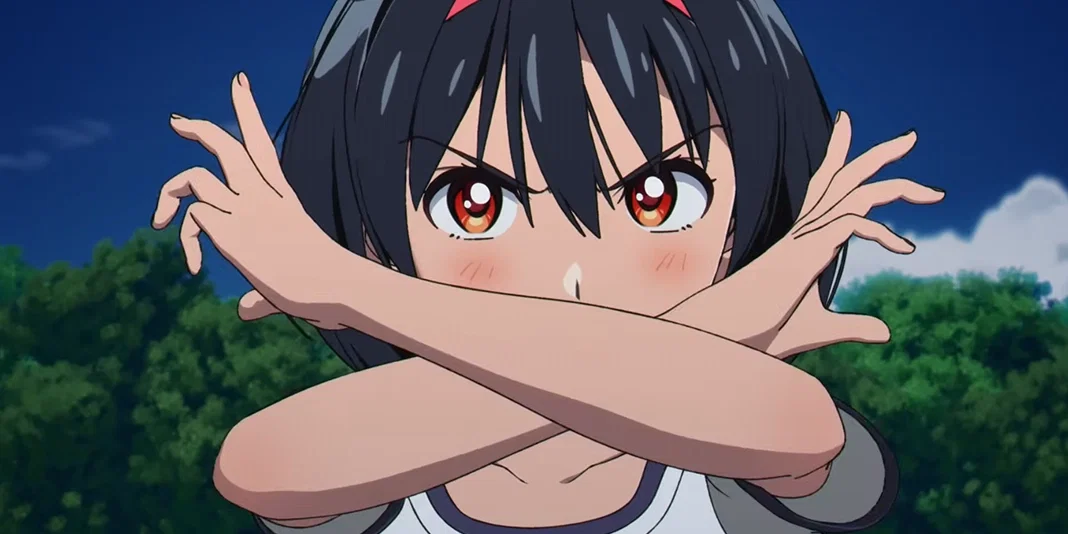
The newly released character introduction establishes Haruka Todo as Vertex Force’s central figure, described as a cheerful and athletic girl living in Okinawa. Character art depicts Haruka as a petite young woman with short dark hair and brown eyes, dressed in casual athletic wear, including a sweater, T-shirt, short skirt with gym shorts underneath, and sneakers. This grounded, everyday appearance contrasts sharply with the science fiction elements visible in the teaser materials, suggesting a fish-out-of-water narrative where an ordinary teenager encounters extraordinary circumstances.
Haruka’s voice actor has not yet been announced, leaving one of the production’s key creative decisions still pending. Given the character’s apparent centrality to the narrative and the October premiere window, casting announcements should arrive within the coming months as production progresses toward completion.
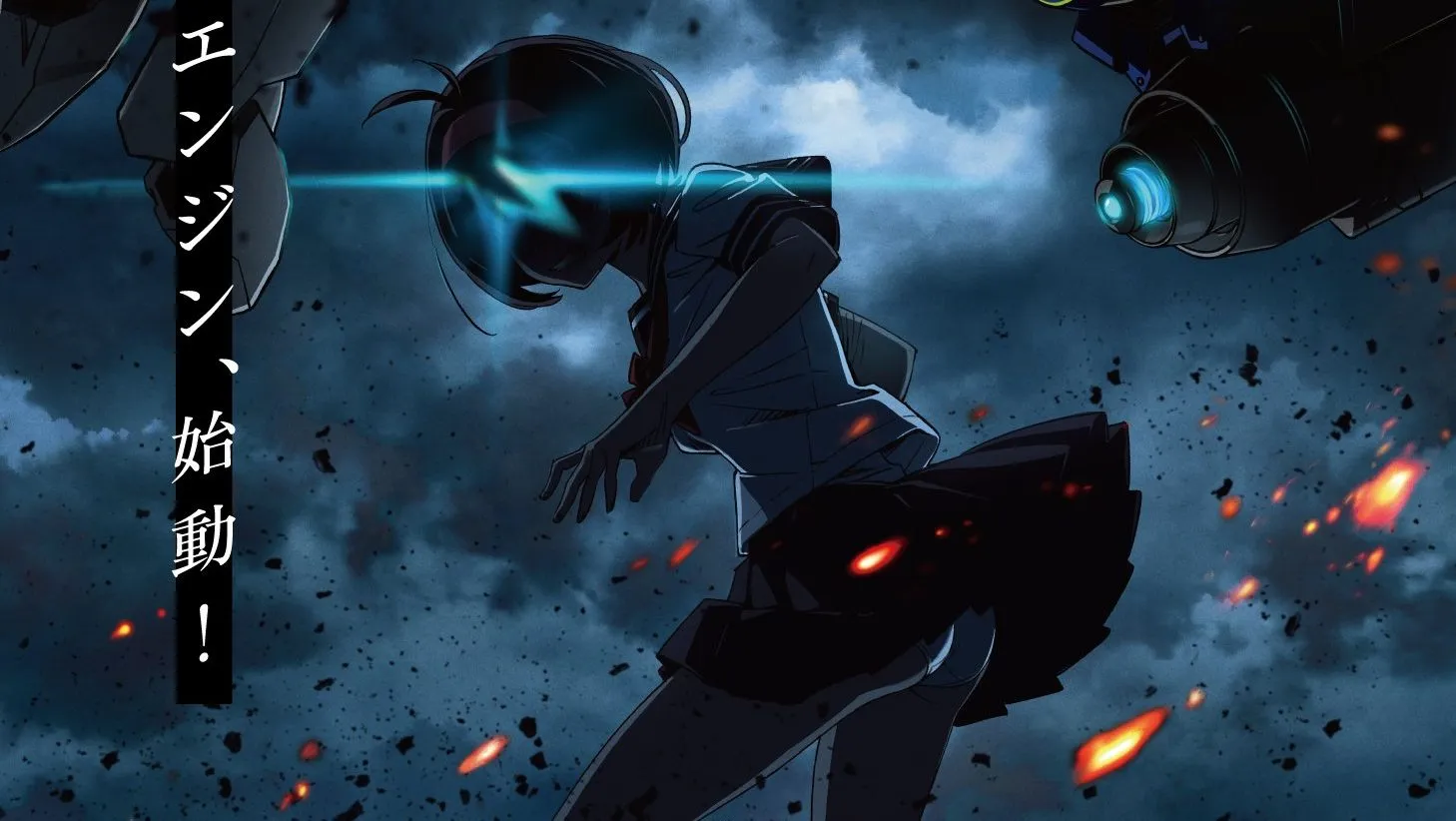
The teaser artwork released alongside character details shows Haruka reaching toward a vision containing humanoid mecha and a mysterious, beautiful woman with blue eyes and long silver hair. This imagery implies Haruka’s connection to both the mechanical Engines and supernatural or extraterrestrial elements represented by the enigmatic female figure. The Earth visible in the background positions the story’s scope as potentially global or even cosmic despite its Okinawan setting.
Creative Team and Technical Approach
Kazuhiro Takamura assumes multiple crucial roles on Vertex Force, serving as director, character designer, and co-writer for series composition alongside Masashi Suzuki. This multi-role approach gives Takamura significant creative control over the project’s visual and narrative direction, suggesting a strongly unified artistic vision. Goro Kuji provides assistant direction, supporting Takamura in managing the production’s day-to-day execution.
The mechanical design credits reveal a collaborative approach to the anime’s robot elements. Kanetake Ebikawa handles Engine design, bringing his mecha design experience to the humanoid machines that appear central to the story. JNTHED contributes to ENIA design, though the exact nature of ENIA within the narrative remains unclear from available information. The distinction between Engine and ENIA suggests multiple categories of mechanical or technological elements within the world of Vertex Force.
Hiroyuki Tadokoro’s role as CG director indicates that Vertex Force will employ computer-generated animation for mechanical elements, a standard approach in modern mecha anime that allows for complex transformations and dynamic action sequences that would prove prohibitively expensive or time-consuming using traditional hand-drawn animation alone. The integration between Takamura’s character designs and the CG mechanical elements will significantly impact the series’ visual cohesion.
Nobuaki Nobusawa provides the musical score, responsible for establishing the emotional tone and enhancing action sequences through orchestration and thematic composition. Music plays a particularly important role in mecha anime, where dramatic reveals of new machines and climactic battles require memorable musical accompaniment to maximize impact.
Production Studio and Industry Context
SMDE Animation Studio produces Vertex Force, adding another original project to the competitive mecha anime terrain. Original anime productions, as opposed to manga or light novel adaptations, face unique challenges in building audience anticipation without pre-existing source material fanbases. However, successful original mecha anime can establish new franchises with potential for model kit sales, video games, and multimedia expansion.
The October 2026 broadcast slot positions Vertex Force within the fall anime season, traditionally one of the most competitive periods for new series premieres. The mecha genre specifically has experienced fluctuating popularity in recent years, with successful entries requiring strong character work and compelling narratives beyond simply showcasing robot battles.
Setting the story in Okinawa provides geographical distinctiveness compared to the Tokyo-centric settings common in anime. Okinawa’s subtropical climate, cultural heritage, and strategic military significance offer narrative possibilities that differ from mainland Japan settings, potentially influencing both the story’s atmosphere and thematic concerns.