
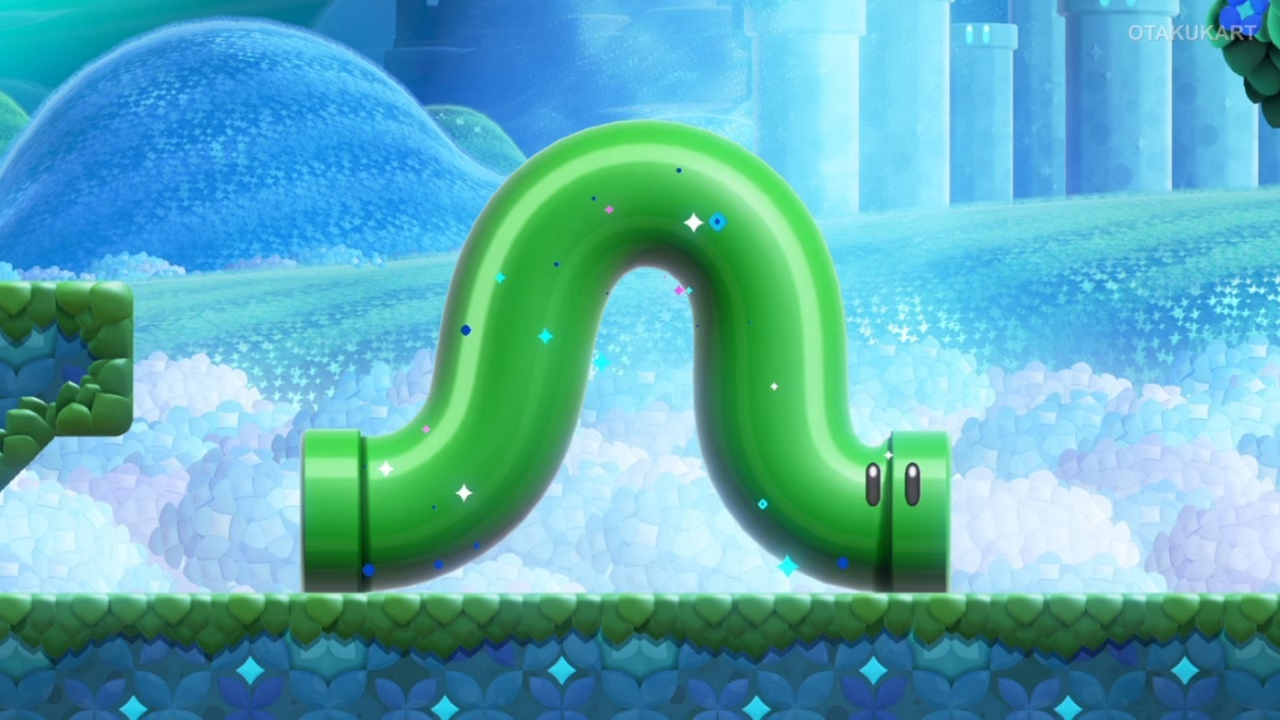
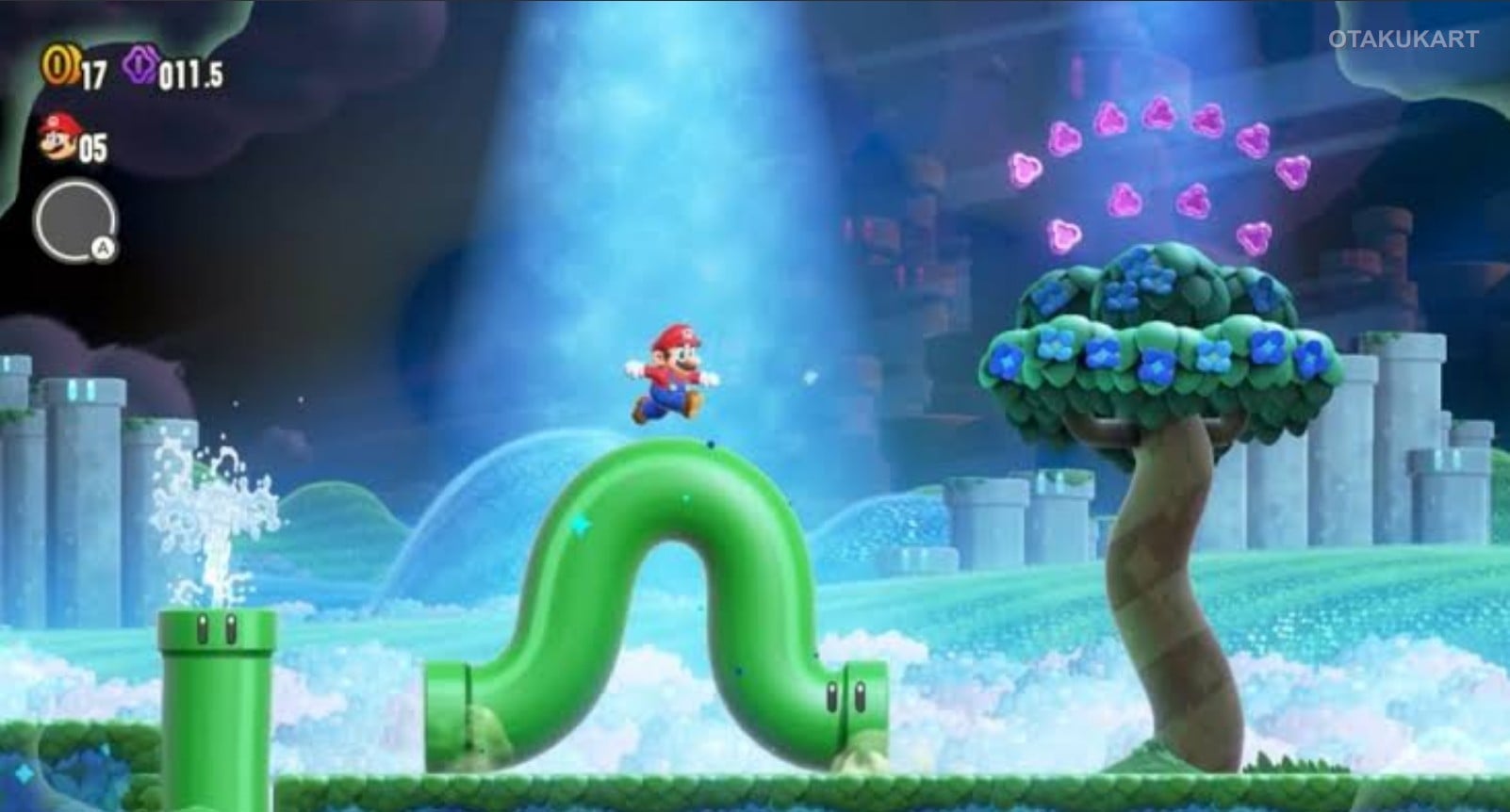
Super Mario Bros. Wonder introduced plenty of imaginative gameplay ideas when it launched, but one of its most memorable additions was the Inchworm Pipe—a familiar Warp Pipe that suddenly comes to life and crawls across the stage. While the mechanic delighted players, Nintendo has now revealed that designing its sound effect was one of the team’s biggest creative challenges.
In a developer interview published on Nintendo’s official recruitment website, one of the game’s sound designers reflected on the process of bringing the Inchworm Pipe to life.
The developer explained that creating a convincing sound for an object that does not exist in the real world required far more experimentation than recording everyday sounds. Instead of relying on real-world references, the team had to imagine how a living pipe should sound, ultimately discovering that a vibrato effect was the key to making it feel organic and expressive.
Designing a sound for something that doesn’t exist
The developer explained that traditional sound design often starts with recording or recreating sounds from real objects. Everyday actions such as opening a door can be captured directly or recreated by layering different recordings.
The Inchworm Pipe presented a completely different challenge because there was no real-life equivalent. As a signature Wonder Effect, the moving pipe needed to sound playful, surprising, and alive while still feeling unmistakably like a Mario object.
The sound designer recalled that the team’s earliest versions resembled a pipe scraping across the ground with a simple “zuzuzuuu” sound. However, those attempts failed to capture the creature-like personality that Nintendo wanted for the animation, leading the team to continue testing different ideas over an extended period.
Vibrato transformed the Inchworm Pipe’s personality
According to the developer, the breakthrough came after revisiting an earlier prototype created by senior members of the audio team. Unlike later versions, that early sound immediately conveyed the feeling of a living creature.
When asking colleagues how they achieved the effect, the developer learned they had incorporated vibrato, a subtle pitch-shifting technique commonly used in music and audio production.
The reasoning went beyond simply adding movement to the sound. As the developer explained, the team believed that
“the wiggling movement of something like a living creature can be conveyed with a vibrato’s shaking sound.”
Using that lesson, the sound designer refined the effect with a stronger emphasis on the emotional impression it created rather than the technical process behind it. The result, the developer said, was that
“we finally created the perfect sound we imagined by producing it to convey a more wriggling, creature-like quality.”
Sound effects help define the Mario experience
The interview also offers insight into Nintendo’s broader philosophy toward game audio. The developer explained that sound effects are not only intended to communicate information—such as identifying different materials or character actions—but also to evoke emotions like excitement and fun.
Reflecting on the experience, the sound designer admitted the project reshaped their understanding of audio design. Learning from senior colleagues highlighted the importance of considering how players emotionally interpret a sound rather than focusing solely on technical implementation.
The developer also described one of the most rewarding aspects of the profession, noting that unlike the real world, game worlds remain silent until someone imagines and creates every sound within them. That creative freedom, they said, allows sound designers to give life and personality to interactive worlds.
Originally released for Nintendo Switch in 2023, Super Mario Bros. Wonder remains one of Nintendo’s most celebrated 2D platformers, with the recently released Nintendo Switch 2 Edition bringing the adventure to the company’s latest hardware.