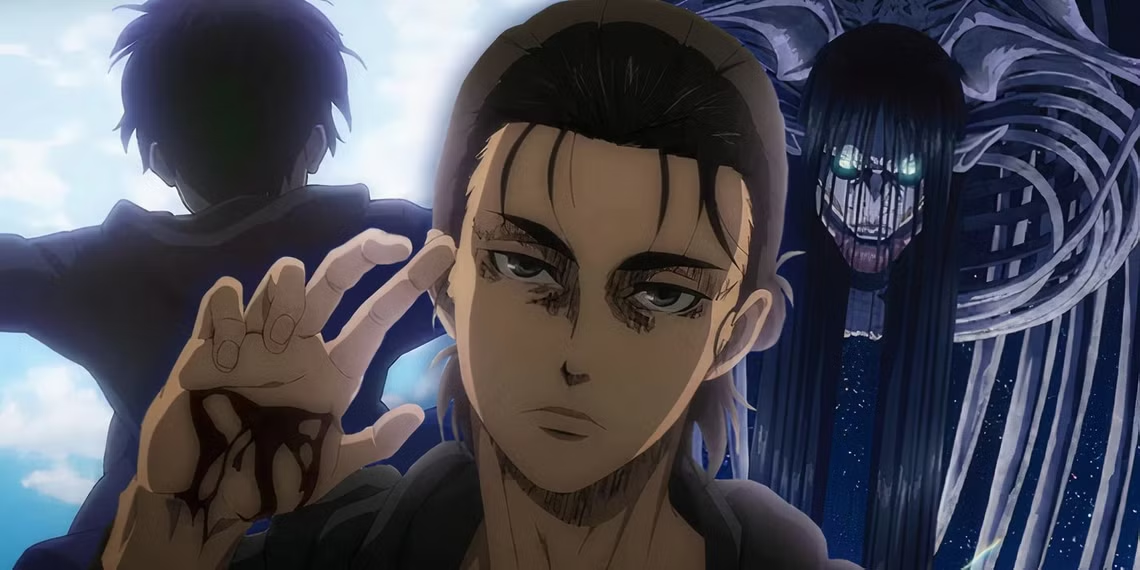

Anime fans are living through some of the most competitive times in streaming history. What was once a niche nook within the wider entertainment world has exploded into a global phenomenon, and the platforms are racing to secure as much quality anime content as possible.
For viewers, this should be a dream come true. But the rapid growth also means frustration, confusion, and loyalty battles between platforms that want to be known as the home of anime.
In 2025, anime is not just one more category in a catalogue. It is a strategic battleground. Streaming services have learned that a deep anime library does more than attract subscribers.
It keeps them. And in a market where viewers cancel subscriptions quickly and expect more with each passing season, that retention power is extremely valuable.
Why Anime Has Become the Centre of the Streaming Battle
A decade ago, anime was supported mainly by dedicated fan platforms and tight-knit online communities. In today’s mainstream operations, global corporations have come to understand the genre’s power and potential. Fans are covering whole seasons in a single weekend, and making every effort to follow heavily invested in the franchises.
The platforms are now competing by striking exclusive licensing agreements, fast-tracking simulcasts, and promoting their original anime series.
On the surface, this competition benefits viewers, but it has also created a fragmented landscape. One series sits on a US-based platform, another is exclusive to a European service, and a third may be limited by region entirely.
The result is a confusing environment in which fans often need multiple subscriptions just to follow a single season’s lineup. With every announcement or removal, social media fills with debates about availability and accessibility.
The Rise of Fan Expectations
One thing is certain. Fans expect more than ever before. They want complete catalogues, uncensored versions, accurate subtitles, fast-paced dub releases, and reliable streaming quality. They also expect platforms to understand the culture and the fanbase rather than simply hosting anime because it is popular.
Services that treat anime as a secondary category often feel the consequences quickly. Fans are vocal and informed, and when a platform delays an episode, botches a translation, or removes a classic title, people notice immediately.
This heightened expectation has pushed streaming companies toward aggressive strategies. Some invest heavily in original productions, hoping to create the next breakout series. Others are rebuilding their retro libraries to appeal to long-time fans.
It is common these days to hear anime viewers compare streaming habits with the same casual tone someone might use when discussing online casino offers or other digital entertainment because the way people consume media has expanded to include many different platforms and routines. This overlap shows how deeply streaming fits into everyday online life.

Original Anime as the New Strategic Weapon
One of the most important monumental movements is the rise of original anime productions. So many platforms are working with Japanese scriptwriters and animators, with the purpose of making exclusive shows come together with the proper licensing and agreements.
This offers great opportunities, but of course, it also carries risks. Producing higher quality anime takes many hours of talent, those of which have to respect the medium of the art. It’s easily distinguishable if products of production are not made with the same care, attention, and generational fine streaming.
For those who have been successful in producing authentic anime, there has been global online buzz and new viewers. However, a rushed, poorly executed original release can showcase quite a different story.
The Challenge of Licensing and Regional Restrictions
Licensing remains the most difficult part of the streaming race. Rights holders vary across countries, production committees change frequently, and agreements often move from one platform to another.
This creates headaches for viewers. A series that is available in one country can disappear in another. Fans who travel or move between regions sometimes find themselves unable to watch shows they legally followed only weeks before.
Platforms must now navigate these restrictions carefully. With viewers expecting fairness and consistency, licensing complications are as much a public relations issue as they are a business one.
What the Future Holds for Anime Streamers
Fans are not asking only for quantity. They want quality. That includes thoughtful curation, stable simulcasts, complete seasons, and minimal unexpected removals. It also means giving proper credit and attention to translators, voice actors, editors, and the animation teams responsible for bringing series to life.
The platforms that will dominate the future are not necessarily the ones with the biggest budgets. They will be the ones who engage deeply with anime culture and deliver reliable, respectful, and well-managed content.
For now, the streaming war continues to escalate. More services are joining the battle, more exclusive deals are being signed, and more studios are experimenting with global first releases. Through it all, one thing remains constant. The fans sit at the centre, passionate, demanding, and always ready for the next great story.