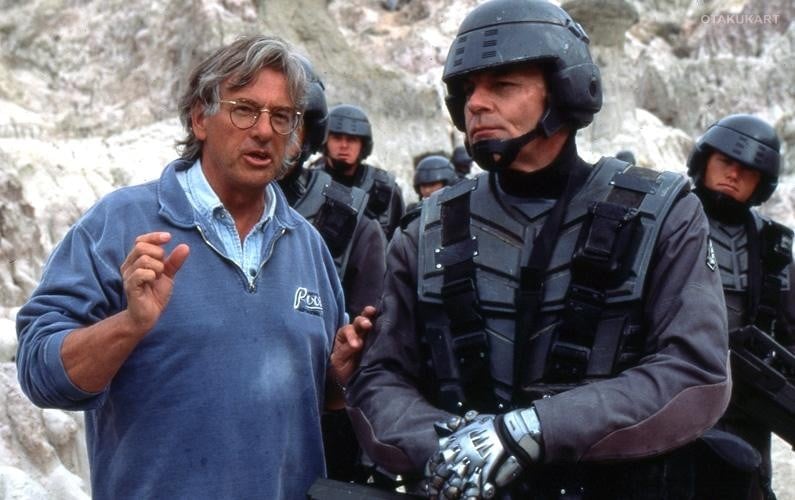
Nearly three decades after Starship Troopers reached theaters, director Paul Verhoeven is once again explaining the political meaning behind the movie’s military imagery. The discussion follows Donald Trump’s recent presentation of a proposed “next generation” Space Force uniform that explicitly cites the 1997 film as an inspiration for its design.
The proposed uniform features a sharply tailored dark outfit, peaked cap, tall black boots and the Space Force delta insignia across several parts of the design. While the imagery has attracted comparisons to military and science-fiction villains online, Verhoeven says the connection to Starship Troopers should be understood differently.
In a new interview with The Hollywood Reporter, Verhoeven explained that the visual language of his movie was intentionally influenced by fascist propaganda. His comments also revisit one of the central ideas behind Starship Troopers: that authoritarianism can become attractive when it is presented through glamorous images of heroism, order and military strength.
Paul Verhoeven Says Starship Troopers Was Inspired by Fascist Propaganda
Verhoeven directly addressed the Trump administration’s use of Starship Troopers imagery, saying the movie was based on the visual style of filmmaker Leni Riefenstahl.
“When they talk about Starship Troopers, they should be aware that it’s based on the style of Leni Riefenstahl,”
Verhoeven told The Hollywood Reporter.
Riefenstahl was closely associated with Nazi Germany and became internationally known for films including Triumph of the Will, which documented the Nazi Party’s 1934 Nuremberg Rally. Her work became notorious for using carefully composed imagery, mass choreography and cinematic spectacle to glorify Adolf Hitler and the Nazi regime.
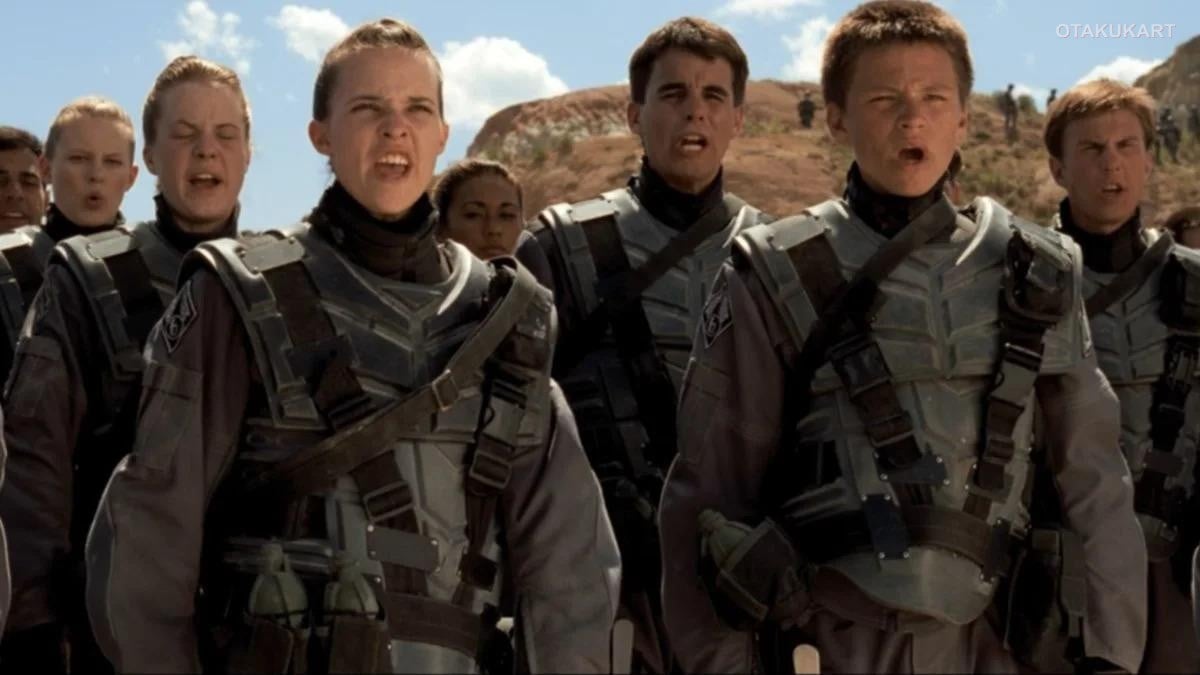
Those influences were deliberately incorporated into Starship Troopers. The movie presents its military society through polished propaganda videos, patriotic slogans, idealized soldiers and exaggerated displays of strength. Rather than simply celebrating that world, Verhoeven intended the exaggerated presentation to expose how easily militaristic propaganda can make authoritarian ideas appear appealing.
The director was particularly direct about the film’s protagonists, saying,
“I don’t know if this president is aware that the movie says these [characters] are fascists without knowing that they’re fascists. That’s the point.”
Why Starship Troopers Was Misunderstood
The political satire was not immediately understood by everyone when Starship Troopers was released in 1997. Verhoeven has previously discussed how the movie’s intentionally bombastic tone, attractive young cast and spectacular military sequences led some viewers to interpret it as a straightforward celebration of militarism.
The story follows Johnny Rico, played by Casper Van Dien, as he joins the United Citizen Federation’s Mobile Infantry and becomes involved in humanity’s war against the Arachnids, commonly called “bugs.” Denise Richards plays Carmen Ibanez, while Dina Meyer portrays Dizzy Flores. Neil Patrick Harris and Michael Ironside also appear as members of the military establishment.
Verhoeven has now reiterated that the satire was always central to his approach. He also acknowledged that some members of the cast and crew did not fully understand what he was attempting until they saw the finished movie.
“I knew what I was doing,”
Verhoeven said, adding that the film’s heroes are
“without knowing, Nazis.”
The director has previously explained that he hoped audiences would recognize the absurdity of the movie’s propaganda-heavy world. Instead, the film’s deliberately exaggerated imagery contributed to its complicated reception.
Trump’s Space Force Design Revives the Film’s Political Debate
The controversy returned after Trump shared a proposed Space Force uniform described as being inspired by the discipline and functionality of the Starship Troopers uniform. The design’s dark military styling immediately prompted comparisons with the film and other authoritarian science-fiction imagery.
The timing has given Verhoeven’s comments renewed relevance because the visual elements that attracted attention in the original movie were never intended to function simply as aspirational military fashion. They were part of a broader satire about propaganda, militarism and the way authoritarian systems can package themselves as heroic.
For Verhoeven, the renewed attention demonstrates how Starship Troopers continues to provoke debate about the imagery it deliberately borrowed and exaggerated. Almost 30 years after its release, the film’s central warning remains tied to the distinction between depicting fascist imagery and endorsing it.