After the introspective brilliance of “ErickerHead,” Rick and Morty Season 9 continues its impressive late-season run with “MortGully, The Last Rickforest.” While the episode openly borrows its foundation from environmental adventure films like FernGully, it quickly transforms that familiar premise into something unmistakably Rick and Morty.
What begins as another routine resource-stealing mission soon evolves—quite literally—into a survival story spanning millions of years of evolution. Packed with bizarre comedy, ambitious animation, and surprisingly thoughtful themes about nature and cooperation, Episode 7 ranks among the season’s most inventive adventures.
Rick’s greed finally catches up with him
The episode opens exactly as longtime fans would expect.
Rick drags Morty to an alien forest planet to harvest valuable tree sap without much concern for the ecosystem they’re exploiting. Unsurprisingly, Rick chooses the worst possible tree.
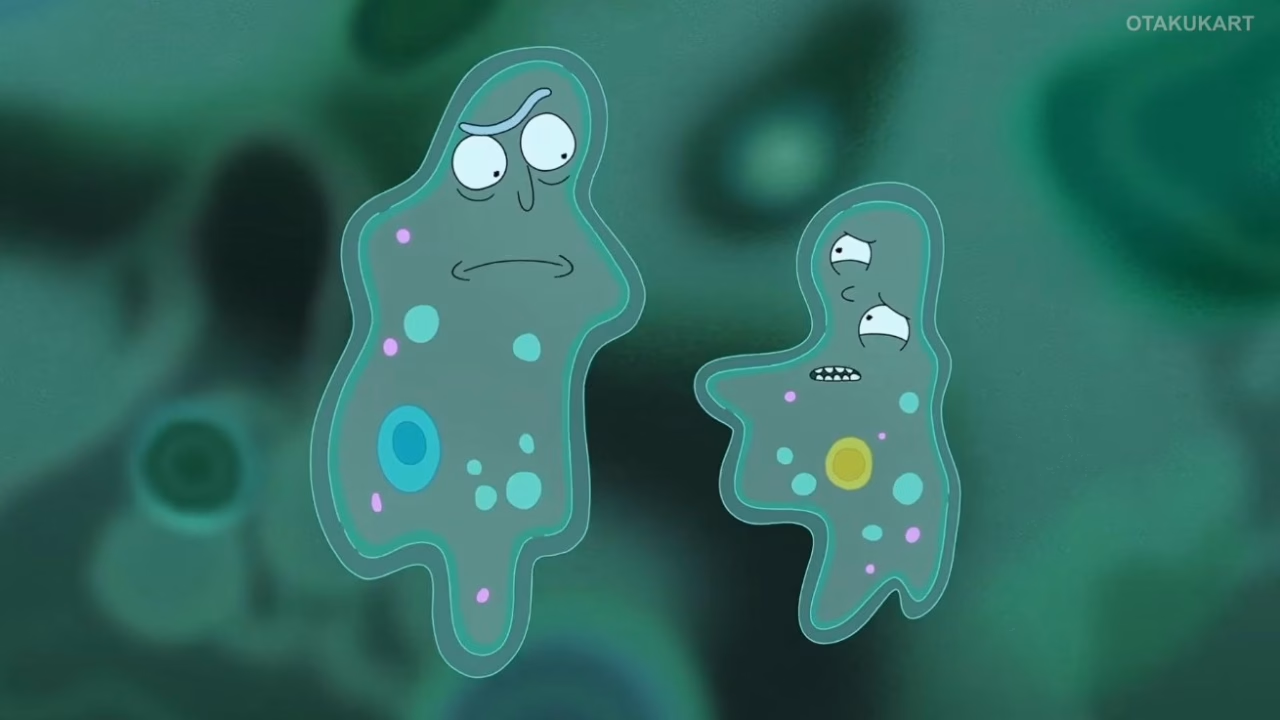
The ancient being known as the Warden awakens after Rick damages it and immediately punishes the pair by imprisoning them inside an underground biodome. Rather than simply locking them away, the Warden strips Rick and Morty of their human bodies and forces them to begin life again as microscopic amoebas.
It’s one of the season’s most creative setups.
Instead of escaping through gadgets or portal technology, Rick and Morty must survive the evolutionary process itself. Every death resets them back to the beginning, forcing them to repeatedly adapt, evolve, and learn from previous failures.
The concept constantly introduces new environments and new species, keeping the episode visually fresh from beginning to end.
Evolution becomes both the joke and the lesson
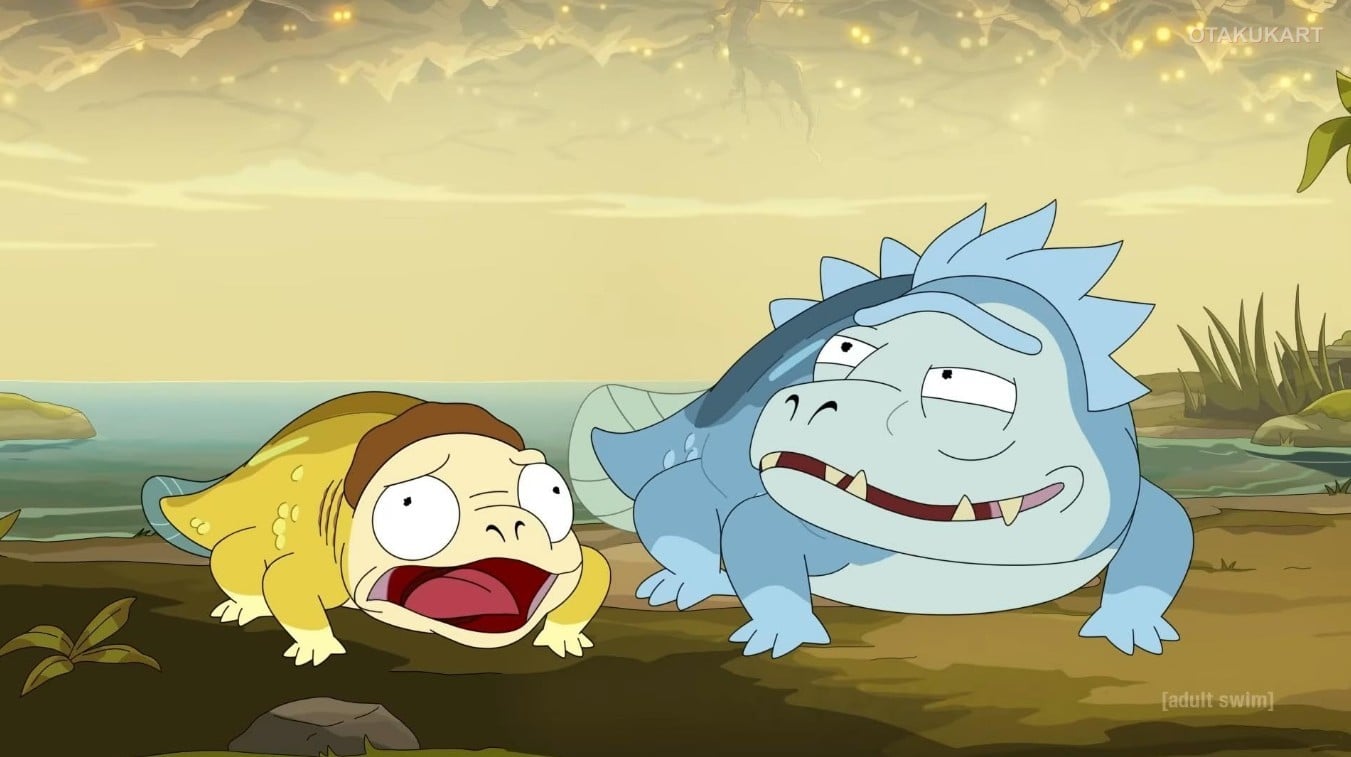
Watching Rick and Morty progress through countless lifeforms is easily the episode’s greatest strength.
Fish become reptiles.
Reptiles become birds.
Birds become dinosaurs.
Dinosaurs eventually give way to mammals, primates, and beyond.
Every stage creates fresh comedic opportunities while naturally advancing the story. Rather than feeling repetitive, each evolutionary leap introduces another obstacle that prevents Rick’s usual shortcuts from working.
More importantly, the episode quietly shifts its perspective on survival.
Rick repeatedly relies on domination, violence, and military organization. At one point he effectively builds an animal army in hopes of defeating the Warden through brute force.
Predictably, every attempt fails.
Morty, meanwhile, takes an entirely different path. Instead of controlling others, he gradually learns to cooperate with them, forming relationships with peaceful species that prioritize coexistence over conquest.
That contrast becomes the emotional heart of the episode.
Morty shows real growth
Season 9 has consistently given Morty stronger material than previous years, and “MortGully, The Last Rickforest” continues that trend.
Rather than simply following Rick’s lead, Morty develops his own philosophy.
His experiences across countless evolutionary cycles slowly convince him that survival isn’t always about becoming stronger. Sometimes it’s about creating balance instead.
That realization ultimately inspires the episode’s clever final strategy.
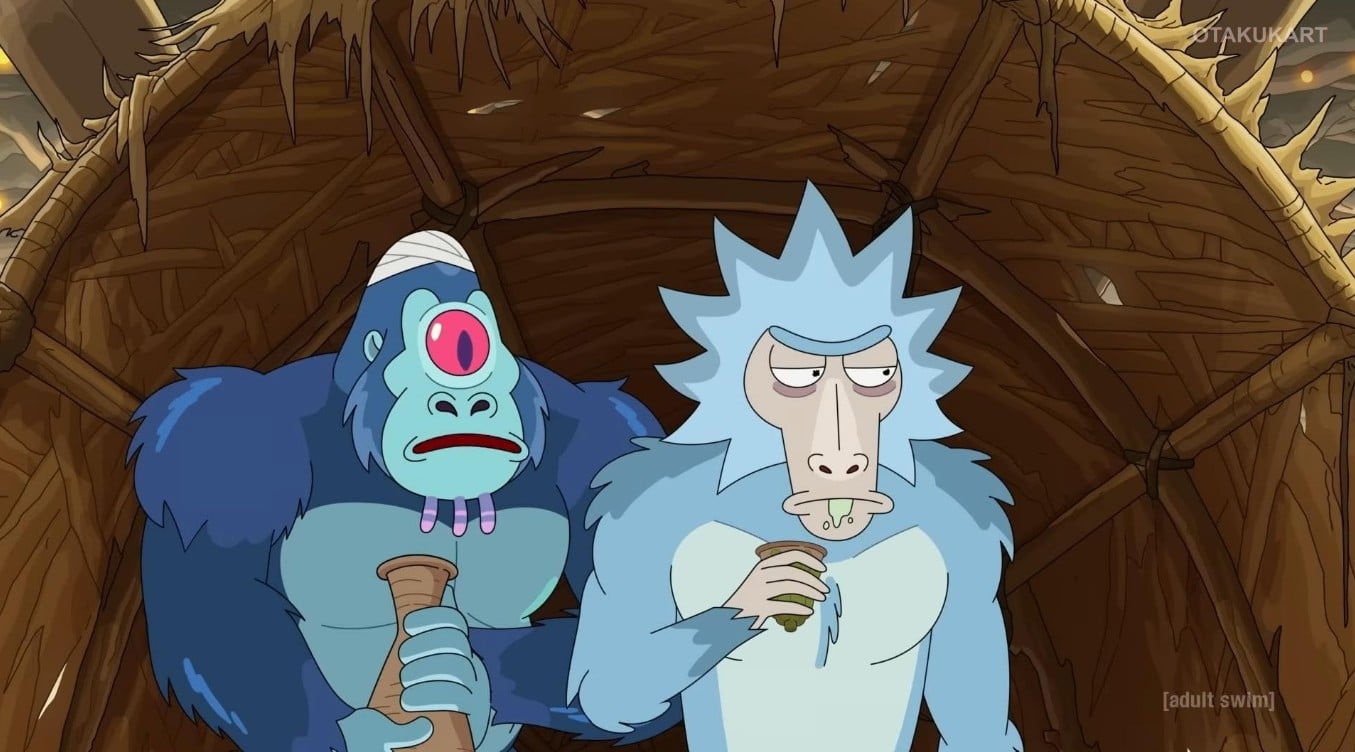
Instead of continuing an endless cycle of violence, Rick and Morty convince the trapped creatures to build a self-sustaining ecosystem that deprives the Warden of the conflict it depends upon.
It’s an unexpectedly optimistic solution for a show usually built around cynical humor.
Better still, Rick eventually accepts Morty’s approach after recognizing that his own methods have repeatedly failed.
Watching Rick reluctantly embrace cooperation instead of domination represents subtle but meaningful character growth.
Season 9’s animation continues to impress
From a technical standpoint, this may be the show’s most visually ambitious episode of the season.
The countless evolutionary transformations allow the animation team to constantly reinvent the visual style while maintaining fluid storytelling. Whether depicting prehistoric landscapes, aerial chases, underwater survival, or sprawling ecosystems, every sequence feels energetic and beautifully animated.
Several montages showing Rick and Morty’s evolutionary journey stand among the strongest visual moments the series has produced in recent years.
Even without dialogue, those scenes effectively communicate the passage of time, the brutality of natural selection, and the emotional exhaustion experienced by both characters.
The action scenes also deserve praise.
Rather than relying solely on explosions or futuristic technology, the episode uses primitive survival, animal behavior, and environmental hazards to create exciting confrontations.
A satisfying ending with classic Rick and Morty humor
After starving the weakened Warden and finally defeating him, the trapped creatures celebrate their newfound freedom.
Naturally, Rick can’t resist ruining the heartfelt moment.
Instead of helping everyone return home, Rick and Morty convince the remaining survivors that believing hard enough will restore their original bodies before quietly escaping in a hot-air balloon.
It’s a perfectly selfish ending that reminds viewers Rick hasn’t completely changed despite everything he’s experienced.
Thankfully, the post-credit scene confirms the others eventually find their way back, softening what could have been an unnecessarily cruel conclusion.
The ending strikes a satisfying balance between emotional payoff and the series’ trademark cynical humor.
“MortGully, The Last Rickforest” is one of the most imaginative episodes of Rick and Morty Season 9. Its evolutionary survival concept provides endless creative opportunities while quietly delivering meaningful commentary about cooperation, environmental responsibility, and Rick’s inability to solve every problem through force alone. Combined with exceptional animation, inventive world-building, and one of Morty’s strongest character arcs this season, Episode 7 stands as another reminder that the series continues to evolve nearly a decade after its debut.
The Good
- Brilliant evolution-based premise that stays fresh throughout.
- Outstanding animation and visual storytelling.
- Excellent character development for Morty.
- Creative environmental themes without becoming preachy.
- Strong balance of humor, action, and emotional payoff.
The Bad
- The Warden could have benefited from more backstory.
- Some evolutionary stages pass by too quickly.
- Rick's final selfish twist slightly undercuts the emotional ending.
- Environmental message occasionally feels a little on-the-nose.
| Premiere Date | December 2, 2013 |
|---|---|
| Network / Service | Adult Swim |
| Creator | Dan Harmon, Justin Roiland |