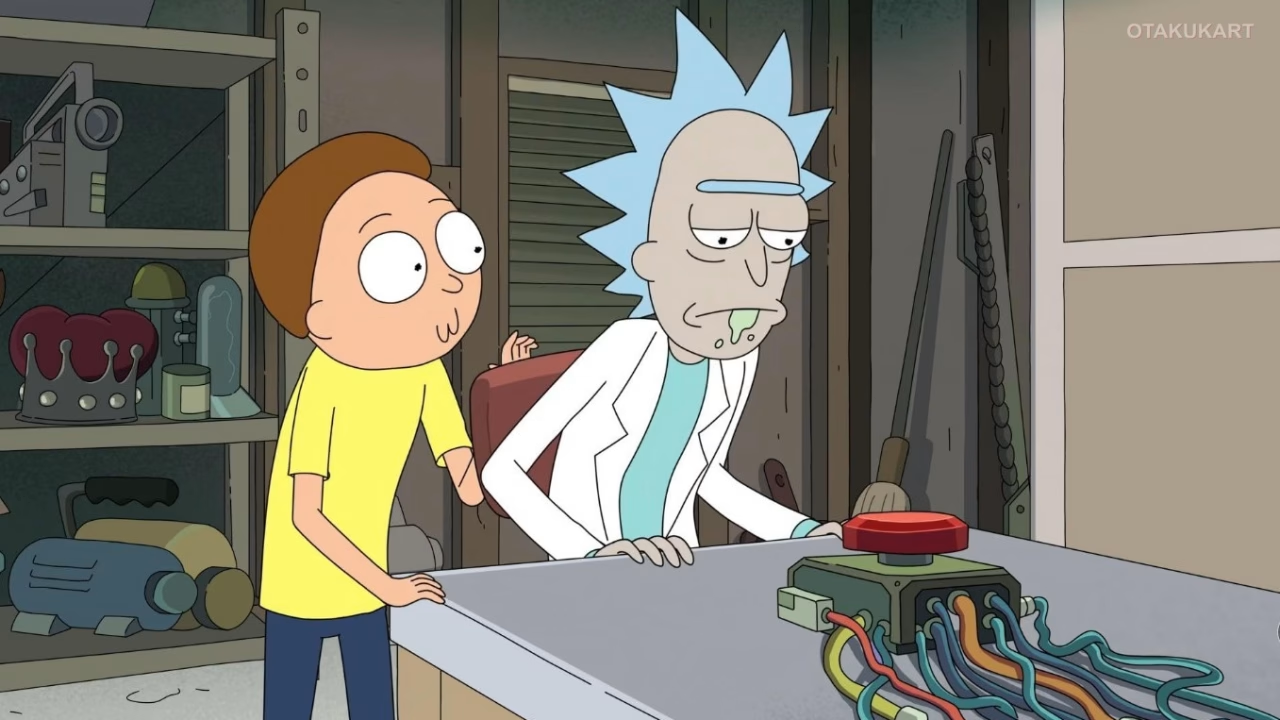
After a somewhat uneven season premiere, Rick and Morty Season 9 Episode 2, “Ricks Days, Seven Nights,” reminds viewers why the series remains one of television’s smartest animated shows. Instead of relying on multiversal chaos or elaborate sci-fi concepts alone, this episode turns inward, delivering a deeply personal story about Rick Sanchez’s inability to escape himself.
What initially appears to be another bizarre adventure quickly reveals itself as an existential character study. The result is an episode that isn’t the funniest of the season, but it is arguably one of the most emotionally resonant chapters the series has produced.
Rick’s dream life becomes his greatest nightmare
The episode opens with Rick living under the name Ted on the snowy planet Beloi 6E, spending his days bowling, fishing, and enjoying life with ordinary friends. He repairs his RV by hand, visits Marjorie’s bowling alley, and appears genuinely happy—something rarely seen from the galaxy’s smartest man.
The mystery unfolds when Rick survives a robbery thanks to hidden cybernetic enhancements, triggering memories he deliberately erased. It turns out this peaceful existence is part of an annual vacation where Rick wipes his own memories to experience life without the burden of being Rick Sanchez.
It’s a fascinating premise because it asks a simple question: Can Rick ever truly be happy if he forgets who he is?
The answer becomes increasingly tragic as the story progresses.
Strong emotional storytelling outweighs the comedy
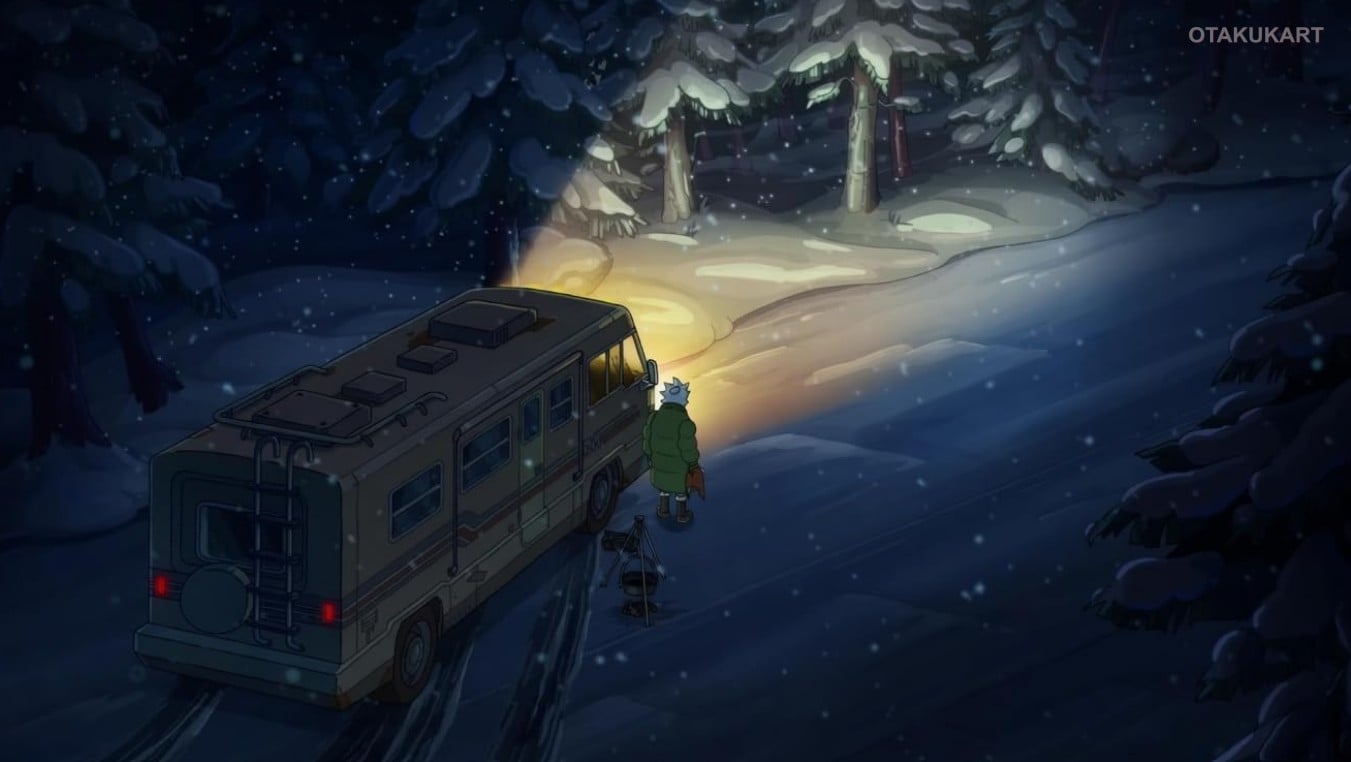
Unlike many episodes built around rapid-fire jokes, “Ricks Days, Seven Nights” allows its emotional moments to breathe. The action sequences—including Rick transforming bowling equipment and his RV into deadly weapons during a battle against his own drone forces—are entertaining, but they never overshadow the central conflict.
The emotional turning point arrives with Marjorie’s death, which shatters Ted’s peaceful illusion. From that moment onward, the episode becomes less about defeating enemies and more about watching Rick’s carefully constructed fantasy collapse under the weight of his true identity.
His friends initially embrace the advanced technology surrounding him, but fascination quickly turns into obsession. Portal guns, futuristic weapons, and limitless possibilities ultimately destroy the simple life Ted had built. It’s a clever metaphor for Rick himself—his intelligence gives him unlimited power while simultaneously preventing him from enjoying an ordinary existence.
The writing effectively argues that Rick’s greatest curse isn’t his enemies or his traumatic past. It’s his inability to stop chasing something bigger, even when happiness is sitting right in front of him.
Morty delivers one of the season’s best moments
The final act belongs to Morty, whose compassion grounds the episode’s bleak themes. Throughout the series, Morty has often been Rick’s reluctant sidekick, but here he becomes the emotional anchor.
As Rick spirals into despair after losing both his vacation life and the friendships he treasured, Morty desperately tries to convince him that his life already has meaning.
“You’re really smart. Really important. You have a great family and lots of friends. You’re so happy. And we all really love you.”
It’s one of the show’s most heartfelt speeches, made even more devastating because both Morty and the audience know it isn’t enough.
Rick’s response captures the tragedy of his character perfectly:
“You’re a nice kid. Good boy. You should have your grandpa. Not this. I’m too stupid, Morty. Stupid Ted. If I were just a little bit smarter, I could figure it out and be happy.”
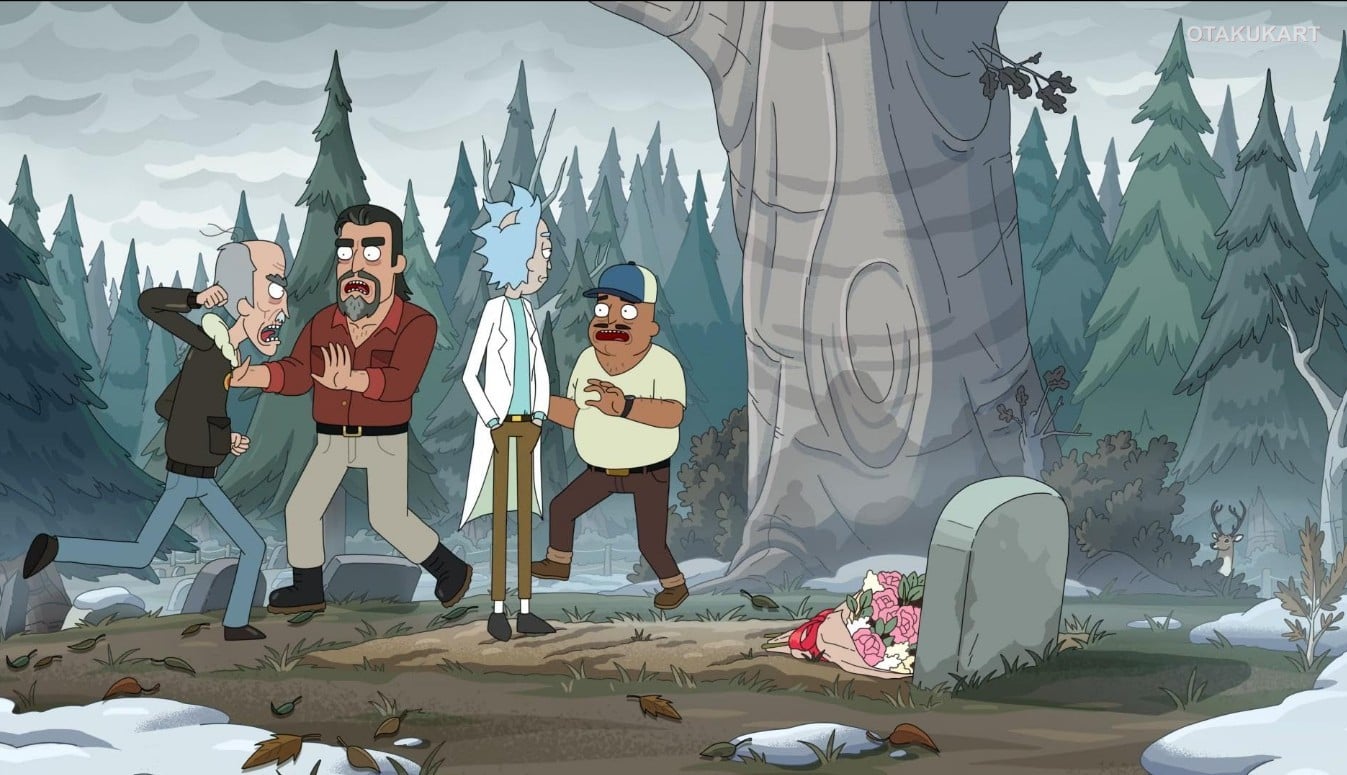
The episode’s final scene intentionally leaves viewers questioning whether pressing the mysterious red button actually changed anything. Physically, Rick remains the same. Emotionally, he appears just as broken as before.
That ambiguity is what makes the ending so effective. Rick may erase memories, invent impossible technology, or travel across infinite realities, but none of those abilities can solve the one problem that truly matters—himself.
Rather than offering easy answers, the episode embraces that sadness, delivering one of the most mature explorations of Rick’s character since the series began.
“Ricks Days, Seven Nights” is an outstanding return to form after the season premiere. It proves that Rick and Morty is at its strongest when science fiction serves the characters instead of overshadowing them.
The episode balances clever concepts with genuine emotional weight, offering a thoughtful examination of identity, regret, and the impossible search for lasting happiness. While viewers looking for nonstop comedy may find it slower than usual, those invested in Rick’s ongoing character arc will discover one of Season 9’s finest episodes.
The Good
- Excellent character-driven story centered on Rick's emotional struggles.
- One of the strongest endings in recent seasons.
- Clever sci-fi premise with meaningful thematic depth.
- Outstanding performances from Rick and Morty.
- Balances action and emotion without losing narrative focus.
The Bad
- Less comedy than a typical Rick and Morty episode.
- Supporting characters receive limited development.
- Slower pacing may not appeal to viewers expecting nonstop action.
| Premiere Date | December 2, 2013 |
|---|---|
| Network / Service | Adult Swim |
| Creator | Dan Harmon, Justin Roiland |