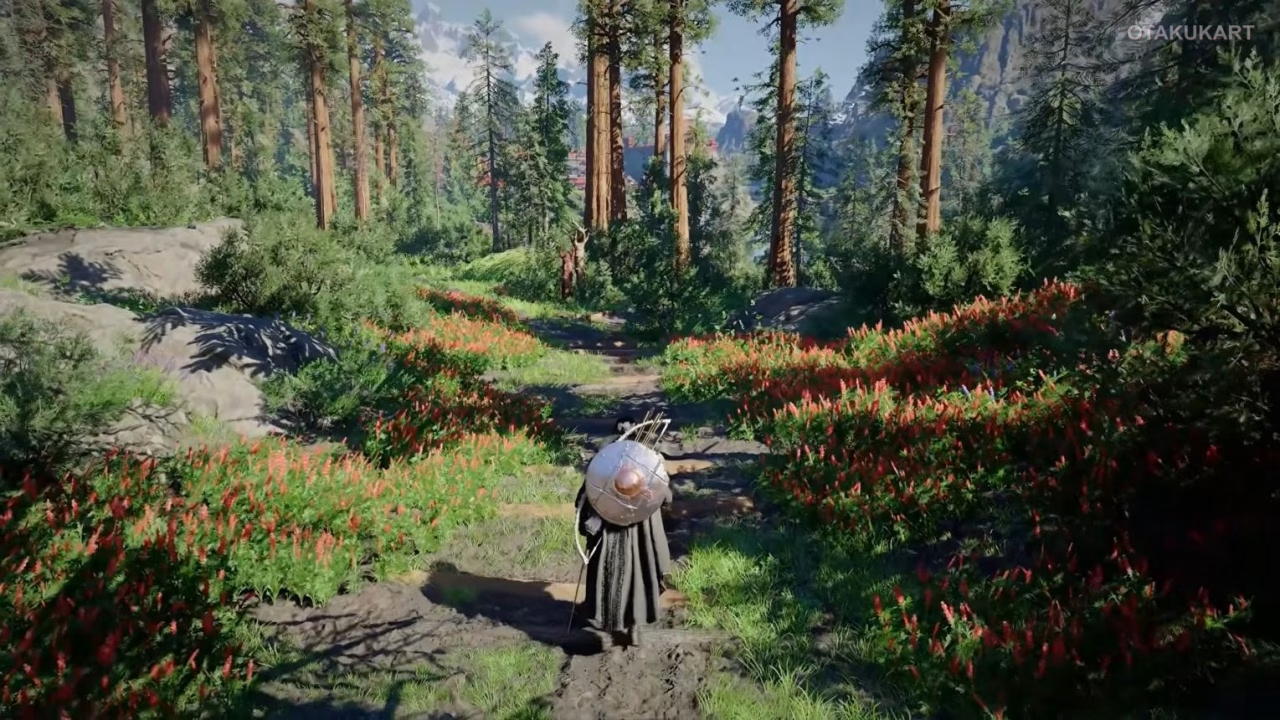
Pearl Abyss deliberately moved away from realistic forest designs while developing Crimson Desert after discovering that overly dense vegetation made exploration frustrating. Instead of filling every available space with trees and foliage, the developers focused on creating environments that players could easily navigate, understand, and explore.
The design philosophy was discussed by Ahn Keun-tae, Art Level Division Lead, and Yoon Jin-ho, Graphics Division Lead, during a G-CON presentation at G-STAR on November 19, 2026, and reported by Inven Global. According to the developers, the challenge was not simply creating a visually impressive open world but making its environments communicate with players without relying on dialogue or quest markers.
Why Crimson Desert’s Developers Avoided Realistic Forests
Ahn explained that recreating nature as accurately as possible could actually damage the gameplay experience. A genuinely dense forest can obstruct visibility, conceal landmarks, and make navigation difficult.
Pearl Abyss discovered this problem during development when visually impressive forest environments looked considerably less appealing during actual gameplay. Players struggled to find their way, while carefully positioned animals and collectible resources disappeared behind thick vegetation.
The studio consequently prioritized readability over realism. Forests were designed with carefully arranged openings, visible landmarks, and enough space for movement and combat. Quieter sections were also introduced to give players breathing room between visually dense environments.
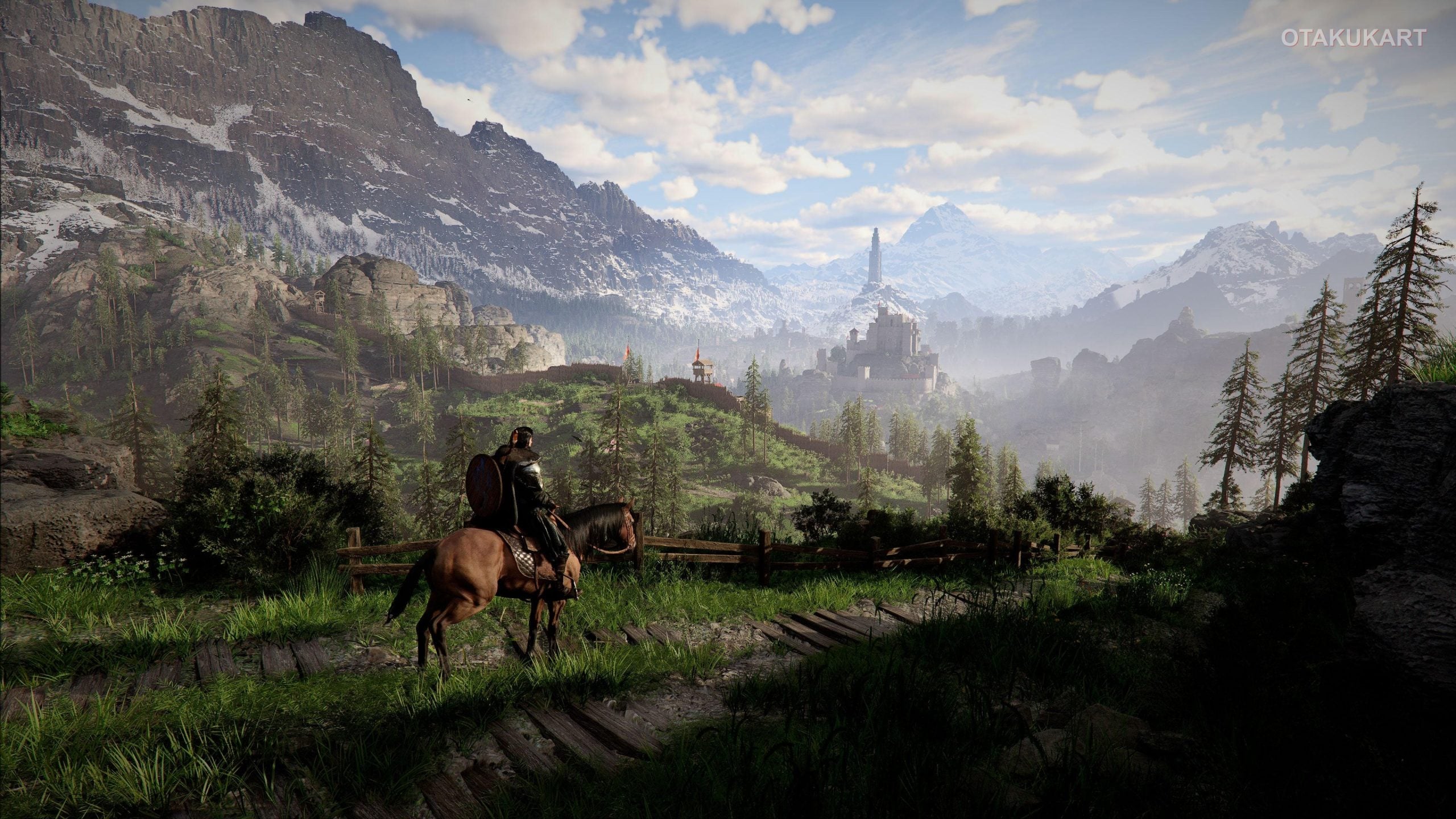
The presentation also explored how Pearl Abyss uses its proprietary BlackSpace Engine to bring Pywel’s approximately 200-square-kilometer world to life.
The engine combines procedural vegetation generation, level streaming, and five levels of detail to render environments efficiently. According to Yoon, its vegetation system can display up to 500,000 trees in a single scene.
Another important design principle is that distant locations should remain accessible. Pearl Abyss wants players to be able to travel toward landmarks they spot on the horizon rather than treating them as decorative scenery.
The developers also highlighted interactive vegetation, dynamic lighting, weather changes, and water simulation. These systems allow the environment to respond to player actions, making Pywel feel like a connected world rather than a collection of static backgrounds.
| Platforms | PC, PlayStation 5, Xbox Series X/S |
|---|---|
| Developer | Pearl Abyss |