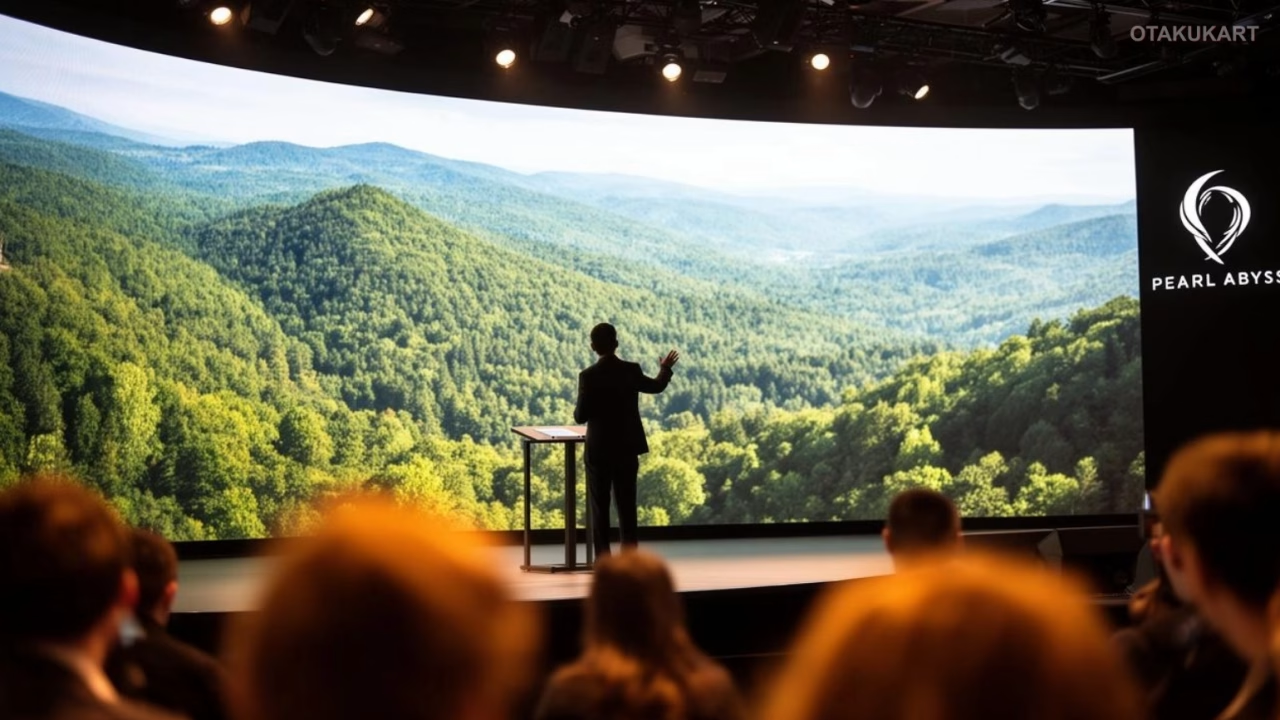
Pearl Abyss has revealed more details about the technology powering Crimson Desert, including how its proprietary BlackSpace Engine can render up to 500,000 trees in a single scene. The South Korean developer shared the technical details during a presentation at G-CON 2026, explaining how it manages the enormous environments of its open-world action-adventure game without overwhelming hardware resources.
As reported by BigGo, the game’s fictional continent of Pywel spans approximately 200 square kilometers. Maintaining dense forests, distant mountain ranges, and interconnected environments across such a large area requires several systems working together. Rather than relying entirely on conventional rendering techniques, Pearl Abyss developed a combination of optimized vegetation rendering, spatial management, and automated world-building tools.
Crimson Desert Uses an Impostor Technique to Render 500,000 Trees
During the November 19 presentation at G-CON 2026 in Busan, Pearl Abyss art level director Ahn Geun-tae and game engine graphics director Yoon Jin-ho explained how the BlackSpace Engine handles the game’s extensive vegetation.
One of its most notable features is an impostor technique designed to display enormous numbers of trees efficiently. The development team prepared substitute images for more than 100 tree species, allowing the engine to display simplified representations of distant vegetation based on the player’s position and viewing direction.
This reduces the processing requirements associated with rendering every individual tree in full detail. According to Yoon, the system can display up to 500,000 trees in a single scene while preserving the density of forests and the silhouettes of distant mountain ranges.
The engine also divides objects throughout Pywel into more than 20,000 independently managed units. Instead of loading everything simultaneously, it retrieves the necessary environmental data according to the player’s location and direction of travel.
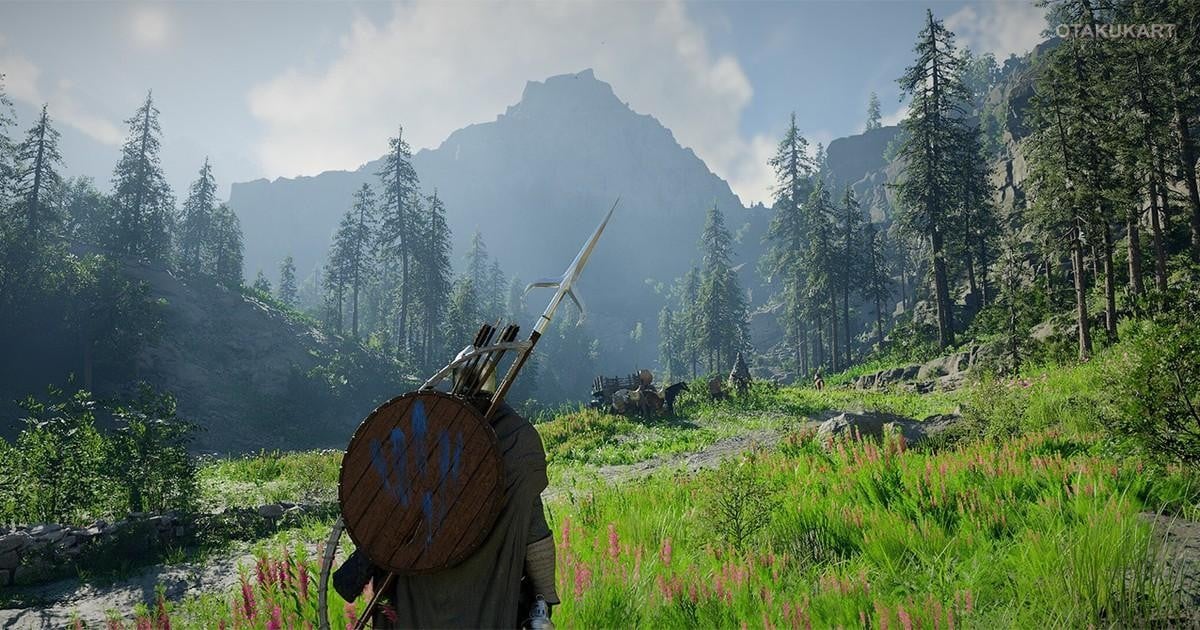
Pearl Abyss further applies five levels of detail (LOD), rendering nearby objects with greater complexity while simplifying distant elements. CPU and GPU workloads are also distributed to improve efficiency when handling complex environments.
Pearl Abyss Uses Houdini to Build Pywel’s Vast Environment
Rendering the world is only one part of the challenge. Pearl Abyss also explained how it constructed a continent that would be impractical to develop entirely through manual work.
Ahn Geun-tae acknowledged the limitations of traditional production methods, stating,
“The Pywel continent is truly vast. It simply cannot be made by hand.”
To address this, the developers first handcrafted representative regions before extracting rules governing vegetation density, terrain slopes, erosion patterns, and landmark placement. They then used Houdini, a procedural 3D production tool, to extend those established environmental rules across the rest of the continent.
Ahn described automation as a way to improve quality rather than simply reduce development time. He explained that improving one carefully constructed sample could raise the quality of the entire world through the automated pipeline.
Pearl Abyss deliberately prioritized exploration and visibility over photorealistic forests in Crimson Desert. The developers adjusted vegetation density and tree placement to prevent forests from obstructing movement or hiding important landmarks such as towers and ruins. Ahn Geun-tae summarized this approach by saying,
“Our goal was not the most realistic forest. It was the most readable forest.”
The team also ensured that distant landmarks remain accessible and combat areas provide enough room for players to move freely.
BlackSpace Engine Also Supports Dynamic Weather and Environmental Destruction
The G-CON presentation also covered how Crimson Desert makes its surroundings respond to player actions and changing environmental conditions.
Grass bends when characters move through it, while attacks can cut vegetation and break trees. These interactions are designed to make the environment feel connected to the player’s actions rather than functioning as static scenery.
Weather and time-of-day changes also affect multiple environmental elements together. Rain changes how wet surfaces reflect light, while snowfall influences atmospheric brightness and visibility. Wind calculations affect vegetation, fog, dust, and other elements across the world.
Yoon Jin-ho explained the philosophy behind this interconnected system:
“You should be able to go anywhere you can see on screen. The world must be connected as one.”
The technical revelations provide a closer look at how Pearl Abyss combines its proprietary BlackSpace Engine with procedural production to maintain a detailed, interconnected environment. The studio’s approach demonstrates that building a large open world involves more than increasing map size or visual fidelity. It also requires managing rendering resources, maintaining consistent environmental quality, and ensuring that the scenery supports actual gameplay.

| Platforms | PC, PlayStation 5, Xbox Series X/S |
|---|---|
| Developer | Pearl Abyss |