The development of Monster Hunter Wilds has hit an unexpected talking point after a recent interview revealed that some of its most ambitious gameplay systems are still not fully implemented. While anticipation around the title remains high, the update suggests that the game’s defining feature, its dynamic hunting experience, is still evolving behind the scenes. The revelation comes directly from the development team, offering a rare look at the challenges of building a more reactive and immersive world.
The comments were shared during an interview with IGN Japan, where director Yuya Tokuda discussed the current state of the project. According to Tokuda, the team is working toward a system where players are encouraged to adapt to changing conditions in real time rather than simply following pre-assigned quests. However, he acknowledged that some of these “possible situations” are still missing, even after a year of development progress.
A Shift Away From Traditional Quest-Based Hunting
The Monster Hunter series has long been built around structured quests where players accept missions and hunt specific targets. In Monster Hunter Wilds, that core loop is being expanded into something more fluid and unpredictable. Tokuda explained that the goal is to create a world where players naturally encounter opportunities rather than being guided strictly by objectives.
He described scenarios where players might set out for one purpose but be forced to rethink their plans mid-journey.
“What a hunter needs is the ability to make decisions on the fly,”
Tokuda said in the interview, emphasizing that adaptability is central to the game’s design philosophy. This marks a significant evolution for the franchise, which has traditionally relied on clearly defined mission structures.
The Vision of a Living, Reactive Ecosystem
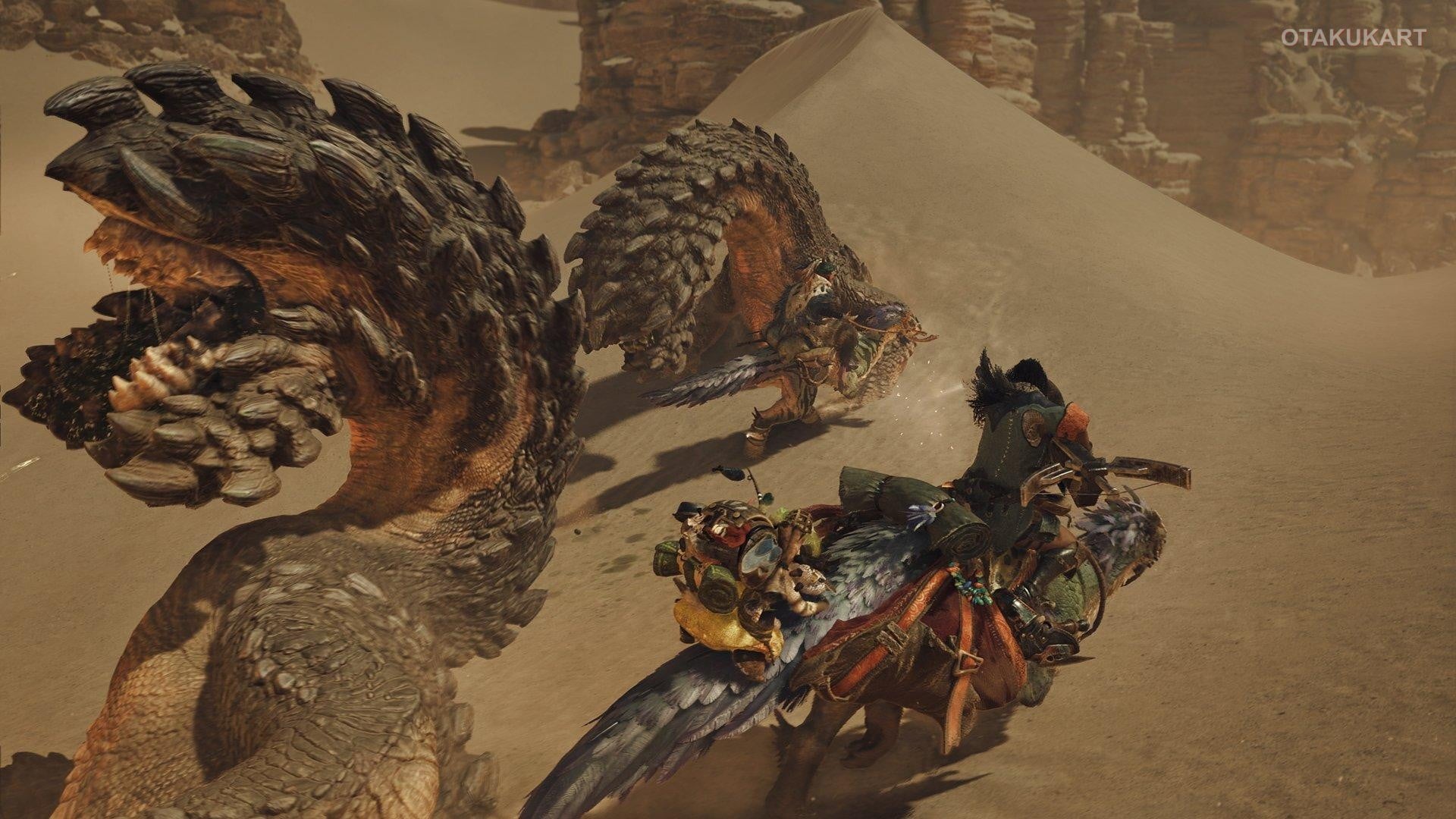
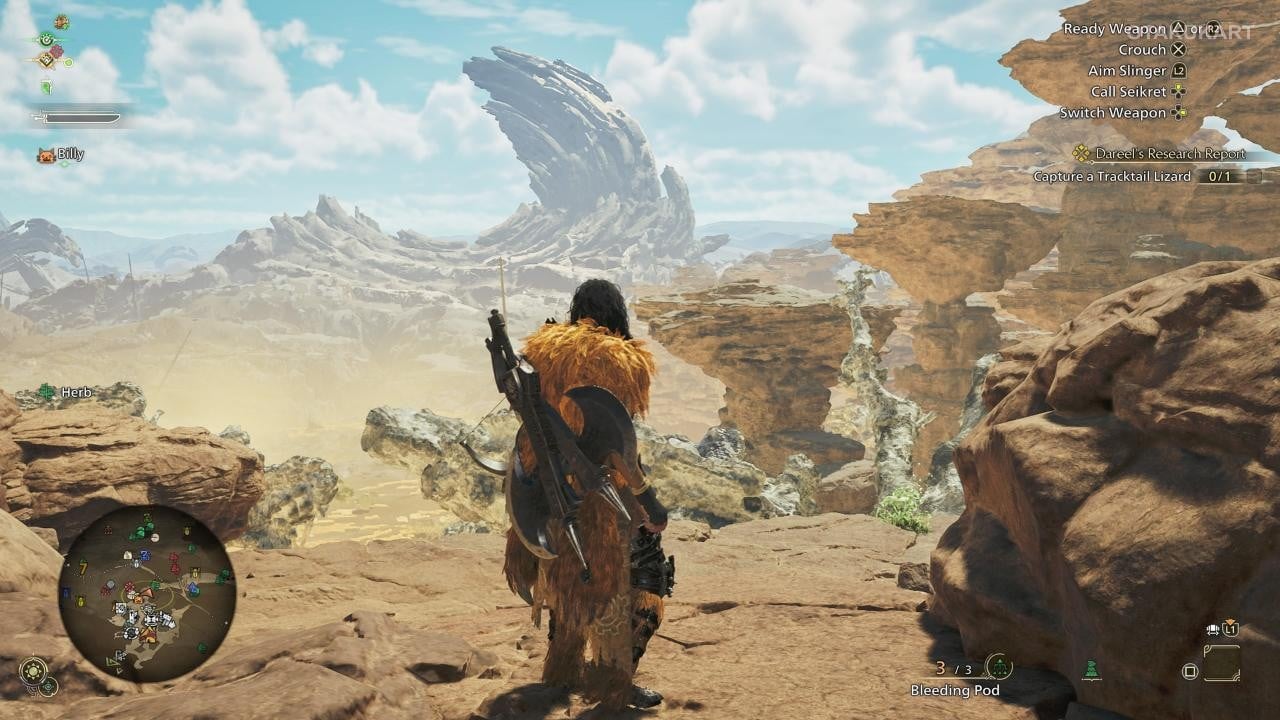
One example shared by Tokuda highlights the kind of emergent gameplay the team is aiming for. A player traveling across a desert environment in search of crafting materials might suddenly spot a wounded monster in the distance. Even if that creature is not part of the current objective, the potential rewards could tempt the player into changing course and engaging in an unscripted hunt.
This approach is meant to make the game world feel more alive, with monsters interacting with each other and the environment in meaningful ways. Signs of previous battles, such as injuries on creatures, are intended to tell stories without the need for direct exposition. However, Tokuda admitted that not all of these dynamic interactions are fully realized yet, suggesting that the system is still being refined.
Development Challenges Behind the Ambitious Design
Creating a seamless and reactive hunting system presents significant technical and design challenges. Unlike traditional quest-based gameplay, a dynamic system requires the world to respond to player actions in real time while maintaining balance and consistency. This complexity may explain why some planned features are still not present in the current build.
Tokuda’s comments indicate that the team is aware of the gap between their vision and the current state of the game. Rather than scaling back, however, the developers appear committed to continuing refinement. This transparency offers insight into how modern AAA games are evolving, especially those attempting to push genre boundaries.
What This Means for Players
For fans, the update is a mix of reassurance and caution. On one hand, it confirms that Monster Hunter Wilds is aiming for a deeper and more immersive experience than previous entries. On the other, it raises questions about whether all promised systems will be ready at launch or continue to evolve post-release.
The idea of abandoning a planned hunt to chase a wounded monster across a dynamic environment captures the essence of what the developers are trying to achieve. If successfully implemented, it could redefine how players interact with the Monster Hunter world. For now, however, it remains a work in progress, with key elements still being developed to match the ambitious vision outlined by its creators.
| Platforms | PC, PlayStation 5, Xbox Series X/S |
|---|---|
| Developer | Capcom |
| Director | Yuya Tokuda |