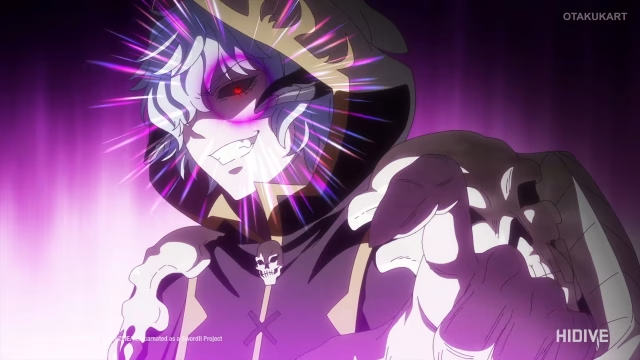

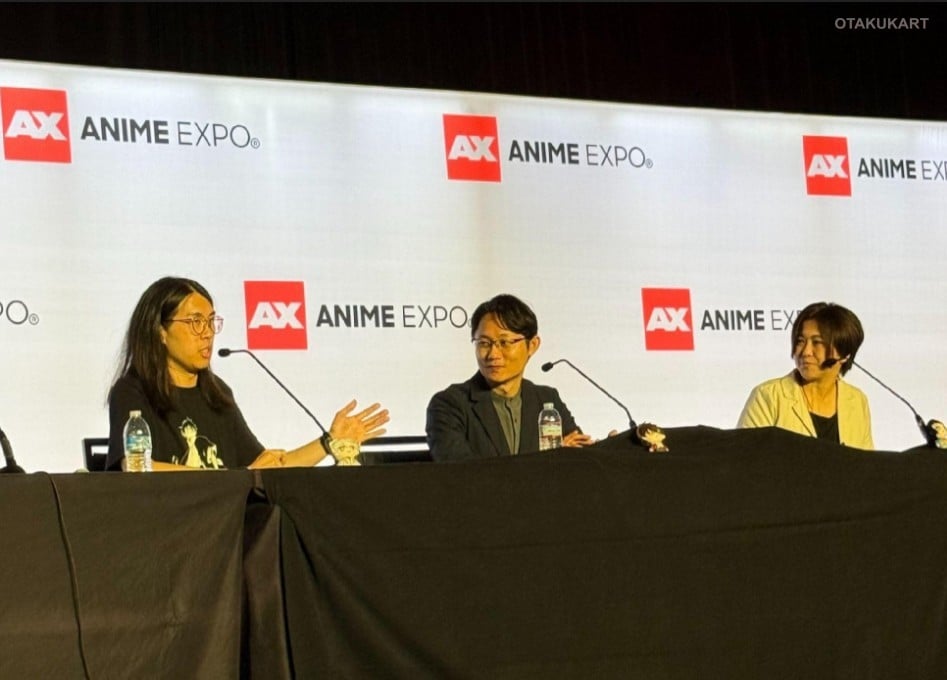
Kyoto Animation officially introduced its newest original television anime, Sparks of Tomorrow, to international audiences during Anime Expo 2026, where the series received an enthusiastic response following its world premiere. Held at the Platinum Ballroom of the JW Marriott in Los Angeles, the event featured screenings of the first two episodes, followed by an in-depth panel with director Minoru Ota, producer Satori Senami, and musician Ginger Root, who performed double duty as the ending theme artist and the panel’s MC and interpreter.
Fans began lining up long before the venue opened, creating one of the busiest queues of the morning. Throughout the screening, audiences reacted with frequent laughter during the comedy sequences before applauding enthusiastically once the credits rolled. The positive reception continued during the panel, where Ota and Senami discussed the creative philosophy behind the anime, its alternate-history setting, and the production process that shaped Kyoto Animation’s latest original project.
Director explains the themes and creative vision behind Sparks of Tomorrow
Set in an alternate-history version of Kyoto, Sparks of Tomorrow imagines a society where steam-powered technology flourished while other technological advancements stalled. Rather than focusing purely on steampunk aesthetics, the story follows Kihachi, Inako, and their companions as they search for the mysterious 20th Century Electrical Catalog in hopes of reclaiming their dreams and changing their future.
Discussing the central message of the anime, Ota explained that the story ultimately encourages perseverance.
“Above all, I hope audiences take away the spirit of trying again and never giving up.”
The director also spoke about the challenges of creating a completely original series. According to Ota, the team intentionally avoided ideas that felt too familiar, even though that made developing the project significantly more difficult.
Producer Satori Senami revealed that the staff initially spent considerable time understanding Ota’s creative style because it marked his directorial debut. She jokingly described him as “a strange person,” drawing laughter from the audience before explaining that embracing his unique approach ultimately became one of the production’s greatest strengths.
Character development also plays a major role in the series. Ota explained that Kihachi and Inako were deliberately designed as opposites, representing doubt and belief. Their contrasting personalities allow both characters to grow through encounters with people who challenge their perspectives. He added that Yosuke’s unwavering determination creates another important contrast, as he refuses to abandon his dreams while Kihachi has already done so.
The production team also highlighted the careful balance used when building the alternate-history Kyoto. Instead of creating a stereotypical steampunk world, the staff wanted audiences to recognize the city through the everyday lives of its characters. Steam pipes, industrial machinery, and environmental pollution support the setting without distracting from the emotional story.
Production team discusses animation, music, and future episodes
One of the standout elements of Sparks of Tomorrow is its distinctive visual presentation. Ota revealed that the background artists developed an Impressionist-inspired look using an extensive library of digital brush textures. Approximately 80% of the backgrounds were created digitally, while Kyoto Animation continues teaching traditional analog techniques before artists transition to digital production.
Ota praised the background art department for continually refining the visual style throughout production, noting that maintaining the new artistic direction across an entire season became one of the team’s greatest accomplishments. Senami added that Episode 1 underwent extensive revisions to establish a consistent visual identity that guided the remainder of the series.
The panel also featured Ginger Root, who shared how he became involved with the project after receiving an email from Bandai asking him to create the ending theme. As a longtime Kyoto Animation fan, he accepted immediately.
“If I hadn’t received those notes, I probably would have had to rewrite the song fifteen times as well.”
He credited Ota’s detailed creative direction, including artwork and written inspiration, for helping him create the futuristic electronic sound featured in the ending theme.
Looking beyond the technical aspects, Ota reflected on the series’ broader message about technology and humanity. While acknowledging the rapid growth of AI and digital communication, he expressed hope that future generations will continue to value genuine human relationships.
“At the heart of human nature is the desire not to be alone.”
Senami echoed that sentiment, saying she hopes people 100 years from now will continue to value wisdom, courage, and dignity regardless of technological progress.
Closing the panel, Ota admitted he had been nervous about showing the anime publicly for the first time but said hearing audiences laugh and react positively gave him confidence. He teased that the story becomes especially exciting around Episode 11, while Senami hinted that Yosuke’s role will continue expanding as the series progresses.
Sparks of Tomorrow is now streaming worldwide on Netflix.