Acquisitions and consolidation define the entertainment and gaming industries today. The story is always big money: Microsoft, Sony, Embracer Group, Tencent, Take-Two, and Electronic Arts are behind at least 16 unprecedented mega-deals since 2020 alone.
But behind the headlines, there’s a grimmer reality quickly unfolding for thousands of creative professionals.
Mergers that promise global synergy and fiscal strength often bring sweeping redundancies and shuttered studios, leading to mass layoffs that ripple across continents and genres.
A perfect illustration of the fallout can be found in the latest moves by Sony Interactive Entertainment. In February 2024, Sony announced it would lay off 900 PlayStation staff, a full 8 percent of its global gaming unit.
What stings for many is the simultaneous closure of its famed London Studio, a division behind pioneering titles and VR experiences. This decision follows a pattern: corporate consolidation that creates enormous power at the top, but puts creative workers at risk in every subdivision.
Also Read: One Piece Anime Goes on Two-Week Hiatus Mid-Arc — Recap Ep Hits Instead
Jim Ryan, PlayStation’s chief, admitted that “tough decisions” were unavoidable as the industry shifts how it develops, distributes, and launches entertainment. These moves, however, mirror the strategies of Sony’s biggest rivals.
Microsoft, for example, just months earlier executed mass layoffs and restructuring after acquiring Activision Blizzard for $69 billion, only to cancel projects, close studios, and streamline its workforce.
Studio Closures and Lost Innovation
What happens when studios close following a merger is about more than job loss. For players and developers alike, the shutdowns often mean beloved franchises are abandoned mid-development and innovative projects are shelved.
The layoffs and closures in the years after 2022 saw more than 45,000 lost positions, including entire teams at world-renowned outfits like Volition, London Studio, and Ready at Dawn.
Industry experts and developers attribute many of these cuts directly to merger-driven overexpansion. During the pandemic, companies chased unprecedented growth and snapped up competitors, betting on continued surges in gaming consumption.

Instead, they are now left with overlapping resources, ballooning budgets, and fiscal expectations that simply do not match post-pandemic realities. The result? Staff reductions, cancelled games, and a creative chill as risk is replaced with a formulaic push for safe bets and blockbuster franchises.
Studio closures aren’t just limited to gaming. Daily Mirror’s parent company, for example, recently cut over 300 jobs as it pivots from traditional publications to nimble multimedia formats, proof that the consolidation wave extends far beyond games and consoles.
The Human Cost: Voices From Inside
The most overlooked aspect of mega mergers is the trauma faced by people displaced by them. PlayStation’s layoffs reached teams responsible for best-selling games like “Marvel’s Spider-Man 2” (Insomniac Games) and “The Last of Us” (Naughty Dog).
These layoffs hit hard, not just for their sheer scale, but because they target the creative and technical backbone of gaming’s most cherished stories.
And it’s not stopping there. Embracer Group, once lauded for building a family of creative studios, is now infamous for cutting headcounts by nearly 8,000 and closing or divesting 44 studios in the process. Developers share stories of projects halted abruptly, teams scattered, and new ideas never seeing the light of day.
Many in the community point to the drying up of “creative risk” as studios focus on established franchises with mega budgets, crowding out experimentation and innovation that indie teams once brought.
Those left behind, or seeking jobs elsewhere, describe morale crushed under the weight of constant uncertainty. Surveys suggest a growing unemployment rate within the industry, with some regions seeing double the national averages, and the youngest talent is overwhelmingly pushed out first.
Creative Trade-Offs: The Hidden Cost to Players
Players rarely see the full extent of how mergers shrink the possibilities of gaming and entertainment. But every cancelled project or lost studio translates into fewer fresh concepts, less creative risk, and ultimately, fewer surprises on the screen.
The cost of developing major titles continues to surge, with budgets now regularly surpassing $200 million. Companies respond by betting only on safe sequels and evergreen properties, knowing that one misstep can ripple into layoffs and kill projects.
That’s why after every acquisition, you’ll see fewer oddball experiments and more of the same blockbusters crowding digital shelves and movie screens.
The industry’s risk aversion becomes self-perpetuating: studios and creators who once took chances are now pushed to focus on proven, market-tested IP, likely to return safe profits instead of surprise hits.
Looking Forward: Is There a Way Out?
There are signs, however, that even the biggest media companies recognize the risks of endless consolidation. Executives at Sony and Microsoft have both publicly acknowledged that current business models and cost structures are unsustainable, given the rising expenses and shifting global habits.
Some try to experiment with new distribution platforms, streaming models, or cross-platform releases, hoping to diversify and find new growth away from perpetual mergers.
Unions, rare until now in this creative sector, are beginning to form in response to the instability. New alliances are demanding a seat at the table and better protections when conglomerates make decisions that shape the future of their workplace.
It’s too soon to say whether such grassroots movements can push back meaningfully against the tide.
For now, the story remains the same: Mega deals mean studio closures, job losses, and a shrinking space for new ideas. For everyone who cares about the future of gaming, film, and mass entertainment, the price of unchecked mergers is one that the industry and its creative core can no longer afford to ignore.
Also Read: Ryan Seacrest and the Joy Forum: Hollywood Faces Backlash Over Saudi Entertainment Ties
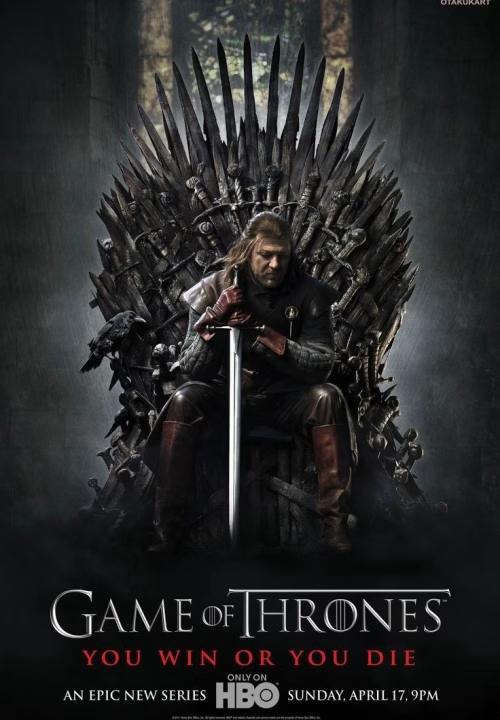
| Premiere Date | April 17, 2011 |
|---|---|
| Network / Service | HBO |
| Creator | David Benioff, D. B. Weiss, Based on A Song of Ice and Fire by George R.R. Martin |